2TPH RO Water Treatment Equipment Purification Desalination System For Industries
2TPH RO Water Treatment Equipment Purification Desalination System for Industries
Main Processing Design:
How Does Reverse Osmosis Remove Impurities?
Reverse Osmosis water filtration process is simple and straightforward. It is accomplished by water pressure pushing tap
water through a semipermeable membrane to remove impurities from water. This is a process in which dissolved inorganic
solids are removed from a solution.
There Are Generally Stages In The Reverse Osmosis Process:
Raw water pump→ Quartz sand filter → Activated carbon filter→Water softener(optional) → Cartridge filter→ High-pressure pump→ 1st RO system.
The picture is flow chart:
![]()

Basic Components Of A Reverse Osmosis System:
1. Raw water pump -- provide the pressure to quartz sand filter/active carbon filter.
2.Pre-Filter(s) -- Water from the cold water supply line enters the Reverse Osmosis Pre Filter first. There may be more than one pre-filter used in
a Reverse Osmosis system, the most common being sediment and carbon filters. These pre-filters are used to protect the RO membranes by
removing sand silt, dirt, and other sediment that could clog the system. Additionally, carbon filters may be used to remove chlorine, which can
damage the RO membranes.
3.Reverse Osmosis Membrane -- The Reverse Osmosis Membrane is the heart of the system. The semipermeable RO membrane is designed to
remove a wide variety of both aesthetic and health-related contaminants. After passing through the membrane, the water goes into a pressurized
storage tank where treated water is stored.
4. Cartridge filter -- The water entering the reverse osmosis system is subjected to a third-stage filtration to ensure that the water entering the
reverse osmosis system meets the requirements.
5. High pressure pump -- Provide the high pressure to RO membrane.
How Does Reverse Osmosis Remove Impurities?
Reverse Osmosis water filtration process is simple and straightforward. It is accomplished by water pressure pushing tap
water through a semipermeable membrane to remove impurities from water. This is a process in which dissolved inorganic
solids are removed from a solution.
Technical parameter:
| Model | CK-RO-2000LPH | Remark |
| Production Capacity | 2000 Liter Per Hour | |
| Power Supply | 220V/380V 50Hz | Customization |
| Raw Water Pump | 0.75KW | CNP |
| Quartz Sand Filter | φ400×1500MM | SS304 |
| Activated Carbon Filter | φ400×1500MM | SS304 |
| Water Softener | φ400×1500MM | SS304(optional) |
| Cartridge Filter | 20 ‘’ X 5μm pp filter | 5pcs |
| High Pressure Pump | 3KW | CNP |
| RO Membrane | 4040 | Vontron/DOW/Toray |
| Membrane Housing | SS304 | |
| Sterilizer Device | UV or Ozone | optional |
RO water treatment system detail picture
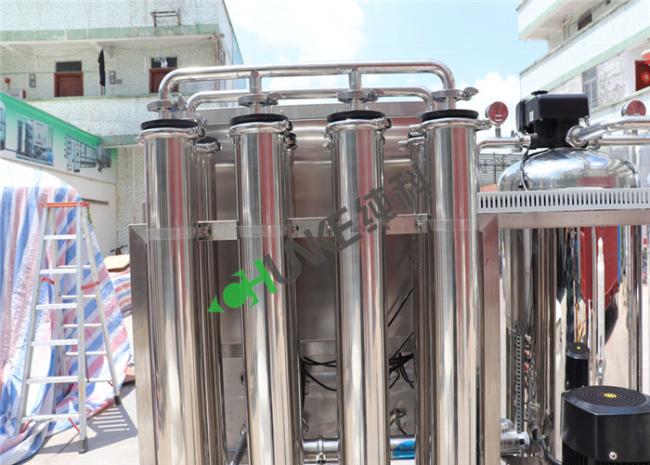
Front view:This water treatment system with quartz sand filter, active Carbon filter . The whole system is in stainless steel material , automatic control.
Some factors that may affect the performance of a Reverse Osmosis System:
- Incoming water pressure (most on municipal city tap water have 40-85 psi, but if water pressure is too low, RO system will not operate properly)
- Water Temperature (i.e. cold water takes longer to filter to filter)
- Type and number of total dissolved solids (TDS) in the tap water
- The quality of the filters and membranes used in the RO System

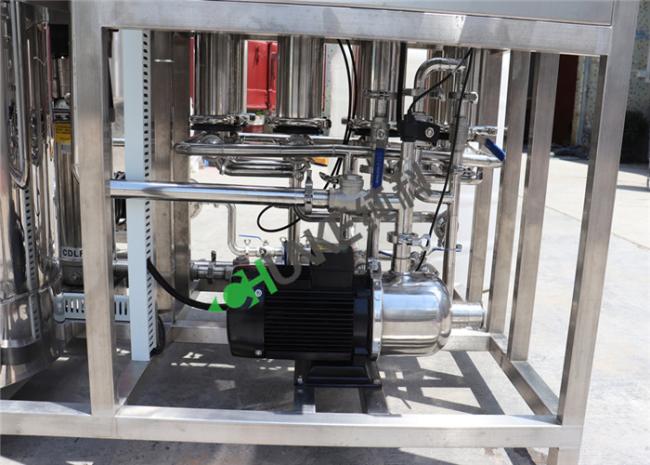
Back view:According the machine back view,you can see the membrane housing,high pressure pump,cartridge filter.
Are all Reverse Osmosis drinking water systems and filters the same?
There are many different Reverse Osmosis (RO) water filtration systems on the market. While one RO System may look like the next in terms of
design and components, there can be substantial differences between systems.

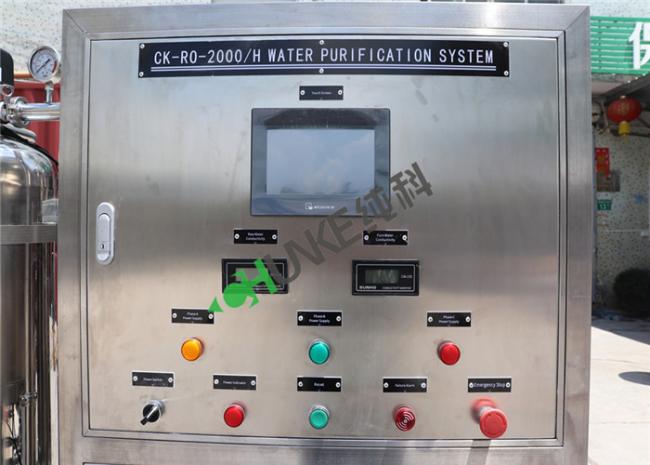
Electric control :
RO membrane:
How does a Reverse Osmosis Membrane work?
Reverse Osmosis (RO) is a water treatment process that removes contaminants from water by using pressure to force water
molecules through a semipermeable membrane. During this process, the contaminants are filtered out and flushed away,
leaving clean, delicious drinking water. Reverse osmosis is capable of removing up to 99 percent of 65 different
contaminants (see partial list below), including lead, fluoride, chlorine, dissolved salts, and more.
Raw water pump:The whole system uses stainless steel material.
There Are Many Benefits of Stainless Steel
Corrosion Resistance – Chromium is the alloying element that imparts to Stainless Steel their corrosion resistant qualities. Lower alloyed grades
resist corrosion in atmospheric and pure water environments; high-alloyed grades can resist corrosion in most acids, alkaline solutions.
Fire and Heat Resistance – Stainless Steel is used extensively in heat exchangers, super-heaters, boilers, feed water heaters, valves, and main
stream lines as well as aircraft and aerospace applications.
Hygiene – Cleanliness is a matter of high importance. The easy cleaning ability of stainless makes it the first choice for strict hygiene conditions.
Aesthetic Appearance – The bright easily maintained surface of stainless steel provides a modern and attractive appearance.
Strength-to-Weight Advantage – considerable cost savings.
Impact Resistance – provides high toughness.
Long-Term Value – In considering total cost, it is appropriate to consider material and production cost AND the life cycle cost. When the total life
cycle costs are considered, stainless is often the least expensive material option. The cost saving benefit of a maintenance free product having a
long life expectancy.
100 % Recyclable – Over 50% of new stainless comes from old remelted stainless steel scrap, thereby completing the full life cycle.
Automatic valves
If you have any question about water treatment ,feel free to contact more details with Jessie.
Whatsapp:+86 17502033136
Mail: jessieli@gzchunke.com

Get in Touch
Have questions about our products or want to discuss a custom order? Our team is ready to help you.