
Dual Chamber Auto Air Spring Vacuum Helium Leak Tester, ≤1×10⁻⁶mbar·L/s High Precision Device With Helium Recovery For OEM Suspension Quality Control
HeJin dual‑chamber automotive air spring vacuum helium leak testing equipment delivers ultra‑sensitive, fast, repeatable non‑destructive leak detection for air suspension components, fully compliant with ISO & automotive OEM standards, supported by direct factory supply and full lifecycle after‑sales service.
In the automotive industry, “close enough" isn’t an option. An air spring failure isn’t just a technical glitch; it’s a compromise on passenger comfort and vehicle safety. At HeJin, we understand the weight of that responsibility.
Our Dual-Chamber Automotive Air Spring Helium Leak Testing Equipment is more than just a machine; it is a sentinel for your production line. By utilizing advanced helium mass spectrometry, we help manufacturers transition from "hopeful quality" to "proven integrity." This system is engineered to handle the fast-paced environment of automotive manufacturing while maintaining the delicate precision required to find leaks invisible to the naked eye.
- Dual chamber alternative testing, greatly improves production efficiency and detection throughput
- Ultra-low leakage sensitivity ≤1*10⁻⁶ mbar·L/s, accurately capture tiny micro leaks
- Non-destructive testing, no damage to air spring appearance and internal performance
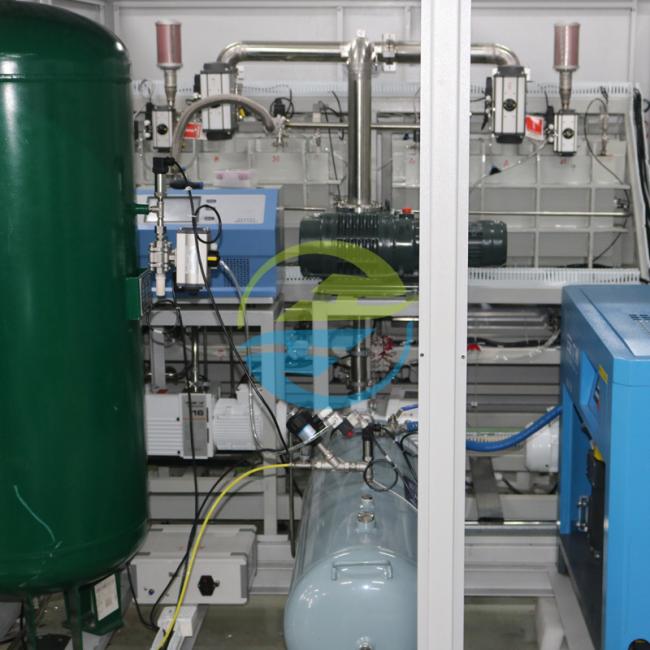
- Built-in high-efficiency helium recovery system, effectively reduce long-term gas consumption cost
- Stable and repeatable detection data, fully meet strict automotive OEM quality standards
- PLC intelligent touch screen control, simple operation and low operator training cost
- Complete test data automatic recording, storage and export traceability management
- Custom quick-change fixtures, compatible with multiple specifications of air spring products
- ISO 20485: Non-destructive testing — Helium mass spectrometry leak testing methods for industrial components
- ISO 16247: Road vehicles — Detection of exhaust system leaks — Helium test method and equipment specification
- SAE J2655: Performance standard for sealing components in automotive fluid systems
- ASTM F2338: Standard test method for leak detection of packaged products using helium mass spectrometer
- IEC 60068: Environmental testing for electronic and electromechanical components
| Parameter | Specification |
|---|---|
| Test Method | Vacuum Helium Mass Spectrometer |
| Chamber Type | Dual Chamber |
| Leak Detection Sensitivity | ≤ 1*10⁻⁶ mbar·L/s |
| Test Gas | Helium |
| Vacuum Level | ≤ 5 Pa |
| Cycle Time | Approx. 30–90 s (adjustable) |
| Control System | PLC + Touch Screen |
| Helium Recovery | Supported |
| Fixture Type | Customized according to air spring |
| Data Storage | Test data logging & export |
| Power Supply | AC 380V, 50/60Hz |
| Operating Mode | Automatic / Manual |
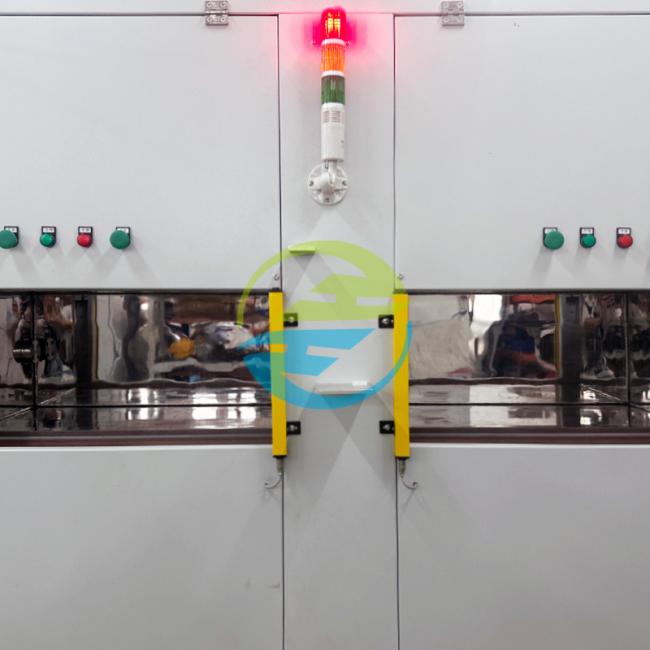
| Alarm System | Visual & audible |
| Equipment Structure | Industrial welded steel frame |
| Application Environment | Production line / Laboratory |
- Automotive air springs
- Air suspension bellows / capsules
- Pneumatic sealing components
- Rubber / composite air spring assemblies
- Other pneumatic & hydraulic sealing parts
- Micro leakage rate of air spring body
- Sealing performance of end caps, joints, and welds
- Porosity, microcracks, and assembly defects
- Overall airtightness qualification
- Long‑term sealing stability under vacuum
-
1.Why choose helium leak testing over pressure decay?
Helium testing is 100–1000* more sensitive for micro‑leaks, faster, and more repeatable, meeting strict OEM standards.
-
2.Can this machine test different air spring models?
Yes. We provide customized or quick‑change fixtures for multiple product types.
-
3.Is helium consumption high?
No. The built‑in recovery system greatly reduces usage and long‑term cost.
-
4.Can it be integrated into an automatic production line?
Yes, with standard communication interfaces for inline automation.
-
5.What is the typical test cycle time?
Approx. 30–90 seconds, adjustable based on product size and process.
-
6.Is testing destructive to air springs?
No, it is non-destructive and maintains part performance and appearance.
Get in Touch
Have questions about our products or want to discuss a custom order? Our team is ready to help you.