
Heat Resistant Laboratory Duct Fume Hood With 5mm Compact Laminate
Heat Resistant Acid & Alkali Resistant Chemical Laboratory Duct Fume Hood with Fireproof
1. Product Description
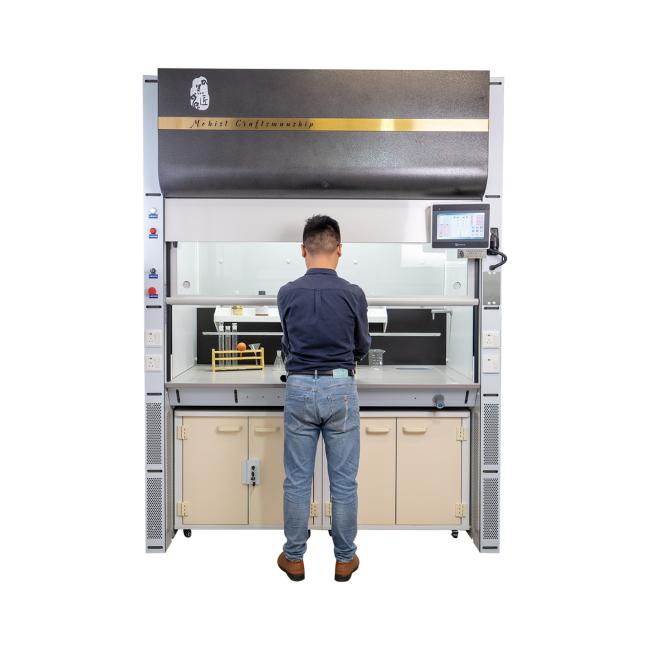
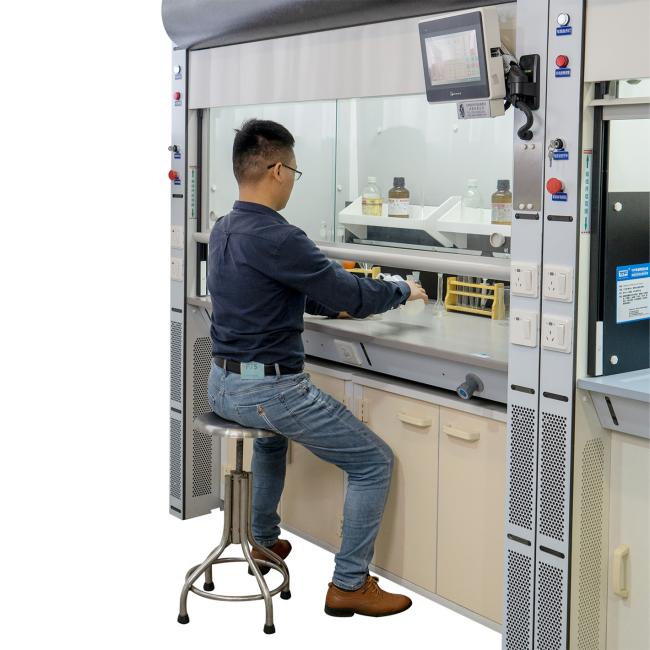
A fume hood (sometimes called a fume cupboard or fume closet) is a type of local ventilation device that is designed to limit exposure to hazardous or toxic fumes, vapors or dusts.
A fume hood is typically a large piece of equipment enclosing five sides of a work area, the bottom of which is most commonly located at a standing work height.
Two main types exist, ducted and recirculating (ductless). The principle is the same for both types: air is drawn in from the front (open) side of the cabinet, and either expelled outside the building or made safe through filtration and fed back into the room. This is used to:
-protect the user from inhaling toxic gases (fume hoods, biosafety cabinets, glove boxes)
-protect the product or experiment (biosafety cabinets, glove boxes)
-protect the environment (recirculating fume hoods, certain biosafety cabinets, and any other type when fitted with appropriate filters in the exhaust airstream)
Secondary functions of these devices may include explosion protection, spill containment, and other functions necessary to the work being done within the device.
2. Product Parameters
|
Model Parameters |
YT-1500A | YT-1500B | YT-1500C | YT-1800A | YT-1800B | YT-1800C |
| Size (mm) | 1500(W)*865(D)*2400(H) | 1800(W)*1205(D)*2400(H) | ||||
| Worktop Size (mm) | 1260(W1)*795(D1)*1100(H1) | 1560(W1)*795(D1)*1100(H1) | ||||
| Worktop | 20+6mm Ceramic | 20+6mm Ceramic | 12.7mm Solid Physiochemical Board | 20+6mm Ceramic | 20+6mm Ceramic | 12.7mm Solid Physiochemical Board |
| Liner | 5mm Ceramic Fibre | 5mm Compact Laminate | 5mm Compact Laminate | 5mm Ceramic Fibre | 5mm Compact Laminate | 5mm Compact Laminate |
| Diversion Structure | Back Absorption | |||||
| Control System | Touch-Tone Control Panel (LED Screen) | |||||
| Input Power | 220V/32A | |||||
| Fan Power | Less than 2.8 A | |||||
| Socket Max. Load | 5KW | |||||
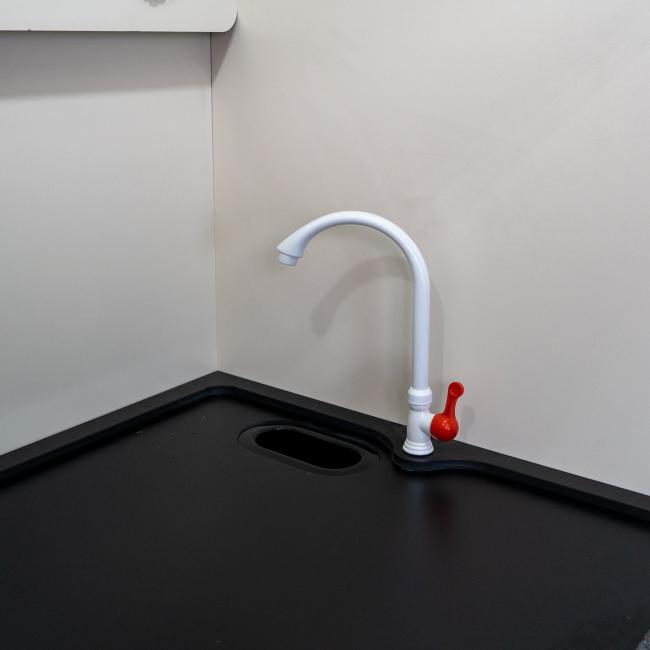
| Faucet | 1 Set | |||||
| Drainage Mode | Natural Fall | |||||
| Storage | Double-Lock, Corrosion-Resistant, Damp-proof, Multi-layer Solid Wood with Mobile Wheel | |||||
| Application | Indoor No-blast, 0-40 ℃ | |||||
| Application Field | Organic Chemical Experiment | |||||
| Face Velocity Control | Manual Control | |||||
| Average Face Velocity | 0.3-0.5 m/s Exhaust: 720-1200m³/h | 0.3-0.5 m/s Exhaust:900- 1490m³/h | ||||
| Face Velocity Deviation | Less than 10% | |||||
| Average Illumination | Less than 500 Lux | |||||
| Noise | Within 55 dB | |||||
| Exhaust Air | No Residue | |||||
| Safety Test | In Accord with International Standard | |||||
| Resistance | Less than 70Pa | |||||
| Add Air Function | Distinctive Structure (Need Exclusive Add Air System) | |||||
| Air Flow Control Valve | Dia. 250mm Flange Type Anti-Corrosion Control Valve | Dia. 315mm Flange Type Anti-Corrosion Control Valve | ||||
3. More About the Fume Hood
A fume hood is the most central piece of safety equipment available to researchers in a laboratory environment. While it is understood that the face velocity and sash height can drastically influence airflow patterns, few specific recommendations can be given to the researcher to guide them to maximize the safety of their particular hood.
There are many styles and configurations of fume hoods, but there is no one-size-fits-all option for various fields of research. However, it is widely accepted that a fume hood face velocity of 80-120 ft/min is ideal for preventing nanoparticles in a hood from entering the breathing zone of a laboratory.
Unlike constant flow fume hoods, which have no features to control the face velocity when the sash is moved constant velocity hoods maintain their velocity regardless of sash height. The constant velocity feature is a marvelous achievement toward improving laboratory safety conditions, but their extreme ease of use may lead researchers to become complacent with regard to safety. It is well known that a constant velocity fume hood can easily keep nanoparticles out of the lab air, and several groups have modeled how external obstructions and workers moving their arms across the fume hood threshold impact airflow patterns. Unfortunately, the most pragmatic case remains unexamined-that is, the influence of a typical synthetic reaction setup on airflow remarkably has yet to be explored.
4. Detailed Photos
5. Fume Hood Maintenance
• Hoods should be evaluated by the user before each use to ensure adequate face velocities and the absence of excessive turbulence.
• In case of exhaust system failure while using a hood, shut off all services and accessories and lower the sash completely. Leave the area immediately.
• Fume hoods should be certified, at least annually, to ensure they are operating safely. Typical tests include face velocity measurements, smoke tests and tracer gas containment. Tracer gas containment tests are especially crucial, as studies have shown that face velocity is not a good predictor of fume hood leakage.
• Laboratory fume hoods are one of the most important used and abused hazard control devices. We should understand that the combined use of safety glasses, protective gloves, laboratory smocks, good safety practices, and laboratory fume hoods are very important elements in protecting us from a potentially hazardous exposure.
• Laboratory fume hoods only protect users when they are used properly and are working correctly. A fume hood is designed to protect the user and room occupants from exposure to vapors, aerosols, toxic materials, odorous, and other harmful substances. A secondary purpose is to serve as a protective shield when working with potentially explosive or highly reactive materials. This is accomplished by lowering the hood sash.
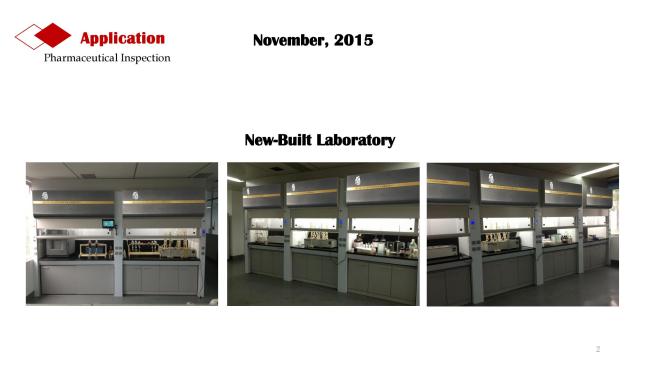
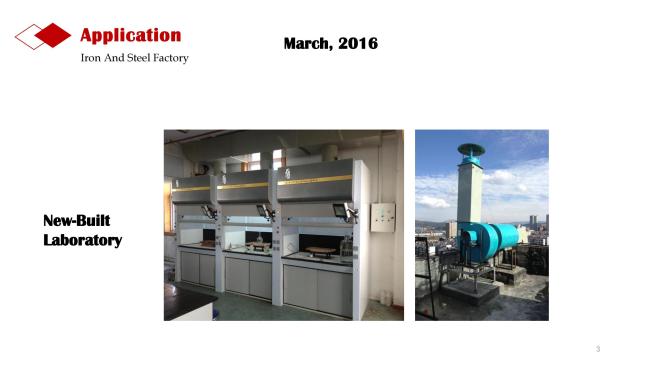
6. Project Cases
Get in Touch
Have questions about our products or want to discuss a custom order? Our team is ready to help you.