
High Performance Polypropylene Fume Hood Acid Alkali Resistant For Education
Acid & Alkali Resistant High Performance Fume Hood For Education
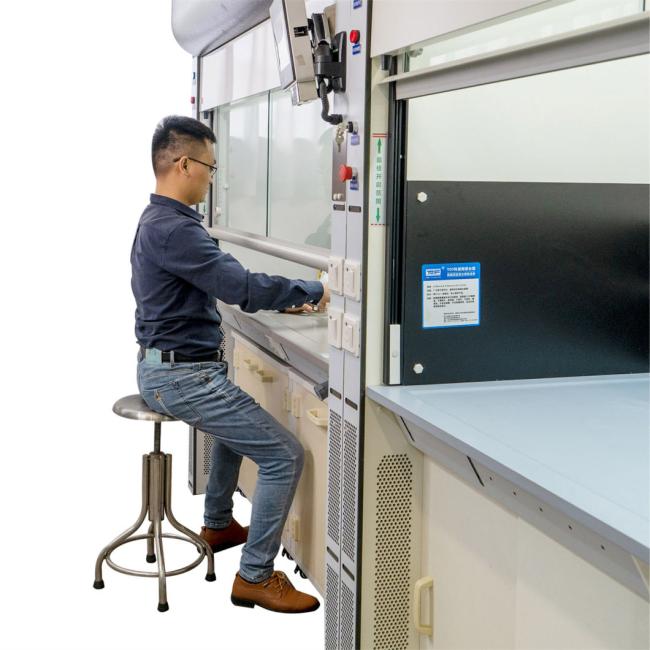
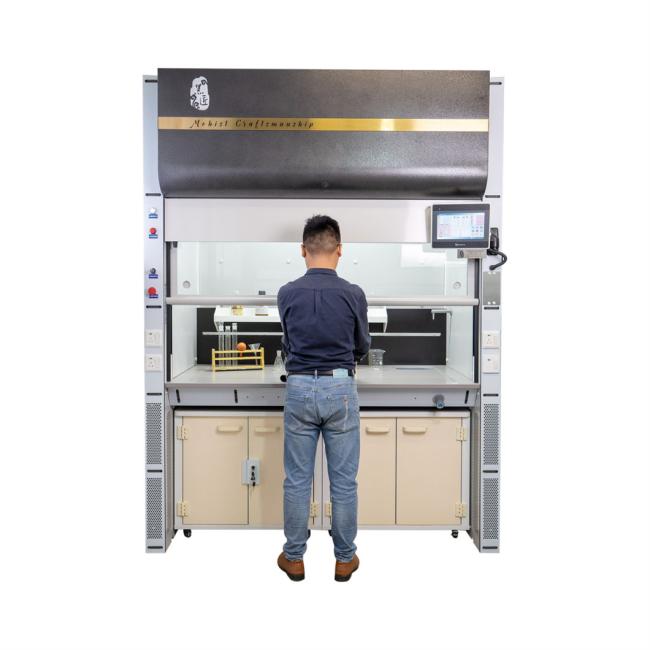
Fume hoods, or fume cupboards, work to ensure the safety of lab personnel while working with hazardous materials by continuously delivering airflow away from the user. When used properly, fume hoods can prevent users and the environment from toxic gases, explosions, and spills.
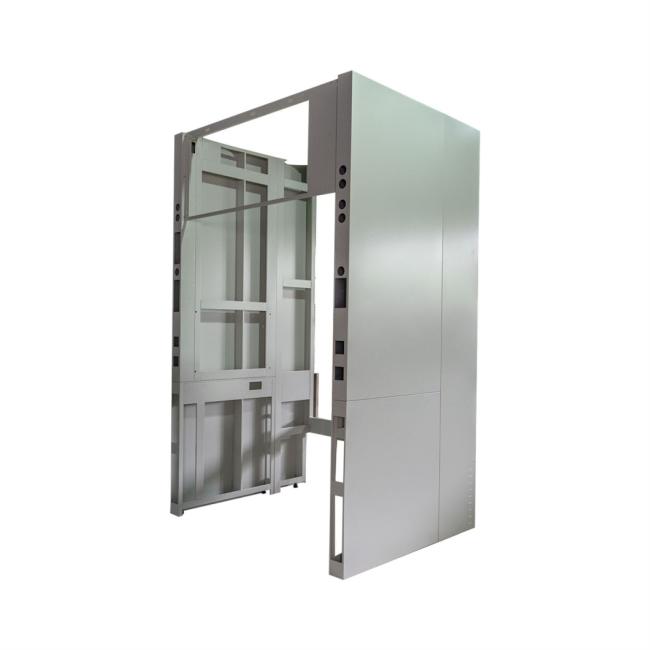
Ducted fume hoods have a base, work surface, hood, blower and ducting that carries the air outside of the building. The engineer of the heating, ventilation and air-conditioning (HVAC) system needs to determine if your room has enough air to provide the necessary volume of ventilation to the hood.
Ductless fume hoods operate off a carbon filter system that recirculates filtered air into your building. Ductless hoods are often referred to as re-circulating range hoods. They filter the air and then return the clean air back into the workspace. They are self-contained filtered laboratory enclosures. Their primary features are mobility, they save energy, are easy to install and cheaper because no ductwork is required.
| Model Specification | WJ-1500A | WJ-1500B | WJ-1800A | WJ-1800B |
| External dimensions of equipment(mm) | 1500(W)*1205 (D) *2400 (H) | 1800(W)*1205 (D) *2400 (H) | ||
| Dimension of works pace (mm) | 1260(W1)*780(D1) *1100 (H1) | 1560(W1)*780(D1) *1100 (H1) | ||
| Panel material | 20+6mm thick butterfly ceramics | |||
| Material of internal lining board | 5mm thick ceramic fiber board | |||
| Diversion structure | Lower air return | |||
| Control system | Button control panel (LCD panel) | |||
| PH value control | The medium is alkaline water solution; manual monitoring, and manual control through acid pump and alkali pump. | |||
| Input power | Three-phase five-wire 380V/50A | |||
| Current for air fan | Not over 2.8A(380V or 220V can be directly connected) | |||
| Maximum load of socket | 12 KW(total of 4 sockets) | |||
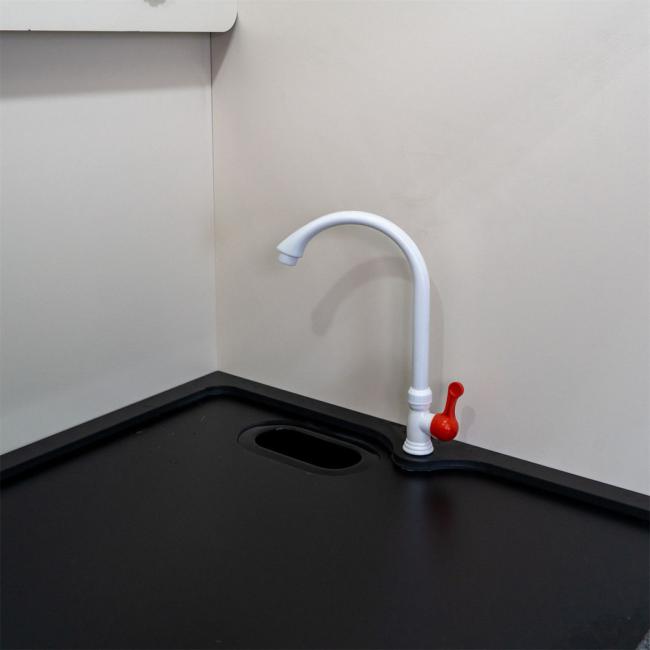
| Water tap | 1 set (remote control valve + water nozzle) | No | 1 set (remote control valve + water nozzle) | No |
| Water discharge way | Magnetic chemical pump strong discharge | |||
| Using environment | For non-explosion indoor use, within 0-40 degrees Celsius. | |||
| Applicable fields | Inorganic chemistry experiment; Food, medicine, electronics, environment, metallurgy, mining, etc. | |||
| Ways of Purification | Spray sodium hydroxide solution, no less than 8 cubic meters/hour | Spray sodium hydroxide solution.no less than 12 cubic meters/ hour | ||
| Ways of surface air speed control | Manual control (through the electric air valve to adjust the exhaust air volume or adjust the height of the moving door) | |||
| Average surface air speed | 0.6-0.8 m/s Exhaust air volume: 1420-1890m3/h (when door height h =500mm) | 0.6-0.8 m/s Exhaust air volume: 1760-2340m3/h (when door height h =500mm) | ||
| Speed deviation of surface air | Not higher than 10% | |||
| The average intensity of illumination | Not less than 700 Lux; Standard white and uv-free yellow LED lamps; The illumination is adjustable. | |||
| Noise | Within 55 decibels | |||
| Flow display | White smoke can pass through the exhaust outlet, no overflow. | |||
| Safety inspection | No spikes, edges; Charged body and the exposed metal resistance is greater than 2 mQ; Under 1500V voltage, no breakdown or flashover occurred for 1min test. | |||
| Resistance of exhaust cabinet | Less than 160 pa | |||
| Power consumption | Less than 1.0kw/h (excluding power consumption of fans and external instruments) | Less than 1.2kw/h (excluding power consumption of fans and external instruments) | ||
| Water consumption | Less than 3.2L/ h | Less than 4.0L/ h | ||
| Performance of wind compensation | With a unique wind compensation structure, the volume of the wind will not cause turbulence in exhaust cabinet and will not directly blow to the staff (need to connect to the air compensation system of the laboratory) | |||
| Air volume regulating valve | 315mm diameter flanged type anti-corrosion electric air flow regulating valve (electric contact actuator) | |||
Ducted fume hoods are considered safest for workers in laboratories, and its often the easiest for employers to maintain. Many universities ONLY allow ducted fume hoods in their facilities to maintain worker and student safety.
Advantages and Disadvantages of Ducted Fume Hoods
| Advantages | Disadvantages |
| Safer for lab workers | More expensive |
| Can handle a wide range of chemicals | More difficult to install |
| Easy to operate and maintain | Stationary in the lab |
| Exhaust system keeps contamination outside lab | More difficult to move or relocate |
| Uses more energy |
The disadvantage is that workers are at a greater risk of chemical exposure, filter maintenance is required, they can be noisy due to the internal blower and there are limited applications for filter options.
Ductless fume hoods are ideal for labs that require mobility, handle light to moderate chemical loads and are looking for a cost-effective option from both an installation and operational perspective.
Advantages and Disadvantages of Ductless Fume Hoods
| Advantages | Disadvantages |
| Less expensive | Handles Limited chemicals |
| Easy to install | Need to replace filters |
| Mobile in the lab | Not as effective at removing chemical fumes |
| Easily moved or relocated | Not for constant use |
| Use less energy |
If you work on the inside of the ductwork or on the fans, follow this procedure :
-Notify the group that owns the hood five days before the work is to begin. Tell them that they won't be able to use the hood during the work. The lab must also take every container out of the hood for the duration of the shutdown.
The person doing the cleaning must wear chemical splash protection during the procedure, including:
• Lab coat or apron,
• Disposable latex or neoprene gloves, and
• Full or half face respirator and splash goggles. The respirators should have high efficiency particulate air filters (HEPA).
• Hoods should be evaluated by the user before each use to ensure adequate face velocities and the absence of excessive turbulence.
• In case of exhaust system failure while using a hood, shut off all services and accessories and lower the sash completely. Leave the area immediately.
• Fume hoods should be certified, at least annually, to ensure they are operating safely. Typical tests include face velocity measurements, smoke tests and tracer gas containment. Tracer gas containment tests are especially crucial, as studies have shown that face velocity is not a good predictor of fume hood leakage.
• Laboratory fume hoods are one of the most important used and abused hazard control devices. We should understand that the combined use of safety glasses, protective gloves, laboratory smocks, good safety practices, and laboratory fume hoods are very important elements in protecting us from a potentially hazardous exposure.
• Laboratory fume hoods only protect users when they are used properly and are working correctly. A fume hood is designed to protect the user and room occupants from exposure to vapors, aerosols, toxic materials, odorous, and other harmful substances. A secondary purpose is to serve as a protective shield when working with potentially explosive or highly reactive materials. This is accomplished by lowering the hood sash.
Get in Touch
Have questions about our products or want to discuss a custom order? Our team is ready to help you.