
Strong Acid and Alkali Resistance Polypropylene Corrosion Resistance Laboratory Chemical Fume Hood with CE Certified
Product Description
Company Info.
Customer Question & Answer Ask something for more details
- Overview
- Product Description
- Product Parameters
- Fume Hood Maintenance
- Detailed Photos
- Application Cases
Basic Info.
Product Description
Fume hoods are a primary method of exposure control in the laboratory. A fume hood is a ventilated enclosure that usually vents separately from the building's heating, ventilation and air conditioning (HVAC) system and not recirculated into the building. Fume hoods should be used when working with toxic compounds or compounds with a boiling point below 120°C. Fume hoods, or other effective local ventilation, must be provided and used when the materials used will exceed exposure limits in the laboratory.
Acid digestion is one of the more common procedures performed in fume hoods that causes premature rusting and corrosion. All-metal fume hoods, standard in most labs, will rust over time and need to be replaced, but specialty labs working with acids to break down organic and inorganic materials often make the mistake of not using metal-free fume hoods. Hydrochloric acid, sulfuric acid, hydrofluoric acid and nitric acid are common in any digestion experimentation and analysis, all of which will immediately rust and corrode any exposed metal it touches, resulting in contamination to samples.
The fume hood is an important safety staple in chemistry classrooms and research labs. Getting the most out of a fume hood begins with selecting the right one for your application. That means knowing precisely what type of work will be performed in the fume hood and making the choice between constant air volume and variable air volume, choosing between a ducted and a ductless fume hood, and selecting the appropriate material of construction.
| Model Parameters | YT-1500A | YT-1500B | YT-1500C | YT-1800A | YT-1800B | YT-1800C |
| Size (mm) | 1500(W)*865(D)*2400(H) | 1800(W)*1205(D)*2400(H) | ||||
| Worktop Size (mm) | 1260(W1)*795(D1)*1100(H1) | 1560(W1)*795(D1)*1100(H1) | ||||
| Worktop | 20+6mm Ceramic | 20+6mm Ceramic | 12.7mm Solid Physiochemical Board | 20+6mm Ceramic | 20+6mm Ceramic | 12.7mm Solid Physiochemical Board |
| Liner | 5mm Ceramic Fibre | 5mm Compact Laminate | 5mm Compact Laminate | 5mm Ceramic Fibre | 5mm Compact Laminate | 5mm Compact Laminate |
| Diversion Structure | Back Absorption | |||||
| Control System | Touch-Tone Control Panel (LED Screen) | |||||
| Input Power | 220V/32A | |||||
| Fan Power | Less than 2.8 A | |||||
| Socket Max. Load | 5KW | |||||
| Faucet | 1 Set | |||||
| Drainage Mode | Natural Fall | |||||
| Storage | Double-Lock, Corrosion-Resistant, Damp-proof, Multi-layer Solid Wood with Mobile Wheel | |||||
| Application | Indoor No-blast, 0-40 ºC | |||||
| Application Field | Organic Chemical Experiment | |||||
| Face Velocity Control | Manual Control | |||||
| Average Face Velocity | 0.3-0.5 m/s Exhaust: 720-1200m³/h | 0.3-0.5 m/s Exhaust:900- 1490m³/h | ||||
| Face Velocity Deviation | Less than 10% | |||||
| Average Illumination | Less than 500 Lux | |||||
| Noise | Within 55 dB | |||||
| Exhaust Air | No Residue | |||||
| Safety Test | In Accord with International Standard | |||||
| Resistance | Less than 70Pa | |||||
| Add Air Function | Distinctive Structure (Need Exclusive Add Air System) | |||||
| Air Flow Control Valve | Dia. 250mm Flange Type Anti-Corrosion Control Valve | Dia. 315mm Flange Type Anti-Corrosion Control Valve | ||||
Labs are a risky environment. Between the sharp objects and beakers lined up in rows, workers have to constantly be aware of their surroundings. Personal protective equipment and other controls are part of what keep them safe, and fume hoods are no exception.
Fume hoods are an engineering control in labs, meaning they control the hazard. When scientists are working with dangerous materials that emit hazardous vapors, gas, and dust, a fume hood will move it away from their faces and out of the area through an exhaust system.
Without getting too deep into the weeds about the inner workings of the mechanism, it's essential that they are always in working order. Professionals should thoroughly inspect and document fume hoods on an annual basis. A quick visual inspection should be done every time it's used. If there is any suspicion that a fume hood is not working correctly, it's imperative to get in touch with someone ASAP.
No air flow. A quick way to check to see if there's air movement is to tape a piece of tissue to the sash. Turn on the hood. A tissue "flapping in the wind" is indicative of ample air movement - good news.
Weird noises. Occasionally, the fan or motor will need some TLC. Unusual noises are are good indicators to shut the hood down until it can be serviced.
Immediately tag the fume hood as "DO NOT USE" and contact the responsible party to get it repaired if any red flags arise.
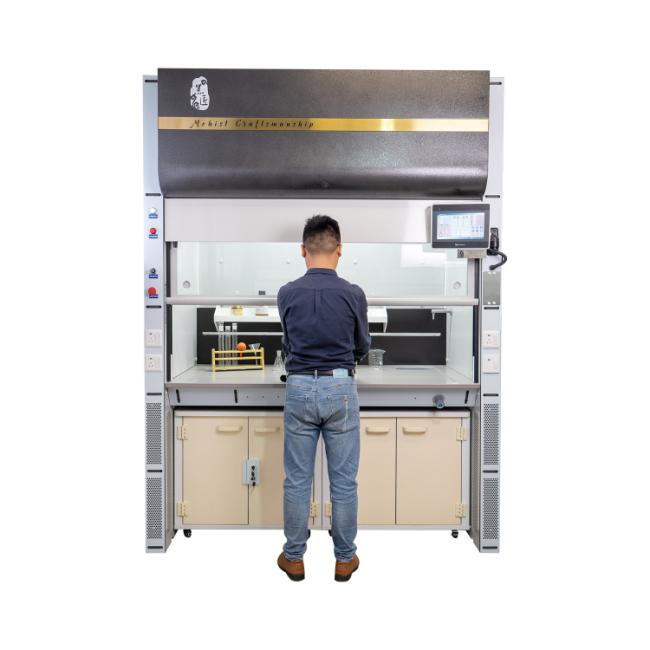
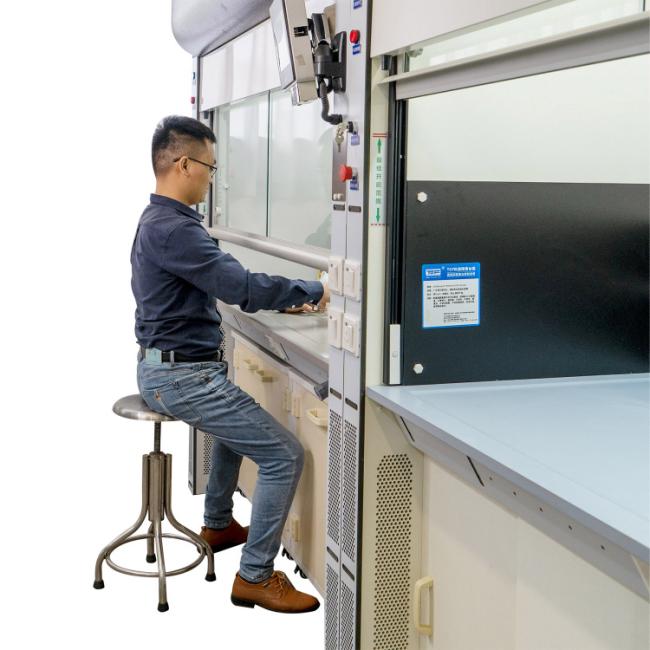
Labs should consider whether a ducted or a ductless fume hood is right for them. Traditional ducted fume hoods are required in certain situations: to accommodate heavy volumes of acids, such as an acid digestion process, when dealing with noble gases, or in cases in which an unknown quantity of evaporation is occurring in the hood. Though filtered fume hoods are a viable solution for 90 percent of the chemistry performed in today's labs, there is a still a place for ducted fume hoods at this time.
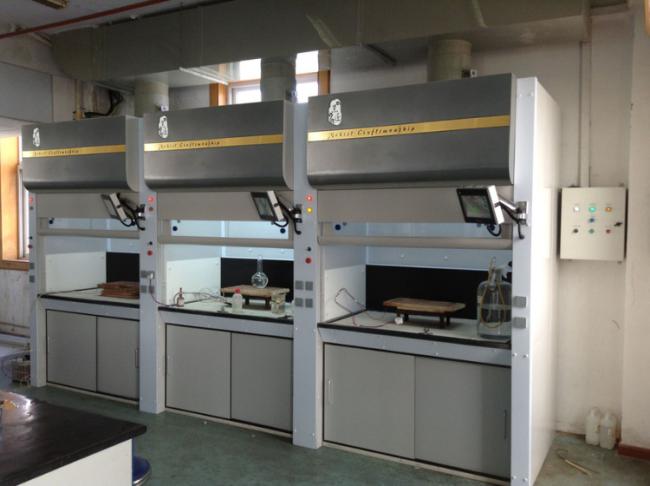
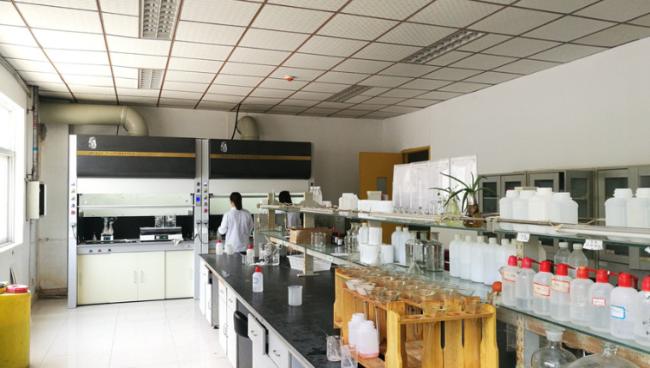
Get in Touch
Have questions about our products or want to discuss a custom order? Our team is ready to help you.