
Full Steel Structure Lab Chemical Fume Hood for Laboratory
Product Description
Company Info.
Customer Question & Answer Ask something for more details
- Overview
- Product Description
- Product Parameters
- Fume Hood Maintenance
- Detailed Photos
- Installation Instructions
- Accessories
Basic Info.
Product Description
When handling chemicals, viral microbes, bacteria, and other potentially harmful substances, it is important to know whether the substance can become airborne. During the experimentation and research process, many chemical and biological agents have the potential to release droplets, fumes, or toxic vapors, which can be inhaled by lab personnel.
While some chemical fumes may be harmless in small amounts, inhaling various chemicals day-in and day-out can have lasting effects, even if they are not immediately noticeable. Similarly, airborne viral droplets may be easy for the immune system to fight off, but researchers working with highly infectious agents may not be so lucky.
A fume hood is used to all but eliminate the risks associated with working with chemicals and viral compounds by drawing airborne droplets and fumes away from the lab environment and into a filtration system. Using suction, fume hoods collect potentially toxic vapors, directing them through a series of filtration systems before recirculating the air.
| Model Specification | WJ-1500A | WJ-1500B | WJ-1800A | WJ-1800B |
| External dimensions of equipment(mm) | 1500(W)*1205 (D) *2400 (H) | 1800(W)*1205 (D) *2400 (H) | ||
| Dimension of works pace (mm) | 1260(W1)*780(D1) *1100 (H1) | 1560(W1)*780(D1) *1100 (H1) | ||
| Panel material | 20+6mm thick butterfly ceramics | |||
| Material of internal lining board | 5mm thick ceramic fiber board | |||
| Diversion structure | Lower air return | |||
| Control system | Button control panel (LCD panel) | |||
| PH value control | The medium is alkaline water solution; manual monitoring, and manual control through acid pump and alkali pump. | |||
| Input power | Three-phase five-wire 380V/50A | |||
| Current for air fan | Not over 2.8A(380V or 220V can be directly connected) | |||
| Maximum load of socket | 12 KW(total of 4 sockets) | |||
| Water tap | 1 set (remote control valve + water nozzle) | No | 1 set (remote control valve + water nozzle) | No |
| Water discharge way | Magnetic chemical pump strong discharge | |||
| Using environment | For non-explosion indoor use, within 0-40 degrees Celsius. | |||
| Applicable fields | Inorganic chemistry experiment; Food, medicine, electronics, environment, metallurgy, mining, etc. | |||
| Ways of Purification | Spray sodium hydroxide solution, no less than 8 cubic meters/hour | Spray sodium hydroxide solution.no less than 12 cubic meters/ hour | ||
| Ways of surface air speed control | Manual control (through the electric air valve to adjust the exhaust air volume or adjust the height of the moving door) | |||
| Average surface air speed | 0.6-0.8 m/s Exhaust air volume: 1420-1890m3/h (when door height h =500mm) | 0.6-0.8 m/s Exhaust air volume: 1760-2340m3/h (when door height h =500mm) | ||
| Speed deviation of surface air | Not higher than 10% | |||
| The average intensity of illumination | Not less than 700 Lux; Standard white and uv-free yellow LED lamps; The illumination is adjustable. | |||
| Noise | Within 55 decibels | |||
| Flow display | White smoke can pass through the exhaust outlet, no overflow. | |||
| Safety inspection | No spikes, edges; Charged body and the exposed metal resistance is greater than 2 mQ; Under 1500V voltage, no breakdown or flashover occurred for 1min test. | |||
| Resistance of exhaust cabinet | Less than 160 pa | |||
| Power consumption | Less than 1.0kw/h (excluding power consumption of fans and external instruments) | Less than 1.2kw/h (excluding power consumption of fans and external instruments) | ||
| Water consumption | Less than 3.2L/ h | Less than 4.0L/ h | ||
| Performance of wind compensation | With a unique wind compensation structure, the volume of the wind will not cause turbulence in exhaust cabinet and will not directly blow to the staff (need to connect to the air compensation system of the laboratory) | |||
| Air volume regulating valve | 315mm diameter flanged type anti-corrosion electric air flow regulating valve (electric contact actuator) | |||
Labs are a risky environment. Between the sharp objects and beakers lined up in rows, workers have to constantly be aware of their surroundings. Personal protective equipment and other controls are part of what keep them safe, and fume hoods are no exception.
Fume hoods are an engineering control in labs, meaning they control the hazard. When scientists are working with dangerous materials that emit hazardous vapors, gas, and dust, a fume hood will move it away from their faces and out of the area through an exhaust system.
Without getting too deep into the weeds about the inner workings of the mechanism, it's essential that they are always in working order. Professionals should thoroughly inspect and document fume hoods on an annual basis. A quick visual inspection should be done every time it's used. If there is any suspicion that a fume hood is not working correctly, it's imperative to get in touch with someone ASAP.
No air flow. A quick way to check to see if there's air movement is to tape a piece of tissue to the sash. Turn on the hood. A tissue "flapping in the wind" is indicative of ample air movement - good news.
Weird noises. Occasionally, the fan or motor will need some TLC. Unusual noises are are good indicators to shut the hood down until it can be serviced.
Immediately tag the fume hood as "DO NOT USE" and contact the responsible party to get it repaired if any red flags arise.
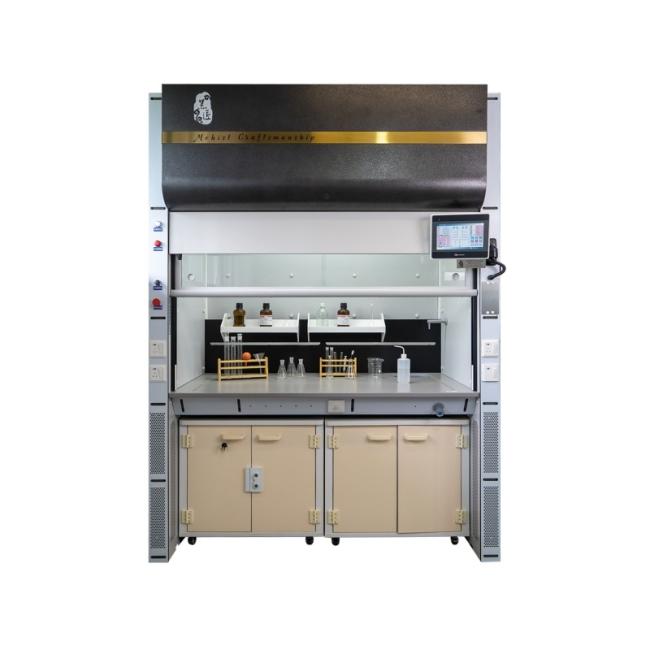
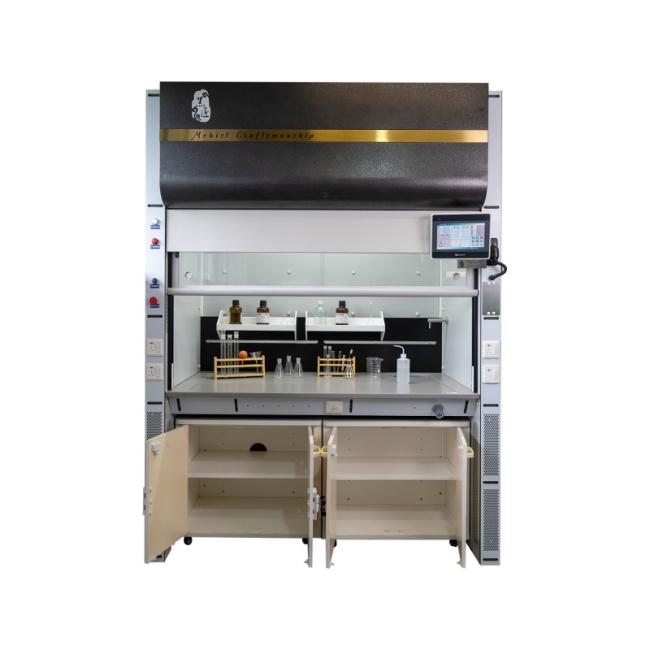
Flow visualization consists of two tests known as local smoke and gross smoke. These names are self-explanatory in that the tester utilizes smoke to check for leaks, or cracks in the fume hood, structural defects, air flow inefficiency or other issues that may allow gas to escape. A smoke gun is used to perform this test but the gross smoke measurement is done on a macro level in which a smoke bomb is detonated in the middle of the fume hood. If any smoke escapes out of the front of the hood during either test, the fume hood will receive a "fail" rating and appropriate action must be taken to rectify it.
Face velocity is the measurement of air flow through the fume hood. Different fume hoods have face velocity specifications for ventilating gases and it's important that the fume hood maintain these levels. Otherwise, it's considered compromised and unsafe. This test is performed with the sash open 25%, 50% and 100% using a device that measures air flow at different place within the hood. Those readings are then compared to the manufacturer's specifications for that fume hood to ensure complete functionality.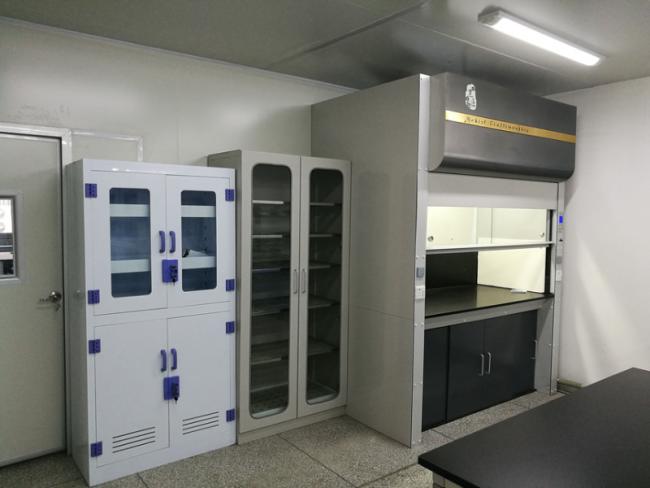
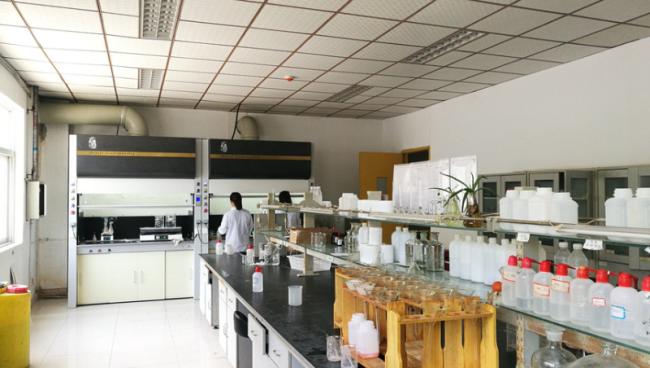
Get in Touch
Have questions about our products or want to discuss a custom order? Our team is ready to help you.