
Laboratory Heat Resistant Chemical Fume Cupboard Acid Alkali Resistant
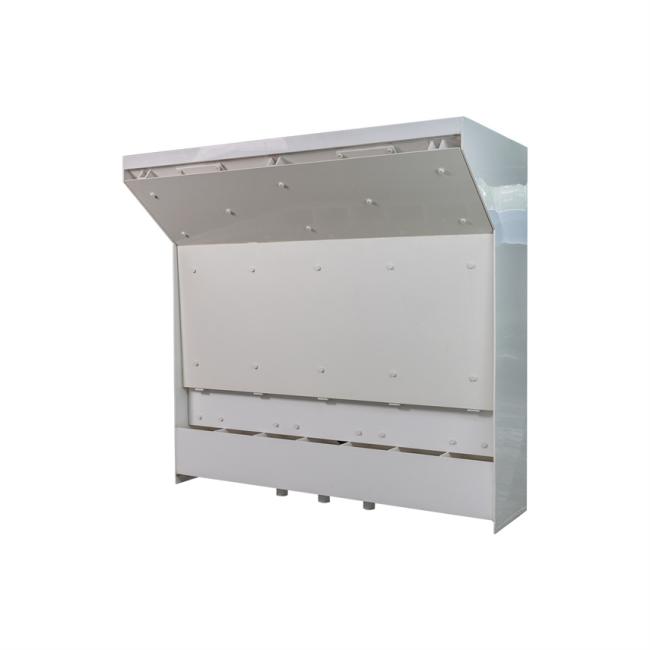
Explosion Proof Laboratory Heat Resistant Chemical Fume Cupboard With Acid & Alkali Resistant
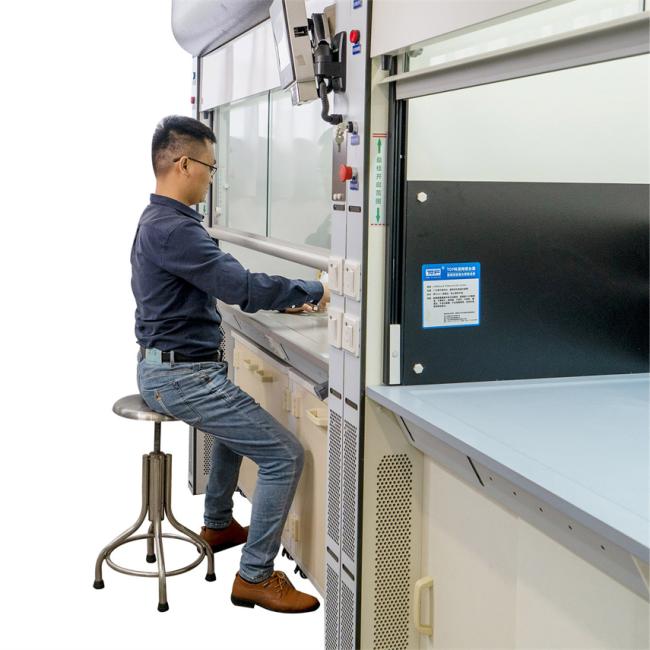
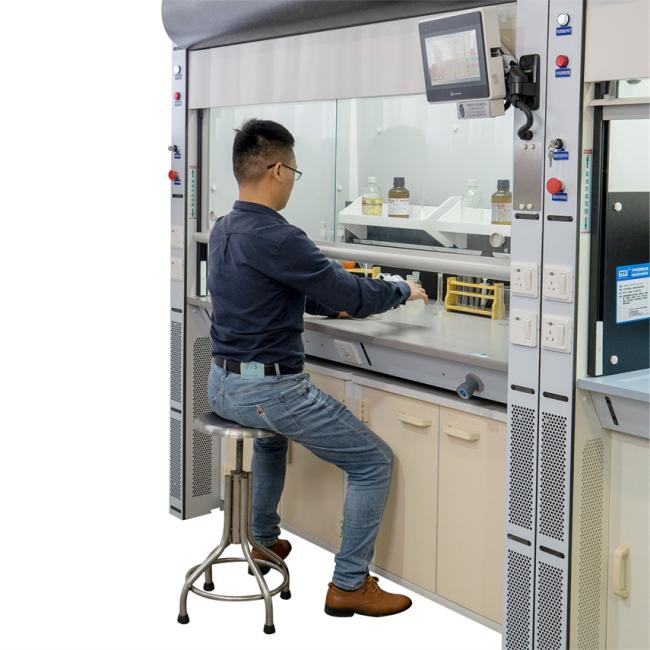
A fume hood (sometimes called a fume cupboard or fume closet) is a type of local ventilation device that is designed to limit exposure to hazardous or toxic fumes, vapors or dusts.
A fume hood is typically a large piece of equipment enclosing five sides of a work area, the bottom of which is most commonly located at a standing work height.
Two main types exist, ducted and recirculating (ductless). The principle is the same for both types: air is drawn in from the front (open) side of the cabinet, and either expelled outside the building or made safe through filtration and fed back into the room. This is used to:
-protect the user from inhaling toxic gases (fume hoods, biosafety cabinets, glove boxes)
-protect the product or experiment (biosafety cabinets, glove boxes)
-protect the environment (recirculating fume hoods, certain biosafety cabinets, and any other type when fitted with appropriate filters in the exhaust airstream)
Secondary functions of these devices may include explosion protection, spill containment, and other functions necessary to the work being done within the device.
| Model Parameters |
YT-1500A | YT-1500B | YT-1500C | YT-1800A | YT-1800B | YT-1800C |
| Size (mm) | 1500(W)*865(D)*2400(H) | 1800(W)*1205(D)*2400(H) | ||||
| Worktop Size (mm) | 1260(W1)*795(D1)*1100(H1) | 1560(W1)*795(D1)*1100(H1) | ||||
| Worktop | 20+6mm Ceramic | 20+6mm Ceramic | 12.7mm Solid Physiochemical Board | 20+6mm Ceramic | 20+6mm Ceramic | 12.7mm Solid Physiochemical Board |
| Liner | 5mm Ceramic Fibre | 5mm Compact Laminate | 5mm Compact Laminate | 5mm Ceramic Fibre | 5mm Compact Laminate | 5mm Compact Laminate |
| Diversion Structure | Back Absorption | |||||
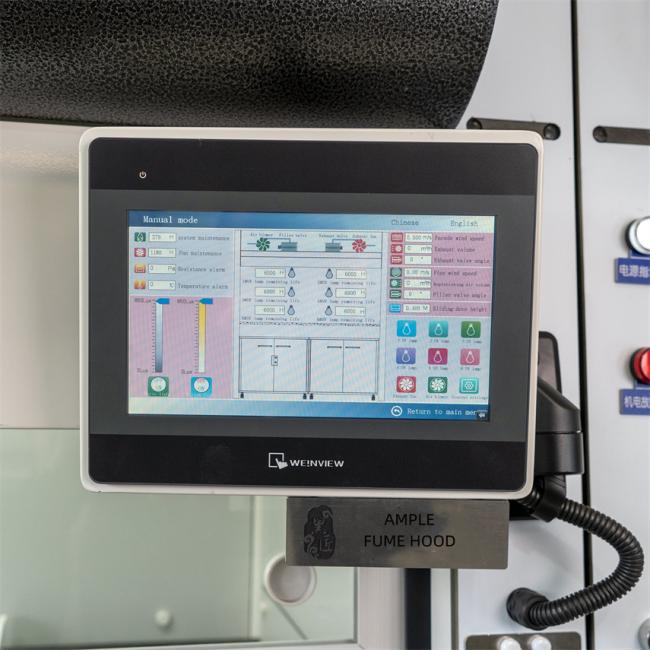
| Control System | Touch-Tone Control Panel (LED Screen) | |||||
| Input Power | 220V/32A | |||||
| Fan Power | Less than 2.8 A | |||||
| Socket Max. Load | 5KW | |||||
| Faucet | 1 Set | |||||
| Drainage Mode | Natural Fall | |||||
| Storage | Double-Lock, Corrosion-Resistant, Damp-proof, Multi-layer Solid Wood with Mobile Wheel | |||||
| Application | Indoor No-blast, 0-40 ºC | |||||
| Application Field | Organic Chemical Experiment | |||||
| Face Velocity Control | Manual Control | |||||
| Average Face Velocity | 0.3-0.5 m/s Exhaust: 720-1200m³/h | 0.3-0.5 m/s Exhaust:900- 1490m³/h | ||||
| Face Velocity Deviation | Less than 10% | |||||
| Average Illumination | Less than 500 Lux | |||||
| Noise | Within 55 dB | |||||
| Exhaust Air | No Residue | |||||
| Safety Test | In Accord with International Standard | |||||
| Resistance | Less than 70Pa | |||||
| Add Air Function | Distinctive Structure (Need Exclusive Add Air System) | |||||
| Air Flow Control Valve | Dia. 250mm Flange Type Anti-Corrosion Control Valve | Dia. 315mm Flange Type Anti-Corrosion Control Valve | ||||
Types Of Fume Hood Sashes
Tempered Glass
When tempered glass breaks, it shatters into tiny pieces with blunt corners. It can withstand radical changes in temperature up to 392 degrees F. Compared to ordinary glass, tempered glass can withstand an impact nearly five times as strong. This makes tempered glass a popular choice for fume hood sashes.
Applications in which higher thermal resistivity is required would typically need tempered glass as the fume hood sash material. For example, tempered glass would likely be the better material if there is a routine use of equipment that emits heat or a drying oven. If there is a risk of a fire in the fume hood, tempered glass would also offer greater protection.
Laminated Glass
Laminated glass is made using two pieces of float glass. In between these two layers is a layer of polyvinyl butyral (PVB). When an explosion occurs, this sandwich approach allows the broken glass pieces to stick to the PVB layer inside, rather than falling to the ground or flying through the air.
Applications in which there is a risk for an explosion would benefit the most from laminated glass since the glass will not shatter if an explosion occurs within the hood. However, it's important to note that tempered glass can be laminated as well, offering a higher level of protection that combines the best of both options.
Polycarbonate
If your laboratory regularly works with hydrofluoric acid, you may need a polycarbonate glass sash. Because hydrofluoric acid can damage standard glass over time, you may need to replace your sash more often. However, a polycarbonate sash is designed to protect the glass from this type of acid and give your fume hood sash a longer lifespan.
Typical applications that would use polycarbonate glass are ones in which hydrofluoric acid use is common, such as research laboratories, geology labs and facilities that perform semiconductor work.
• Hoods should be evaluated by the user before each use to ensure adequate face velocities and the absence of excessive turbulence.
• In case of exhaust system failure while using a hood, shut off all services and accessories and lower the sash completely. Leave the area immediately.• Fume hoods should be certified, at least annually, to ensure they are operating safely. Typical tests include face velocity measurements, smoke tests and tracer gas containment. Tracer gas containment tests are especially crucial, as studies have shown that face velocity is not a good predictor of fume hood leakage.
• Laboratory fume hoods are one of the most important used and abused hazard control devices. We should understand that the combined use of safety glasses, protective gloves, laboratory smocks, good safety practices, and laboratory fume hoods are very important elements in protecting us from a potentially hazardous exposure.
• Laboratory fume hoods only protect users when they are used properly and are working correctly. A fume hood is designed to protect the user and room occupants from exposure to vapors, aerosols, toxic materials, odorous, and other harmful substances. A secondary purpose is to serve as a protective shield when working with potentially explosive or highly reactive materials. This is accomplished by lowering the hood sash.
6 Questions to Ask When Buying a Fume Hood:
-Which chemicals will you use within the hood?
-Is a ducted or ductless hood best suited to your needs and available space?
-Where will you place the fume hood in the lab? Consider workflows, access to external exhaust systems, and competing air patterns.
-What size fume hood will best suit your needs? Be sure to consider what (if any) equipment will be enclosed in the hood.
-Are any service fixtures or accessories such as airflow monitors, electrical outlets, water, or gas fixtures required?
-Are base cabinets for acid, solvent, or non-chemical storage required?
Get in Touch
Have questions about our products or want to discuss a custom order? Our team is ready to help you.