
Red Rubber Intermittent Catheter 1-Way Rubber Urethral Catheter Tube
1. Material: it is made of red rubber. Red rubber catheters are latex-based and can be flexible, allowing for ease of insertion.
2. Type: It is described as a 1-Way catheter. This typically means it is designed for one-directional flow, assisting in draining urine from the bladder.
3. Urethral Catheter: This indicates that the catheter is designed to be inserted through the urethra into the bladder. Urethral catheters are commonly used for short-term or intermittent catheterization.
4. Single-Use: Red rubber catheters are typically designed for single-use, and they are disposed of after each catheterization to reduce the risk of infection.
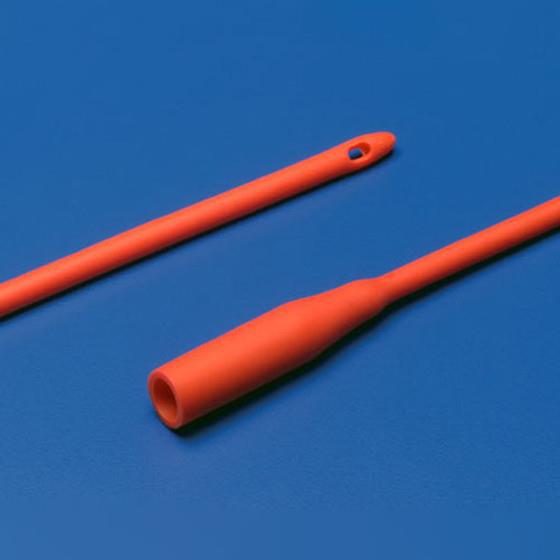
The red rubber catheter is x-ray opaque,soft, comfortable, and economical.It is made of red rubber latex instead of plastic,and this makes the red rubber catheter a bit more flexible, which some people prefer.It is thin and flexible tubing that allows urine to leave the body easily.
The soft rubber feeling for a smooth comfortable catheter insertion and removal through the urethra into bladder for urinary catheterization process.
Two opposing drainage eyes contains smooth openings that allow urine to pass through the tubing and empty into a receptacle or toilet.
Cat.NO. | Size(Fr/Ch) | Patient |
| SR12131106 | 6 | Pediatric |
| SR12131108 | 8 | Pediatric |
| SR12131110 | 10 | Pediatric |
| SR12131112 | 12 | Adult |
| SR12131114 | 14 | Adult |
| SR12131116 | 16 | Adult |
| SR12131118 | 18 | Adult |
| SR12131120 | 20 | Adult |
| SR12131122 | 22 | Adult |
| SR12131124 | 24 | Adult |

What is red rubber catheter?
Red rubber catheters are a type of intermittent catheter used to manage urinary retention. They function just like a straight catheter, except that they are made of red rubber latex instead of plastic. This makes the red rubber catheter a bit more flexible, which some people prefer.
Do red rubber catheters contain latex?
Due to the material, red rubber catheters are more flexible than other types of PVC catheters, but they do contain latex. If you have an allergy to latex, red rubber catheters should be avoided.
Which catheter is better silicone or latex?
Silicone is tissue friendly, hypoallergenic, and causes less irritation than latex. Patients with a known latex allergy should not be treated with a latex catheter. Silicone catheters are cuffed with sterile water for use up to 2 weeks; for longer term usage, glycerine solution should be used to avoid fluid diffusion.
Get in Touch
Have questions about our products or want to discuss a custom order? Our team is ready to help you.