
UNS S32205 / S31803 Duplex Stainless Steel Plate Sheet Thickness 1.0 - 80.0mm Custom Cutting
Price:
1800 - 3200 USD/Ton
MOQ:
500 kgs
Delivery Time:
5 - 12 days based on the quantity
Brand:
TISCO BAOSTEEL
Product Description
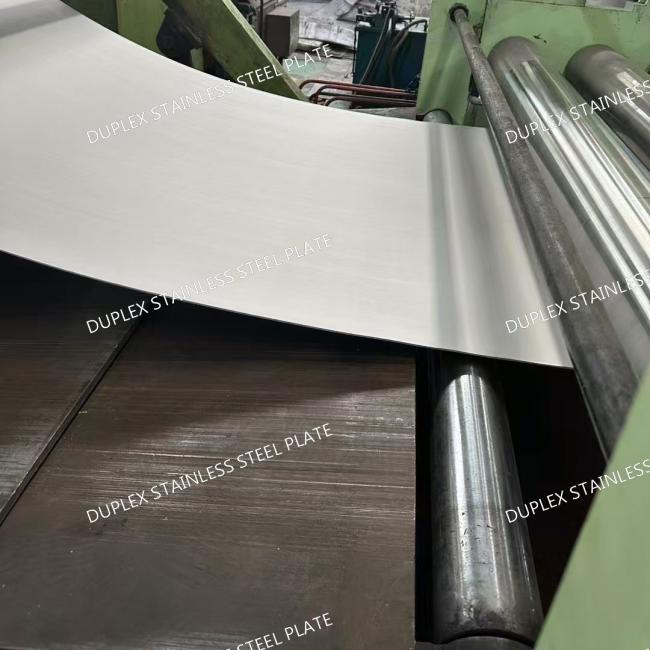
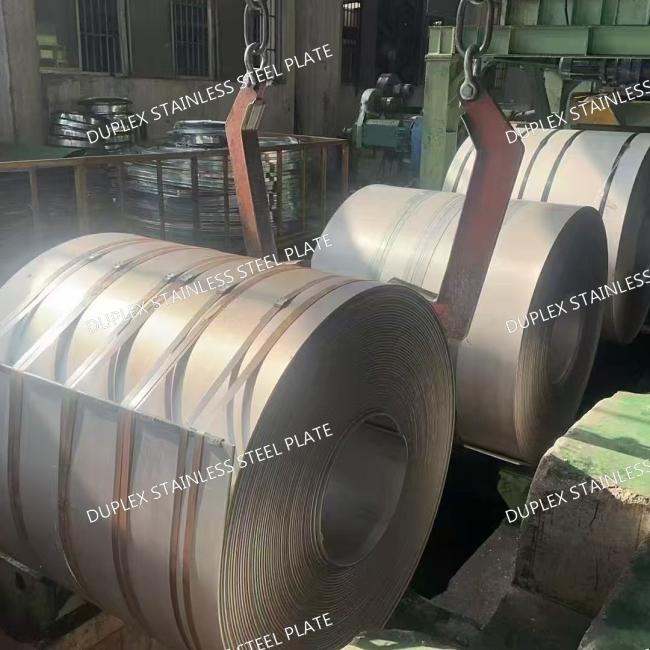
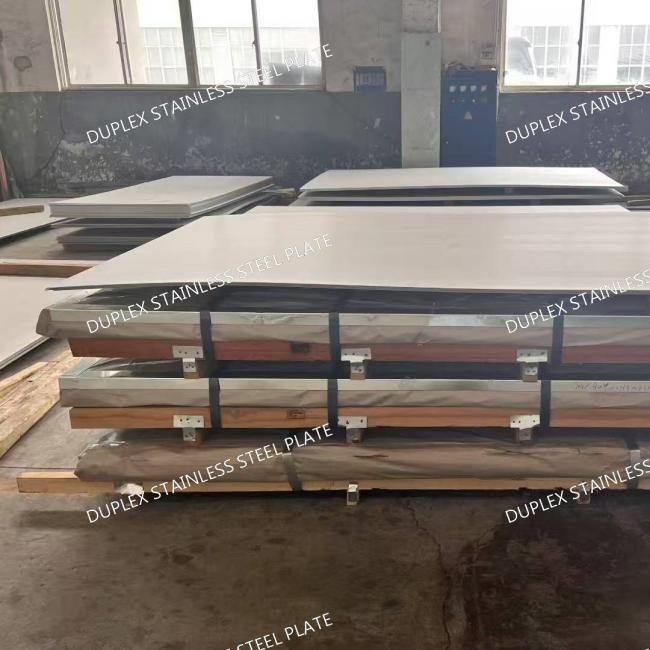
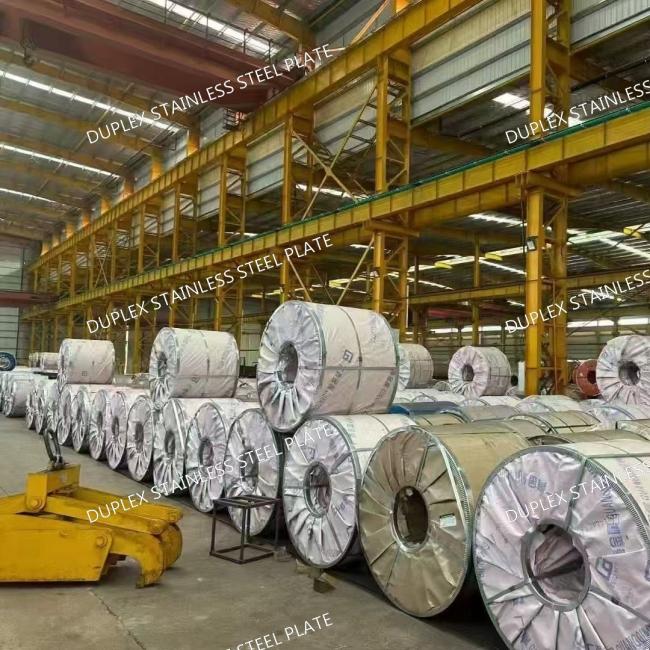
UNS S32205 / S31803 Duplex Stainless Steel Plate Sheet Thickness 1.0 - 80.0mm Custom Cutting
Products Specification
| Products Name | 2205 Duplex Stainless Steel Plate |
| Main Grades | Stainless Steel J1, J2, J4, 201, 202, 301, 304, 304H, 304L, 309, 309S, 310, 310S, 316, 316L, 316TI, 321, 321H, 347, 409, 410, 410S, 420, 430, 441, 904L,630,631,254SMO,253MA,2205,2507.etc |
| Thickness | 3.0 - 80.0mm |
| Width | 1250mm,1500mm ,1800mm,2000mm, or custom other size as request |
| Length | 2000mm, 2440mm, 3000mm, 5800mm, 6000mm, AS PER CUSTOMER’S REQUIREMENT |
| Type of Material | Laser Cutting |
| Form | Plate / coil |
| Test Certificate | Yes. |
| Finish | NO.1, 2B, 2D, 2H, 2R, No.4, HAIRLINE, SCOTCH BRITE, SATIN FINISH, NO.8, BA. |
| Brand | TISCO, LISCO,BAOSTEEL , POSCO, JISCO |
2205 Duplex Stainless Steel: A Technical Overview
2205 duplex stainless steel, designated as UNS S32205 (or S31803) in international standards, is a premium-grade alloy celebrated for its unique microstructure and robust performance in harsh environments. Unlike conventional stainless steels, its duplex structure—comprising roughly equal parts austenitic and ferritic phases—creates a synergistic blend of mechanical strength and corrosion resistance, making it a cornerstone in critical industrial applications.
Chemical Makeup and Microstructural Advantage
The alloy’s composition is engineered for balance:
- Chromium (Cr): 21–23% | Enhances passivity and resistance to general corrosion.
- Nickel (Ni): 4.5–6.5% | Stabilizes the austenitic phase for ductility and toughness.
- Molybdenum (Mo): 2.5–3.5% | Boosts resistance to pitting and crevice corrosion in chloride-rich media.
- Nitrogen (N): 0.08–0.20% | A key alloying element that strengthens the lattice, elevates yield strength, and further enhances corrosion resistance.
- Carbon (C): ≤0.03% | Minimizes carbide precipitation during welding, preserving ductility.
This composition yields a PREN (Pitting Resistance Equivalent Number) ≥ 34, far exceeding that of 316L (PREN ~ 24) and positioning it as a top choice for chloride-laden environments.
Mechanical Performance: Strength Meets Ductility
At room temperature, 2205 delivers:
- Tensile Strength: ≥ 650 MPa | Nearly double that of 304 stainless steel.
- Yield Strength: ≥ 450 MPa | Enables thinner material designs without compromising structural integrity.
- Elongation: ≥ 25% | Maintains formability for complex fabrications.
- Impact Toughness: ≥ 100 J at 0°C | Resists brittle failure in low-temperature applications.
Its dual-phase microstructure mitigates the risk of strain hardening during cold working, though annealing may be needed for severe deformations to restore ductility.
Corrosion Resistance: Tackling Aggressive Media
-
Pitting & Crevice Corrosion:
- Superior in seawater, brine, and acidic solutions due to high Mo and N content.
- Outperforms austenitic steels in stagnant or oxygen-deprived environments (e.g., heat exchangers with poor flow).
-
Stress Corrosion Cracking (SCC):
- Resistant to chloride-induced SCC, a common failure mode in 300-series steels. This makes it suitable for offshore oil rigs, desalination plants, and chemical reactors.
-
Oxidative & Reductive Environments:
- Stable in dilute sulfuric acid, phosphoric acid, and alkaline solutions, though concentrated acids may require higher-alloyed grades.
Fabrication and Welding Considerations
- Hot Working: Perform at 1050–1200°C to avoid phase imbalance; rapid cooling post-forming preserves the duplex structure.
- Cold Working: Feasible for sheets and tubes, but heavy deformation (e.g., deep drawing) may necessitate solution annealing at 1020–1100°C to prevent embrittlement.
- Welding:
- Use filler metals like ER2209 (matching composition) to maintain phase balance.
- Control heat input to < 1.5 kJ/mm to avoid excessive ferrite formation, which can reduce toughness.
- Post-weld cooling should be rapid (e.g., water quenching for thin sections) to prevent sigma phase precipitation.
Industrial Applications: Where Performance Matters
-
Oil & Gas:
- Subsea pipelines, wellheads, and valves in high-salinity, H₂S-rich environments.
- Offshore platforms exposed to seawater and atmospheric corrosion.
-
Marine Engineering:
- Ship hulls, propellers, and seawater handling systems (e.g., desalination plants).
- Coastal structures enduring salt spray and tidal immersion.
-
Chemical Processing:
- Reactors for organic acids, chlorinated solvents, and petrochemical intermediates.
- Heat exchangers in pharmaceutical and food-grade applications.
-
Energy Sector:
- Wet flue gas desulfurization (WFGD) systems in power plants.
- Nuclear waste storage components requiring long-term corrosion resistance.
International Standards and Certification
- ASTM A240/A240M | Specifies plate, sheet, and strip.
- EN 10216-5 | Covers seamless tubes for pressure purposes.
- ASME SA-240 | Valid for boiler and pressure vessel applications.
- NACE MR0175 | Certified for use in sour gas environments (H₂S ≤ 3.5%).
Comparative Edge: Why Choose 2205 Over Other Alloys?
| Property | 2205 Duplex | 316L Austenitic | 430 Ferritic |
|---|---|---|---|
| Yield Strength (MPa) | ≥ 450 | ≥ 170 | ≥ 205 |
| PREN Value | ≥ 34 | ~ 24 | ~ 19 |
| SCC Resistance (Cl⁻) | Excellent | Moderate | Limited |
| Cost-Effectiveness | Higher than 316L | Lower than 2507 | Lowest |
2205 strikes a unique balance: it costs less than higher-alloyed duplexes (e.g., 2507) while outperforming austenitic steels in strength and corrosion resistance. This makes it a strategic choice for projects where longevity, weight reduction, and cost-efficiency are critical.
Similar Products
Get in Touch
Have questions about our products or want to discuss a custom order? Our team is ready to help you.
Company
JIANGSU MITTEL STEEL INDUSTRIAL LIMITED
Location
No.283-1, Youyi Middle Road, Xishan District, Wuxi City, Jiangsu Province
Contact Person
Gao Ben