
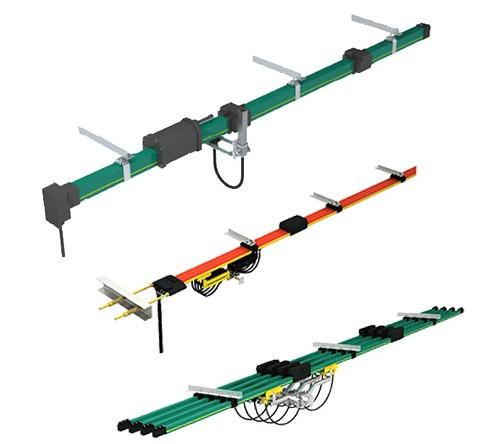
Electric Overhead Conductor Rail System Steel 4 Pole 35a-140a No Seam

Bus bars can be manufactured using various processes, depending on the desired shape, size, and material:
-
Extrusion: Extrusion is a common manufacturing process for producing bus bars with a uniform cross-sectional shape. The material is forced through a die to obtain the desired profile. Extruded bus bars can have complex shapes, such as rectangular or hexagonal.
-
Punching and Bending: Punching and bending techniques are used to fabricate bus bars from sheet metal. The desired shape is punched or cut out from a metal sheet, and then it is bent to the required angle or form.
-
Casting: Casting is used for manufacturing bus bars with intricate shapes or larger sizes. Molten metal is poured into a mold and allowed to solidify, resulting in a bus bar with the desired configuration.
-
Laminating: Laminating involves stacking multiple thin layers of conductive material, usually copper or aluminum, with insulating layers in between. The layers are then bonded together under heat and pressure to form a composite bus bar.
The manufacturing process chosen depends on factors such as the complexity of the design, the required volume, and the material being used.
|
Product name:
|
HIGH-TRO-REEL SYSTEMS DHB
|
|
Product number:
|
DHB-3-10/50
|
|
product material:
|
PVC+copper
|
|
Minimum quantity of product:
|
1m
|



Get in Touch
Have questions about our products or want to discuss a custom order? Our team is ready to help you.