
Water Atomized Ferrous Bulk Iron Powder For PM Metallurgy Parts
Water Atomized Iron Powder: A Cost-Effective Solution for PM Powder Metallurgy Parts
In the ever-evolving world of powder metallurgy (PM), water atomized iron powder offers a budget-friendly alternative for producing high-quality PM parts while maintaining excellent performance characteristics.
Water atomized iron powder is produced by dispersing molten iron into fine droplets using high-pressure water jets. This process results in irregularly shaped particles with a high surface area, ideal for various powder metallurgy applications.
- Cost-Effectiveness: Significantly cheaper than gas atomized alternatives while maintaining quality
- High Purity and Density: Excellent compressibility and strength for dense, durable PM parts
- Versatility: Suitable for automotive, aerospace, and medical applications with various alloying elements
Extensively used in sintered parts production for industries requiring intricate designs and robust components, including automotive, aerospace, and medical sectors.
- Water Atomization: Cost-effective method using water jets, producing irregular particles suitable for large-scale production
- Gas Atomization: Uses inert gases to form spherical particles with better flowability at higher cost
- Flowability: Gas atomized powders offer superior flowability due to spherical shape
- Density and Strength: Both achieve high densities, with water atomized powders sometimes requiring additional processing
| Property | Iron-Based Alloy Powders | Stainless Steel (316L) | Nickel Alloys (Inconel 625) | Titanium (Ti-6Al-4V) |
|---|---|---|---|---|
| Density (g/cm³) | 7.4-7.9 (varies by alloy) | 7.9 | 8.4 | 4.4 |
| Hardness (HRC) | 20-65 (depends on heat treatment) | 25-35 | 20-40 (annealed) | 36-40 |
| Tensile Strength (MPa) | 300-1,500+ | 500-700 | 900-1,200 | 900-1,100 |
| Corrosion Resistance | Moderate (improves with Cr/Ni) | Excellent | Excellent | Excellent |
| Max Operating Temp. (°C) | 500-1,200 (alloy-dependent) | 800 | 1,000+ | 600 |
| Cost (vs. Pure Fe = 1x) | 1x-5x (alloy-dependent) | 3x-5x | 10x-20x | 20x-30x |
| Grade | C | Si | Cr | Ni | Mn | Mo | Cu | W | V | Fe |
|---|---|---|---|---|---|---|---|---|---|---|
| 316L | 16.0-18.0 | 10.0-14.0 | 2.0-3.0 | - | - | - | Bal. |
| Particle Size | Tapping Density (g/cm³) | Particle Size Distribution (μm) |
|---|---|---|
| D50:12um | >4.8 | D10: 3.6-5.0 | D50: 11.5-13.5 | D90: 22-26 |
| D50:11um | >4.8 | D10: 3.0-4.5 | D50: 10.5-11.5 | D90: 19-23 |
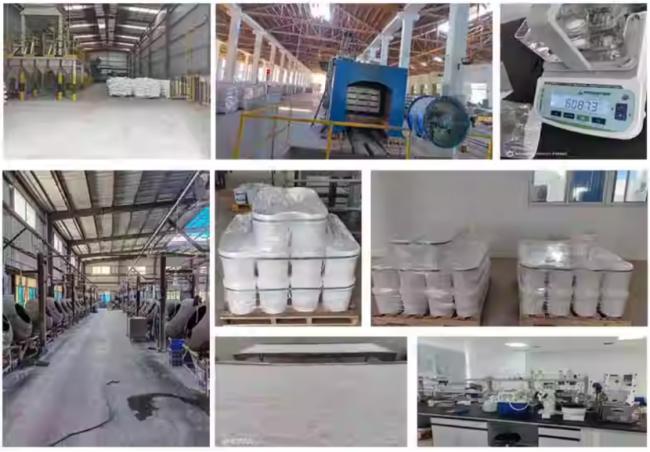

Ship to Poland


Ship to Germany


- Common grades include 316L (excellent corrosion resistance), 17-4 PH (high strength and hardness), 304L (general-purpose use), and 420 (wear resistance)
- The particle size typically ranges from 15 to 45 micrometers (µm), with spherical particles preferred for better flowability and packing density
- Yes, unused powder can often be recycled by sieving and blending with fresh powder, though excessive reuse can degrade quality
- Use gloves, masks, and protective clothing to avoid inhalation or skin contact
- Store in dry, airtight containers to prevent moisture absorption
- Handle in well-ventilated areas or under inert gas to minimize explosion risks
Get in Touch
Have questions about our products or want to discuss a custom order? Our team is ready to help you.