
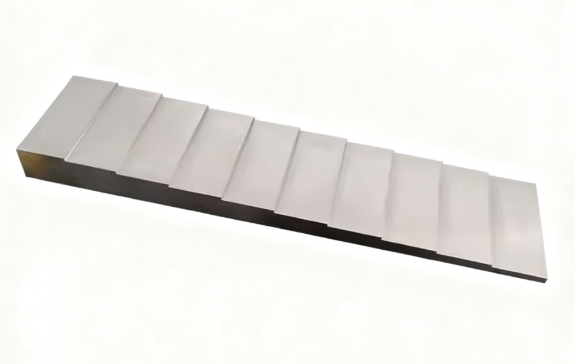
Ray-Check Step Wedges (Blocks) Radiographic Step For Test Block 80x150 (Trial Version) For X-Ray Backing Plate And Radiographic Curve Production
I. Dimensions
External dimensions: 330 mm × 100 mm (or 110 mm) × 22 mm
Steps: 4–22 mm (10 steps) are common, with variations such as 3–22 mm and 7 steps available, with thickness differences varying by 1–3 mm per step.
Backing plate: 20 mm thick, the same width as the test block, for covering a wider thickness range in a single scan.
Material: 45# carbon steel is the most common, but aluminum alloy, titanium, stainless steel, nickel, and other materials can also be customized to match the inspected workpiece material.
II. Core Applications
- Creating X-ray exposure curves—finding the tube voltage/current/time combinations that correspond to different thicknesses.
- Verifying equipment penetration capability and instantaneous penetration thickness.
- Evaluating film contrast and blackness range, and checking image quality meter sensitivity for compliance.
- On-site process re-verification—Using step film to quickly verify parameters after changing the machine, tube, film, or magnetic suspension.
III. Implementation Standards
- International: ASTM E94, ISO 17636 series
- Thickness tolerance: ±0.05 mm
- Length and width tolerance: ±0.1 mm
- Ra ≤ 6.3 µm (working surface)
IV. Daily Use and Maintenance
Visually inspect before each exposure. Discontinue use if rust, scratches, burrs, or deformation are detected.
Keep dry. After exposure, promptly remove developer/water stains and apply a thin layer of anti-rust oil.
Record this along with the image quality meter and densitometer as part of the "Process Verification Three-Piece Set" in the usage log.
Preemptively scrap/replace the device if:
- Actual thickness measurement exceeds tolerance (>±0.05 mm)
- Working surface flatness >0.05 mm
- Rust or scratches causing distortion in black contrast
Get in Touch
Have questions about our products or want to discuss a custom order? Our team is ready to help you.