
0-12pH Analog Glass pH Electrode Sensor for Hydrofluoric Acid Environments up to 4000ppm and 100℃ Temperature Range
| Parameter | Specification |
|---|---|
| pH Range | 0-12pH |
| pH Zero Point | 7.00±0.25 |
| Hydrofluoric Acid Concentration | ≤4000ppm |
| Temperature Range | 0-100℃ |
| Pressure Resistance | 0-0.6MPa |
| Membrane Resistance | <800MΩ |
| Reference System | Ag/AgCL |
| Liquid Junction | Porous Ceramic |
| Double Salt Bridge System | Yes |
| Cable Length | 5m standard (customizable) |
This specialized glass pH electrode operates on the Nernst equation principle, utilizing a galvanic cell system that converts chemical reaction energy into measurable electrical potential. Designed specifically for hydrofluoric acid environments up to 4000ppm concentration, the sensor features a robust double salt bridge system and porous ceramic liquid junction for reliable performance in demanding industrial applications.
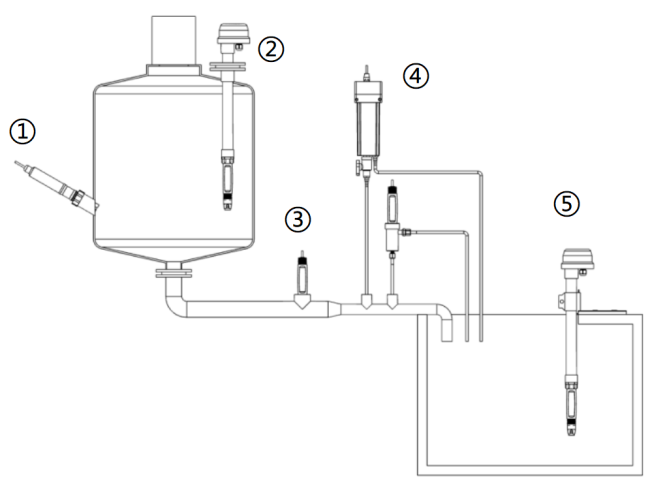
- Sidewall Installation: Ensure interface tilt angle exceeds 15 degrees
- Top Flange Installation: Note flange dimensions and electrode insertion depth
- Pipe Installation: Consider pipe diameter, flow velocity, and pressure requirements
- Flow-Through Installation: Monitor flow velocity and pressure conditions
- Submersion Installation: Adjust bracket length according to application needs
- Before use, unscrew protective cap and immerse electrode bulb and liquid junction in sample
- Rinse with water if salt crystals form near electrode tip
- Check for air bubbles in glass bulb by shaking electrode vertically
- Keep glass membrane hydrated for optimal response time
- Store with 3 mol/L KCl solution in protective cap
- Clean aged electrodes with 10% HCl solution for cloudy membranes or deposits
- Regularly clean and calibrate electrode for consistent performance
With proper maintenance, electrodes typically last over 12 months in normal conditions. Unused electrodes maintain a shelf life of 12-24 months when stored properly. Exposure to strong acids, bases, high temperatures, or corrosive liquids may reduce operational lifespan.
- Use fresh pH/ORP standard buffer solutions of appropriate concentrations
- Remove protective cap and rinse electrode with distilled water
- Set instrument to calibration mode according to manufacturer instructions
- After calibration, proceed with actual sample measurements
Get in Touch
Have questions about our products or want to discuss a custom order? Our team is ready to help you.