
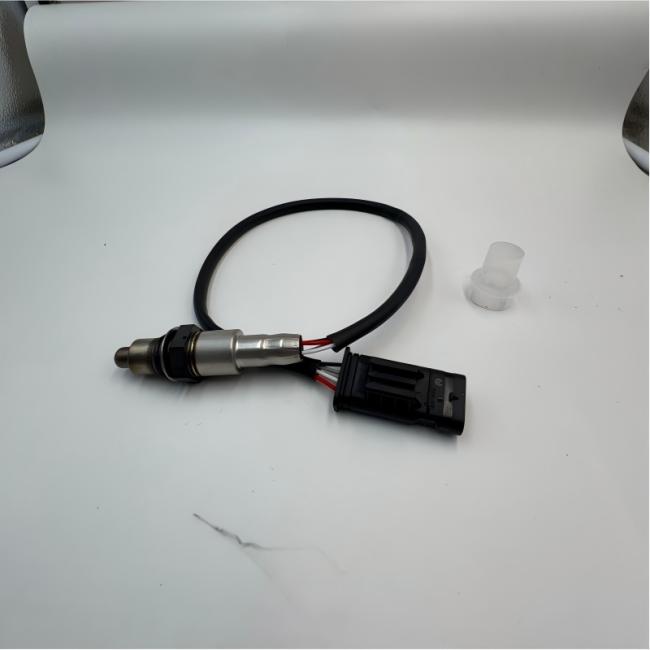
13628589104 Car Oxygen Sensor For BMW 1series 2series 3series 4series 6series 7series / MINI Hatch Convertible Clubman Countryman
13628589104 Car Oxygen Sensor For BMW MINI
| Specification | Details |
|---|---|
| Product Type | Lambda Sensor (Oxygen / O2 Sensor) |
| OE Part Number | 13628589104 |
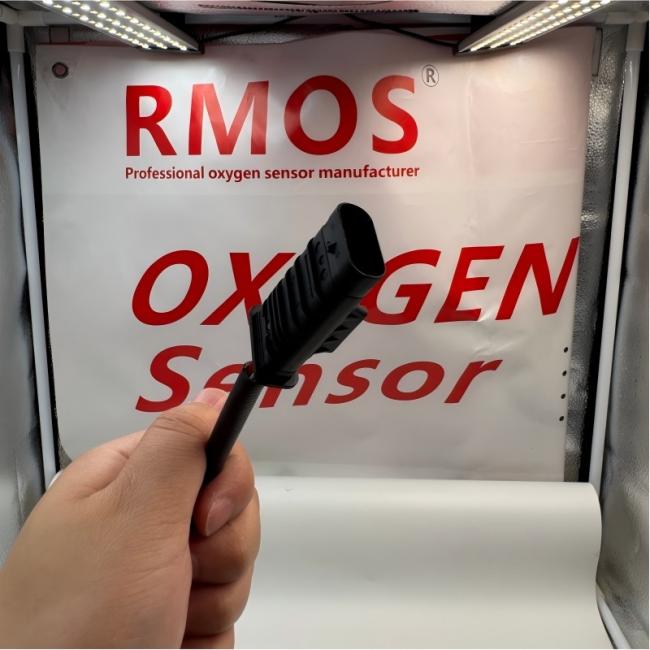
| Number of Wires | 4 |
| Cable Length | 471 - 600 mm (depending on manufacturer) |
| Connector Shape | Oval |
| Housing Colour | Black |
| Type | Heated, Direct-Fit |
| Function | Exhaust Gas Monitoring / Diagnostic Probe |
| Fitting Position | After Catalytic Converter (Downstream) |
Technical Notes:
-
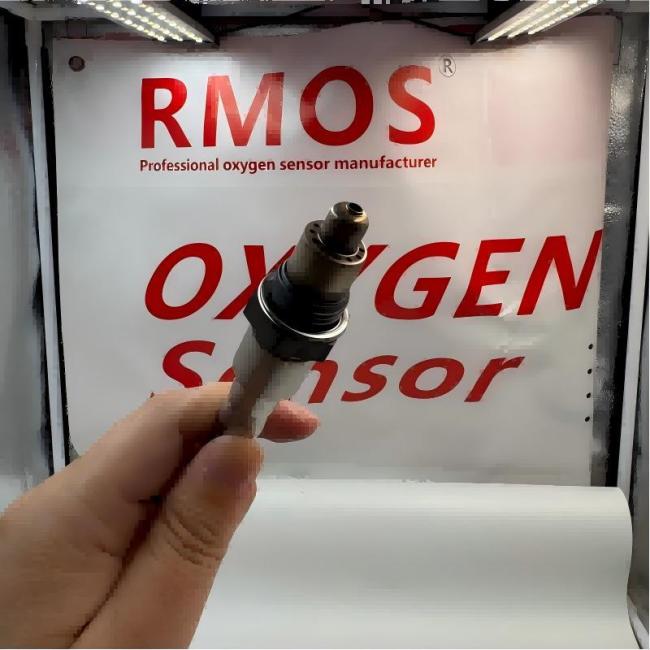
This is a 4-wire heated oxygen sensor, commonly referred to as a "diagnostic probe" in BMW applications
-
Designed to monitor catalytic converter efficiency by measuring oxygen content after the catalyst
-
The centre ceramic element is composed of Zirconium Oxide, Alumina, and Yttrium Oxide, with a platinum coating applied using vapour deposition
-
A spinel coating on the outer platinum layer prevents damage from solid exhaust particles
This Lambda Sensor replaces the following Original Equipment Manufacturer (OEM) and interchange part numbers. Check your old sensor to confirm a match:
| Type | Part Number(s) |
|---|---|
| BMW OEM Numbers | 13628589104, 13628573760, 13628593852, 13628572800, 13628570689, 13628595102, 858910401 |
| Interchange / Aftermarket Numbers | 0281004651, 0281004432 |
| Alternative References | 64918 (Intermotor), LLB1065 (Lemark), LEB5539 (Lucas), VE381842 (Cambiare), KNL1117 (Kerr Nelson), LB2740 (Fuel Parts), 81925 (Meat & Doria) |
This Lambda Sensor is exclusively used in BMW Group vehicles, including BMW and MINI models, as well as certain Land Rover vehicles. It is designed for 4-cylinder diesel engine applications with B47 or N47 engine codes and is typically fitted in the post-catalyst (downstream) position.
1 Series (F20 / F21 LCI)
| Model | Year Range | Engine Code |
|---|---|---|
| 114d | 2014 - 2017 | Diesel |
| 116d | 2014 - 2017 | B47 / N47 |
| 118d | 2014 - 2017 | B47 / N47 |
| 120d | 2014 - 2017 | B47 |
| 125d | 2014 - 2017 | B47 |
2 Series
| Model | Chassis | Year Range |
|---|---|---|
| 218d | F22 / F23 | 2013 - 2017 |
| 220d | F22 / F23 | 2013 - 2017 |
| 225d | F22 / F23 | 2014 - 2017 |
| Active Tourer | F45 | 2013 - Present |
| Gran Tourer | F46 | 2014 - Present |
3 Series
| Model | Chassis | Year Range |
|---|---|---|
| 316d | F30 / F31 / F34 | 2014 - 2016 |
| 318d | F30 / F31 / F34 | 2014 - 2016 |
| 320d | F30 / F31 / F34 | 2014 - 2017 |
| 325d | F30 / F31 / F34 | 2014 - 2016 |
4 Series
| Model | Chassis | Year Range |
|---|---|---|
| 418d | F32 / F33 / F36 | 2014 - 2017 |
| 420d | F32 / F33 / F36 | 2014 - 2017 |
| 425d | F32 / F33 / F36 | 2014 - 2017 |
5 Series
| Model | Chassis | Year Range | Engine |
|---|---|---|---|
| 518d | F10 / F11 | 2013 - 2017 | N47 |
| 520d | F10 / F11 | 2013 - 2017 | B47 D20 A / N47 D20 C |
| 520d | G30 / G31 | 2015 - Present | B47 |
X Series
| Model | Chassis | Year Range |
|---|---|---|
| X1 | F48 | 2014 - Present |
| X2 | F39 | 2016 - Present |
| X3 | F25 | 2013 - 2017 |
| X3 | G01 | 2016 - Present |
| X4 | F26 | 2013 - Present |
Other BMW Models
| Model | Chassis | Year Range |
|---|---|---|
| 6 Series Gran Turismo | G32 | 2016 - Present |
| 7 Series | G11 | 2014 - Present |
| Model | Chassis | Year Range |
|---|---|---|
| MINI Hatch (3-Door) | F55 | 2013 - Present |
| MINI Hatch (5-Door) | F56 | 2013 - Present |
| MINI Convertible | F57 | 2014 - Present |
| MINI Clubman | F54 | 2014 - Present |
| MINI Countryman | F60 | 2015 - Present |
MINI Engine compatibility: Cooper D / Cooper SD diesel variants
| Model | Notes |
|---|---|
| Selected Land Rover models | Cross-references with OEM numbers 13628570689, 858910401 |
Consider replacing your Lambda Sensor if you experience any of the following:
Performance-Related Symptoms:
-
Illuminated Check Engine Light – OBD-II fault codes related to oxygen sensor circuit or catalyst efficiency (e.g., P0420, P0130-P0167 range)
-
Incorrect Mixture Control – The engine ECU receives inaccurate data, leading to improper fuel trim adjustments
-
Poor Driveability – Hesitation, stumbling, or lack of power during acceleration
Exhaust & Emissions Symptoms:
-
High Emissions – Failed emissions test due to incorrect combustion
-
Failed Catalytic Converter Efficiency – As a downstream sensor, failure may incorrectly report converter performance
-
Increased Fuel Consumption – The ECU may default to rich mixture settings
Potential causes of sensor failure:
-
Contamination – Oil, coolant, or silicone sealants can damage the sensing element
-
Heater Failure – Electrical failure of the internal heating circuit
-
Impact Damage – Physical damage from road debris or improper handling during installation
-
Normal wear and tear over mileage
1. Confirm Fitment Before Purchasing
-
This is a direct-fit sensor exclusively for BMW Group vehicles (BMW, MINI) with specific 4-pin oval connector
-
Verify that your vehicle has a B47 or N47 diesel engine – this sensor is NOT for petrol/gasoline engines
-
This sensor is typically positioned after the catalytic converter (downstream)
-
Always cross-reference your old sensor's part number and connector shape before ordering
-
Physical inspection of your original sensor is strongly recommended
2. Engine Code Verification
-
Compatible engine codes: B47 D20 A, N47 D20 C
-
Power outputs: 120KW (163HP), 140KW (190HP), 151KW (205HP), 155KW (211HP)
-
Not compatible with 6-cylinder diesel engines (e.g., 530d) or petrol engines
3. Position in Exhaust System (Upstream vs. Downstream)
-
This part (13628589104) functions as a post-catalyst diagnostic probe (downstream) for diesel applications
-
Do not confuse with pre-catalyst sensors – different part numbers apply for upstream positions
-
Verify the location of your old sensor before ordering
4. Installation Tips
-
Allow the exhaust system to cool completely before removal to avoid burns and prevent thread damage
-
Use an O2 sensor socket (22mm or 7/8") to prevent stripping the sensor during removal/installation
-
Apply anti-seize compound to the threads of the new sensor (avoiding the sensor tip) to prevent seizing in the exhaust bung
-
Do not use silicone sealants near the exhaust system – silicone contamination will destroy the sensor
-
Avoid touching the sensor tip – oils from your skin can contaminate the sensing element
-
Do not drop the sensor – the ceramic element can crack upon impact
-
Tighten to the correct torque – Typically 40-50 Nm (30-37 ft-lb)
5. Replacement Interval
-
Lambda sensors degrade over time, often without triggering immediate fault codes
-
Replacement every 100,000 miles (160,000 km) is recommended to maintain:
-
Optimal fuel efficiency
-
Catalytic converter health and longevity
-
Lower emissions output
-
6. Professional Installation Recommended
-
While this is a direct-fit part, professional installation is recommended if you are not experienced with automotive exhaust systems
-
After replacement, the ECU may need to be reset or adaption values cleared using diagnostic equipment
-
Improper installation can lead to:
-
Exhaust leaks around the sensor bung
-
Cross-threaded or damaged exhaust threads
-
Sensor damage from contamination or mishandling
-
Wiring damage from contact with hot exhaust components
-
7. Required Tools
-
O2 sensor socket (22mm / 7/8") or deep offset wrench
-
Ratchet and extension bar (for access)
-
Anti-seize compound (if not pre-applied)
-
Jack and jack stands (if under-vehicle access requires lifting)
-
OBD-II scanner (to clear fault codes and verify operation after replacement)
8. Warranty
-
Quality aftermarket Lambda Sensors may come with warranty periods (e.g., Lifetime Warranty from certain brands)
-
Check with your specific retailer for their warranty terms and return policy
-
Important: Many warranties are voided if the sensor tip shows contamination from improper handling
Get in Touch
Have questions about our products or want to discuss a custom order? Our team is ready to help you.