
Z60118861A Car Oxygen Sensor For MAZDA 3BK Axela Mazdaspeed Axela 323 323F MPV II MX-5 I MX-5 II MX-5 III
Z60118861A Car Oxygen Sensor
| Specification | Details |
|---|---|
| Product Type | Lambda Sensor (Oxygen / O2 Sensor) |
| OE Part Number | Z60118861A |
| Alternative OE Format | Z601-18-861A, Z601 18861 A |
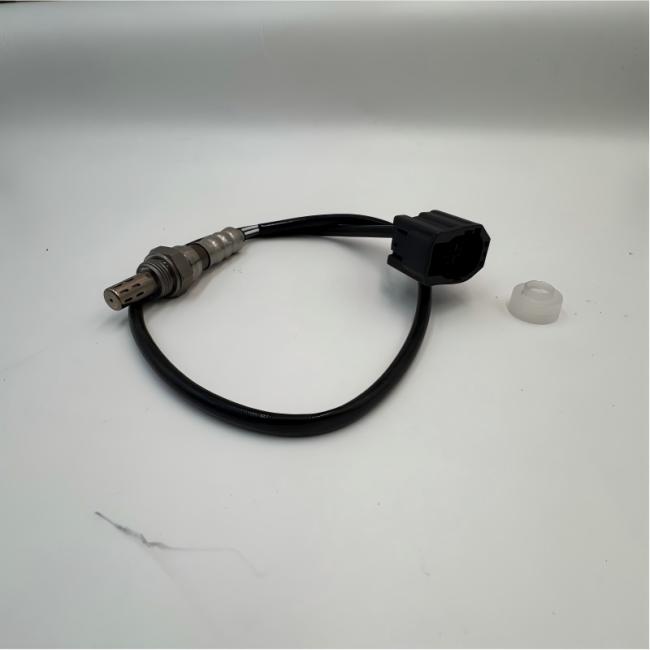
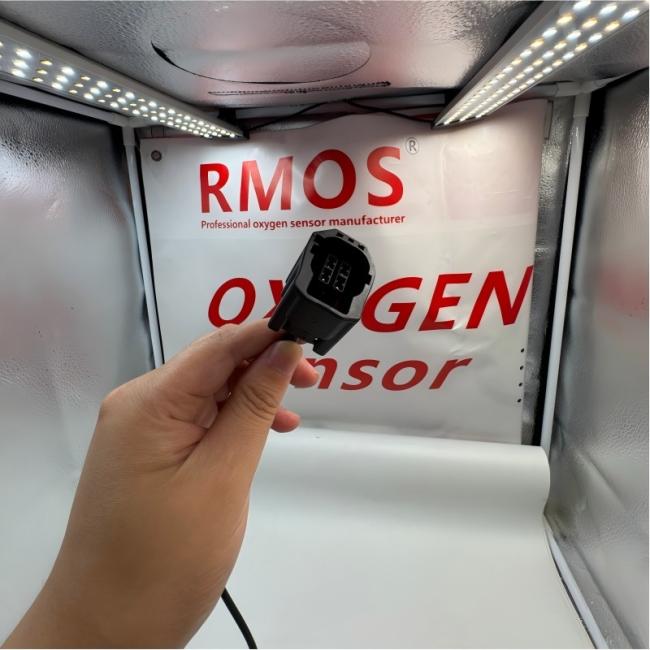
| Number of Pins / Wires | 4-pin connector |
| Cable Length | Approx. 590 mm |
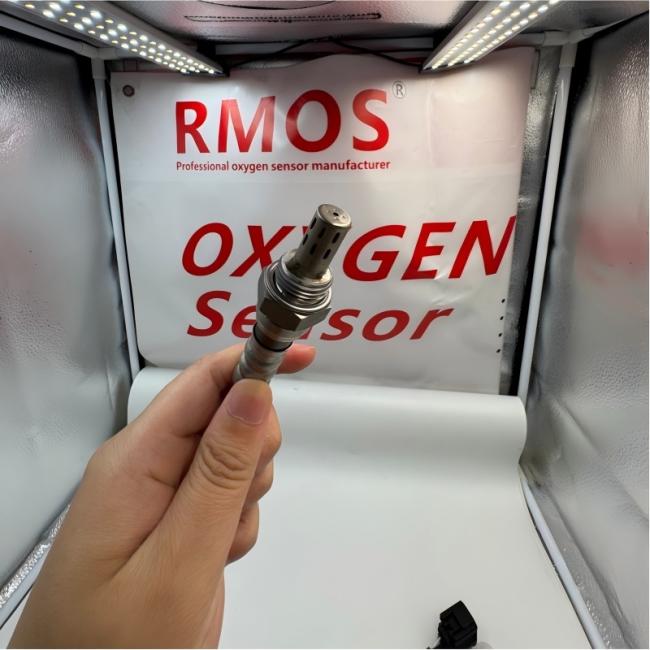
| Thread Size | M18 × 1.5 |
| Spanner Size | 22 mm (7/8") |
| Sensor Type | Heated switching-type oxygen sensor |
| Fitting Position | Before catalytic converter (Upstream / Pre-Catalyst) |
| Thread Treatment | Pre-greased with anti-seize compound |
Technical Notes:
-
This is a 4-wire heated zirconium oxide oxygen sensor, designed as a "regulating sensor" for precise air-fuel mixture control.
-
The heating element allows the sensor to reach operating temperature quickly, enabling the ECU to enter closed-loop fuel control sooner and reduce cold-start emissions.
-
The sensor measures oxygen concentration in exhaust gases and sends voltage signals to the ECU for air-fuel ratio optimisation.
-
For zirconium-type sensors, output voltage is approximately 0.6–1.0 V under rich conditions, and near 0 V under lean conditions.
-
Fitting position: Pre-catalyst (upstream / before catalytic converter). This is the primary regulating sensor that directly influences fuel trim adjustments.
This Lambda Sensor replaces the following Original Equipment Manufacturer (OEM) and interchange part numbers. Check your old sensor to confirm a match:
| Type | Part Number(s) |
|---|---|
| MAZDA OEM Numbers | Z60118861A, Z601-18-861A, Z601 18861 A, Z60118861B, Z6T118861, BP6L18861, BP6J18861B, L33618861, AJ5118861, BP6F18861B, AJ9518861, AJ5518861, AJD618861, ZM0318861A, FS7N18861 |
| Aftermarket / Interchange Numbers | DOX-0331, DOX-0113, ADM57016, VE381350, XLOS2004, ES1112212B1, OSZ439P, 25024904, 920049808, LS140118, 94192, 09SKV740, J1463017, 0893109, 884550008, WG1498324, WG1461304, WG1407644, 77593, 81627, 90239, ADM57016, 600000040370, 2000039SX, B42478, 90076, 7481701, WG1013988, WG1028923, 81701, EOS4502, OXY465059, 0258986507, 920047004, 920048186, 920048202, 920048694, 920048696, 920048782, 920048882, 920048950, 920049062, 920049148, 920049154, 920049254 |
Cross-Reference Notes:
-
DOX-0331 and DOX-0113 are widely recognised aftermarket interchange numbers for this OE fitment.
-
ADM57016 is another common aftermarket reference used by multiple suppliers.
-
Always verify physical fitment before purchasing, as aftermarket interchange numbers may vary slightly by manufacturer.
This Lambda Sensor is exclusively used in MAZDA vehicles, primarily the Mazda3 (BK platform) with 4-cylinder petrol engines. It functions as the upstream (pre-catalyst / front) oxygen sensor.
| Make | Model | Chassis / Generation | Year Range | Engine / Notes |
|---|---|---|---|---|
| MAZDA | 3 (BK) | Saloon / Hatchback | 2003 – 2009 | Upstream position (pre-catalyst) |
| MAZDA | 3 (BK) | 2004 – 2009 | 1.4L (2004-2009) | |
| MAZDA | 3 (BK) | BK12 / BK14 | 2004 – 2009 | 1.6L (77 kW / 105 HP / 1598 cc) |
| MAZDA | 3 (BK) | 2004 – 2009 | 2.0L (2004-2009) | |
| MAZDA | 3 (BK) | 2004 – 2009 | 2.3L (2004-2009) | |
| MAZDA | 3 (BK) | BK14 | 2003 – 2009 | 1.3L (62 kW / 84 HP / 1349 cc) |
| MAZDA | Axela | BK5P (Japan) | Apr 2004 – | ZY-VE engine / Right-hand drive |
| MAZDA | Mazdaspeed Axela | BK3P (Japan) | Sep 2003 – | L3-VDT engine / Right-hand drive |
Detailed Fitment Notes:
MAZDA 3 BK (2003–2009) – Petrol Engines
| Engine Displacement | Engine Code | Power Output | Production Period |
|---|---|---|---|
| 1.3L | — | 62 kW / 84 HP | 2003 – 2009 |
| 1.4L | — | — | 2004 – 2009 |
| 1.6L | — | 77 kW / 105 HP / 1598 cc | 2004 – 2009 |
| 2.0L | — | — | 2004 – 2009 |
| 2.3L | — | — | 2004 – 2009 |
Japanese Domestic Market (JDM) Fitments:
-
MAZDA Axela BK5P – Manufactured from April 2004, ZY-VE engine, right-hand drive.
-
MAZDA Mazdaspeed Axela BK3P – Manufactured from September 2003, L3-VDT engine, right-hand drive.
Additional MAZDA Fitments (from cross-reference sources):
| Model | Notes |
|---|---|
| 323 / 323F | Various petrol engine variants |
| MPV II (LW) | 1999–2006, 3.0L V6 |
| MX-5 I (NA) | 1989–1998, 1.6L / 1.8L |
| MX-5 II (NB) | 1998–2005, 1.8L |
| MX-5 III (NC) | 2005–2014, 2.0L |
| XEDOS-6 | Various |
| Bongo / Bongo Strong | Various |
Fitment Verification:
-
This sensor is designed as an upstream (pre-catalyst / front) oxygen sensor for MAZDA 4-cylinder petrol engines.
-
Compatible with MAZDA 3 BK (first generation Mazda3) manufactured between 2003 and 2009.
-
Engine codes include: ZY-VE, L3-VDT (JDM models).
-
Not compatible with diesel engines or post-facelift models that use different oxygen sensor configurations.
-
Always confirm your specific model year, production date, and engine code before ordering.
Lambda sensors degrade over time due to continuous exposure to high exhaust temperatures and combustion byproducts. When this sensor fails, the ECU can no longer accurately monitor the air-fuel ratio, leading to various performance issues.
Consider replacing your Lambda Sensor if you experience any of the following:
Check Engine Light (MIL) Illumination
-
Check Engine Light illuminates on the dashboard – often the first and most obvious symptom.
-
OBD-II fault codes related to oxygen sensor circuits or heater circuit malfunctions:
-
P0130–P0167 series (O2 Sensor Circuit Malfunction – Bank 1)
-
P0030–P0037 series (Heater Circuit Malfunction – Bank 1)
-
P0420 / P0430 (Catalyst System Efficiency Below Threshold)
-
P0133 / P0155 (O2 Sensor Slow Response)
-
P0037 (Heated Oxygen Sensor Circuit Fault – Downstream)
-
Performance & Driveability Issues
-
Increased fuel consumption – A failing sensor can increase fuel consumption by 10% – 40%, as the ECU defaults to preset rich parameters when it cannot receive accurate readings.
-
Poor acceleration or hesitation – The engine may struggle or hesitate during acceleration, especially under load.
-
Rough idle or stalling – Unstable engine operation at low speeds; idle speed may fluctuate or the engine may stall.
-
Reduced engine power – Noticeable loss of overall performance, particularly under load.
-
Cold start shaking – Difficulty starting when the engine is cold, accompanied by shaking or vibration.
-
Engine surging – The engine may alternately surge and decelerate at steady throttle.
-
Starting difficulty – Extended cranking time or multiple attempts required to start the engine.
Exhaust & Emissions Symptoms
-
Failed emissions test – Incorrect sensor readings can cause the vehicle to fail an emissions inspection or smog test.
-
Black smoke from exhaust – Indicates an excessively rich air-fuel mixture and incomplete combustion.
-
Strong fuel odour – Unburned fuel present in the exhaust stream.
-
Failed catalyst efficiency monitor – The downstream sensor comparison may show incorrect results.
-
Rotten egg smell (sulphur odour) – Indicates a rich-running condition that can damage the catalytic converter over time.
Potential causes of sensor failure:
-
Normal wear and tear – Lambda sensors typically degrade after 60,000 – 100,000 miles (100,000 – 160,000 km) of operation due to continuous exposure to high-temperature exhaust gases.
-
Heater circuit failure – The internal heating element stops functioning, causing the sensor to respond slowly or not at all when cold.
-
Contamination – Oil, coolant, or silicone-based sealants can damage the ceramic sensing tip. Vehicles with worn piston rings or valve seals are more prone to oil contamination that can ruin oxygen sensors.
-
Physical impact damage – Dropping the sensor or impact from road debris can crack the ceramic element.
-
Wiring or connector issues – Damaged wiring, loose connections, corrosion at the connector, or intermittent open/short circuits can trigger error codes.
-
Use of silicone sealants – Any silicone used near the exhaust system will vaporise and permanently coat the sensor tip, destroying its ability to detect oxygen.
-
Improper engine tuning – Excessively rich or lean engine operation can accelerate sensor degradation.
Diagnostic Tip:
-
A failing oxygen sensor often triggers the Check Engine Light without noticeable drivability problems at first. However, fuel consumption is still negatively affected.
-
When testing, a known good oxygen sensor should output 0.6–1.0 V when the engine is repeatedly revved (racing the engine), indicating a temporarily rich fuel mixture.
-
If the voltage output remains steady (instead of oscillating), does not reach the expected range, or changes very slowly, the sensor is likely failing.
-
P0037 code specifically indicates a heater control circuit problem (short circuit to earth or low voltage detected on the heater control circuit), not necessarily an air-fuel ratio reading problem.
1. Confirm Fitment – Position and Vehicle Compatibility
-
This is an upstream (pre-catalyst / front) oxygen sensor for MAZDA 3 BK (2003–2009).
-
DO NOT purchase for downstream (post-catalyst / rear) replacement unless you have verified it matches your original sensor. Downstream sensors serve a different function (catalyst monitoring rather than fuel trim regulation).
-
Compatible with Mazda 3 BK 1.4L, 1.6L, 2.0L, and 2.3L petrol engines (2004–2009).
-
Not compatible with diesel engines, MAZDA 3 BL (second generation, 2010+), or other MAZDA models without verification.
-
Always verify your vehicle's production date, engine code, and the position of your old sensor before ordering.
2. Pre-Catalyst Position (Upstream) – Do Not Confuse with Downstream
-
The upstream oxygen sensor is located before the catalytic converter, typically in the exhaust manifold or just ahead of the converter.
-
Its primary function is to provide feedback to the ECU for air-fuel mixture adjustment and fuel trim control.
-
The downstream (post-catalyst) oxygen sensor is located after the catalytic converter and primarily monitors catalytic converter efficiency.
-
These sensors are NOT interchangeable. Using an upstream sensor in a downstream position (or vice versa) will result in improper ECU readings and persistent fault codes.
3. Connector & Physical Fitment Verification
-
This sensor features a 4-pin connector (switching-type heated O2 sensor).
-
Cable length: Approximately 590 mm.
-
Thread size: M18 × 1.5, requiring a 22 mm (7/8") oxygen sensor socket for removal and installation.
-
Thread treatment: Pre-greased with anti-seize compound from the factory.
-
Always visually inspect your old sensor's connector shape, cable length, and thread size before ordering.
4. OE vs. Aftermarket Quality
-
This part is a MAZDA Genuine OEM component (Z60118861A / Z601-18-861A).
-
Aftermarket sensors using cross-reference numbers (e.g., DOX-0331, ADM57016, VE381350) may vary in cable length, connector design, and calibration parameters.
-
For guaranteed plug-and-play fitment, OE-spec components are strongly recommended.
5. Replacement Interval
-
Lambda sensors degrade over time, often without triggering immediate fault codes.
-
Replacement every 100,000 km (approx. 62,000 miles) is recommended to maintain optimal fuel efficiency, catalytic converter health, and proper emissions output.
-
Even if no Check Engine Light is present, an aged sensor may still be responding more slowly than a new one, negatively affecting fuel economy and emissions.
6. Installation Tips
Before Installation:
-
Allow the exhaust system to cool completely before removal – the exhaust manifold and catalytic converter can remain hot for an extended period after engine shutdown.
-
Disconnect the negative battery cable before starting work to prevent electrical issues.
Removal of Old Sensor:
-
Use a dedicated O2 sensor socket (22 mm / 7/8") with an offset design to prevent stripping the sensor threads and to provide better access in confined engine bays.
-
If the sensor is difficult to remove when the engine temperature is below 48°C (120°F), it may be easier to remove when the engine is warm(warm). Exercise extreme caution to avoid burns.
-
Do not use excessive force – damage to exhaust manifold threads may result.
-
Disconnect the electrical connector carefully – do not pull directly on the wires going into the sensor.
Installation of New Sensor:
-
DO NOT add any additional anti-seize compound to the threads of a new oxygen sensor – they are factory coated with anti-seize compound.
-
Do not use silicone sealants anywhere near the exhaust system – silicone vapour will permanently contaminate and destroy the oxygen sensor.
-
Avoid touching the sensor tip – skin oils can contaminate the ceramic sensing element.
-
Do not drop the sensor – the ceramic element inside the metal housing can crack upon impact.
-
Tighten to the correct torque – typical torque for oxygen sensors is 40–50 Nm (30–37 ft-lb). Refer to your vehicle's service manual for the exact specification. The correct torque varies by manufacturer:
-
Some manufacturers specify 21 ± 3 Nm (15.2 ± 2.2 ft-lb) for downstream sensors.
-
Others specify 28 Nm (20 ft-lb) or 30 Nm (22 ft-lb) for replacement sensors.
-
Some specify 41 Nm (30 ft-lb).
-
CAUTION: Overtightening can damage threads in the exhaust bung; undertightening may cause exhaust leaks.
-
-
Secure the wiring harness with original clips and routing to prevent contact with hot exhaust components or moving parts (e.g., drive shafts, suspension components).
-
Reconnect the negative battery cable after installation is complete.
Post-Installation:
-
Start the engine and allow it to reach operating temperature.
-
Verify that no exhaust gas leakage exists around the sensor bung.
-
Use an OBD-II scanner to clear any existing fault codes.
-
Drive the vehicle through a complete drive cycle to allow the ECU to re-learn adaption values.
7. Required Tools
| Tool | Purpose |
|---|---|
| O2 sensor socket (22 mm / 7/8") – offset type | Removal and installation of the sensor |
| Ratchet and extension bar (3/8" or 1/2" drive) | Access in confined engine bays |
| Anti-seize compound (sensor-safe) | ONLY for re-installing an original sensor; NOT required for new sensors |
| Jack and jack stands | If under-vehicle access requires lifting |
| OBD-II scanner | To clear fault codes and verify operation after replacement |
| Digital multimeter | For testing sensor voltage output if troubleshooting is needed |
8. Quantity Needed – Upstream Sensor
-
4-cylinder MAZDA 3 BK vehicles have at least two oxygen sensors: one upstream (pre-cat) and one downstream (post-cat).
-
This part (Z60118861A) is the upstream oxygen sensor.
-
Check your vehicle's exhaust configuration before ordering multiple units.
-
If both upstream and downstream sensors are faulty, you will need to purchase the appropriate part numbers for each position.
9. Professional Installation Recommended
-
While this is a direct-fit part, professional installation is advisable if you are not experienced with exhaust system work or if the sensor is in a difficult-to-reach location.
-
After replacement, the ECU may need to have adaptation values reset using a diagnostic scan tool.
-
Improper installation can lead to:
-
Exhaust leaks around the sensor bung
-
Cross-threaded or damaged exhaust manifold threads
-
Sensor damage from contamination or mishandling
-
Wiring damage from contact with hot exhaust components
-
10. Warranty
-
Genuine MAZDA OE parts typically include a manufacturer warranty.
-
Aftermarket sensors may offer varying warranty periods – check with your specific retailer.
-
Important: Most warranties are voided if the sensor tip shows contamination from improper handling (e.g., touching the tip, dropping the sensor, or silicone exposure).
-
Electrical components such as oxygen sensors are often non-returnable except for approved warranty replacement due to contamination risk.
11. Common Mistakes to Avoid
| Mistake | Consequence |
|---|---|
| Adding extra anti-seize compound | Contaminates sensor tip; causes premature failure |
| Touching the sensor tip | Skin oils destroy sensing element |
| Dropping the sensor | Ceramic cracks; sensor becomes inaccurate |
| Using silicone sealants near exhaust | Permanent sensor destruction |
| Over-tightening | Damaged exhaust bung threads |
| Installing in wrong position | Persistent fault codes; poor fuel economy |
Disclaimer: While we strive for accuracy, vehicle specifications and OE part numbers may vary by production date, market region, and vehicle trim level. This part number (Z60118861A) is a MAZDA OE number for upstream (pre-catalyst / front) oxygen sensor applications on MAZDA 3 BK (2003–2009) 4-cylinder petrol engines. Always verify physical fitment (connector shape, cable length, and thread size) and confirm the position of your old sensor before purchasing. For MAZDA 3 BL (second generation, 2010+), MAZDA 6, or other MAZDA models, a different sensor may be required. If in doubt, consult your vehicle's manufacturer specifications, an authorised dealer, or a qualified mechanic.
Get in Touch
Have questions about our products or want to discuss a custom order? Our team is ready to help you.