
Power Staion Boiler Superheater And Reheater Heat Exchanger Energy Saved
Power Staion Boiler Superheater And Reheater Heat Exchanger Energy Saved
Power plant furnaces may have a reheater section containing tubes heated by hot flue gases outside the tubes. Exhaust steam from the high-pressure turbine is passed through these heated tubes to collect more energy before driving the intermediate and then low-pressure turbines.
The use of rehearters can further improve heat power of the power station circulating and control the steam temperature of the end blades of the steam turbine within allowed range. Zigzag superheaters and reheaters of the Company are also unique with rigorous production technique, first-class production flow line and complete test methods.
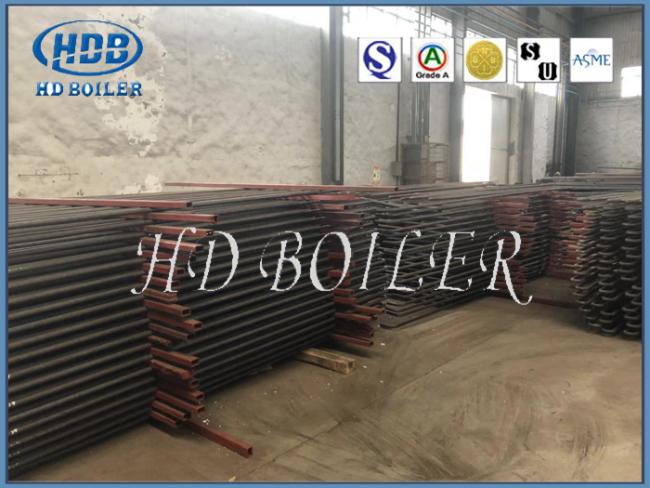
Function
The reheater layout follows the superheater layout, including convection, radiation and semi-radiation.
The convection reheater has reverse flow, downstream flow and mixed flow, single coil, double coil, multi-coil, parallel and staggered, vertical and horizontal type, parallel to the front wall and perpendicular to the front wall.Convection reheater is the main reheater that absorbs convection heat.
Radiant reheater refers to the reheater absorbing furnace radiation.
Semi-radiant reheaters (plate superheater) refer to reheaters that absorb more radiation from the furnace (more than 1/2 of the total heat).
The material selection principle of reheater is the same as that of superheater. Since reheating steam is inferior to superheater in cooling capacity, the design wall temperature is generally higher than that of superheater of the same temperature level.Metal tubes of high temperature reheaters are generally made of alloy steel (metal tubes containing more than 5% of alloy elements).For example, 12CrlMoV, steel 102, sa213-t91, sa213-tp304, sa213-tp347, etc.
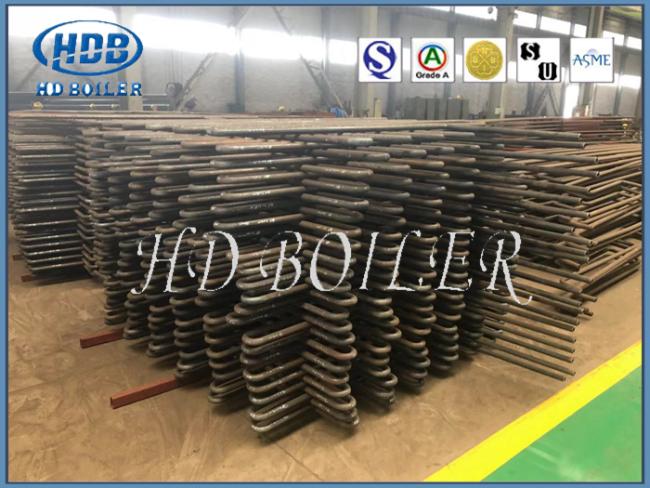
Differences
| Type | Advantages | Disadvantages | Supporting method |
| Pendant-type | 1.Firm structural support | 1. Flow blockage by condensed steam 2. Needs slow restart to purge the water that accumulates in the bottom. | supported from above |
| Inverted-type | 1.Proper drainage of the condensed steam | 1. Lack the structural rigidity, especially in high speed gas flow | Supported from below |
| Horizontal -type |
1. Proper drainage 2. Good structural rigidity. |
1. They do not view the flam directly so they are mainly from the convective type | Usually supported in the vertical gas ducts parallel to the main furnace. |
Application
use for heating saturated steam, steam temperature could be up to 900 degree C.
Superheater Capacity Upgrades to Increase Power Generation
Workshop

Get in Touch
Have questions about our products or want to discuss a custom order? Our team is ready to help you.