
Quartz Optical Fused Silica Glasses JGS1, JGS2, JGS3
Quartz Optical Glass JGS1, JGS2, JGS3 General Introduction
Quartz Optical Fused Silica Glasses JGS1, JGS2, JGS3
The JGS series (JGS1, JGS2, JGS3) represents China's mainstream integrated manufacturing and trading optical fused silica materials, covering ultraviolet to infrared spectral applications. These materials achieve full-spectrum coverage through optimized spectral characteristics and thermal-mechanical balance. Selection requires comprehensive consideration of transmission window, thermal stability, and mechanical strength, with cost constraints as a critical factor. For instance, deep ultraviolet lithography prioritizes JGS1 with anti-reflective coatings, while quantum communication systems must balance JGS3's infrared transmission and laser damage resistance. As semiconductor processes advance toward 3nm and below, JGS materials will further solidify their core position in ultra-precision optical systems.
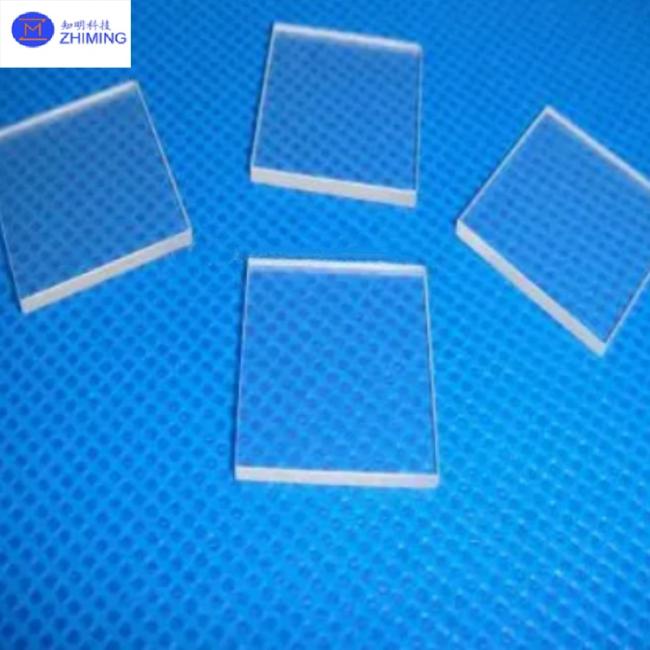
Quartz Optical Glass JGS1, JGS2, JGS3 Comparative Analysis Table
|
Parameter |
JGS1 |
JGS2 |
JGS3 |
|
Spectral Range |
185-2500 nm |
220-2500 nm |
260-3500 nm |
|
OH Content |
1200 ppm |
150 ppm |
5 ppm |
|
Birefringence |
2-4 nm/cm |
4-6 nm/cm |
4-10 nm/cm |
|
Thermal Expansion |
5.5×10⁻⁷/°C |
5.5×10⁻⁷/°C |
5.5×10⁻⁷/°C |
|
Softening Point |
1683°C |
1650°C |
1620°C |
|
Laser Damage Threshold |
1 J/cm² (1064 nm) |
3 J/cm² (1064 nm) |
0.5 J/cm² (1064 nm) |
|
Defect Density |
≤0.03 mm³/100 cm³ (no particles) |
≤0.1 mm³/100 cm³ (minor particles) |
≤0.3 mm³/100 cm³ (micro-bubbles) |
|
Optical Role |
Deep-UV window for lithography |
Laser resonator mirrors |
IR thermal imaging windows |
Quartz Optical Glass JGS1, JGS2, JGS3 Specification Parameter
|
Mechanical Properties |
Density (g/cm³)
|
2.2 |
|
Mohs Hardness
|
6-7 |
|
|
Compressive Strength (MPa)
|
1100 |
|
|
Tensile Strength (MPa)
|
50 |
|
|
Bending Strength (MPa)
|
65 |
|
|
Torsional Strength (MPa)
|
30 |
|
|
Young's Modulus (GPa)
|
7.5 * 104 |
|
|
Poisson's Ration
|
0.17 |
|
|
Eiectncal Properties |
Dielectric Constant (10GHz)
|
3.74 |
|
Loss Factor (10GHz)
|
0.0002 |
|
|
Dielectric Strength (10GHz)
|
3.7 * 107V·m |
|
|
Resistivity (20C) (.cm)
|
1 * 1020Ω·m |
|
|
Resistivity (1000℃)
|
1 * 108Ω·m |
|
|
Thermal Properties |
Strain Point
|
1080 |
|
Annealing Point
|
1180 |
|
|
Sottening Point
|
1630 |
|
|
Thermal Conductivity (20℃)
|
1.4 |
|
|
Specific Heat (J/Kg·K, 20℃)
|
670 |
|
|
Expansion Coefficient (20–320℃; 30℃–600℃)
|
5.5 * 10-7 |
Quartz Optical Glass JGS1, JGS2, JGS3 Application-Specific
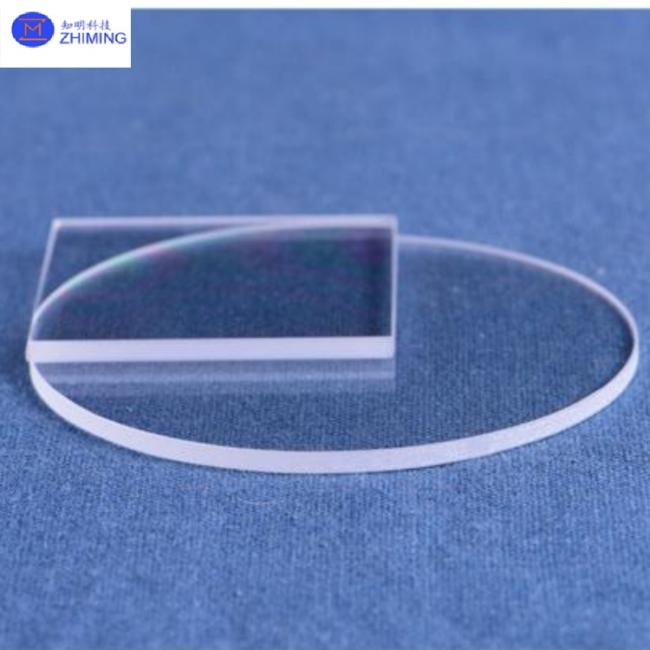
1. JGS1: Enabling Deep-Ultraviolet Systems
- Semiconductor Lithography: Serves as optics for 193 nm ArF excimer lasers, achieving <10 nm resolution for 7nm node chips.
- UV Laser Machining: Low birefringence (λ/10) minimizes beam distortion in UV cutting heads for precision PCB drilling.
- Aerospace Sensing: Captures UV signals (185 nm) for atmospheric ionosphere analysis in remote sensing.
2. JGS2: Balancing UV and Visible Performance
- Industrial Lasers: Stabilizes 1064 nm laser beams in fiber lasers via low birefringence (4-6 nm/cm).
- UV Curing: High transmission (90% @220-400 nm) accelerates UV adhesive curing in 3D printing.
- Wafer Inspection: Ensures λ/20 uniformity in visible light (400-700 nm) for defect detection.
3. JGS3: Expanding Infrared Capabilities
- Thermal Imaging: >85% transmission in 3-5 μm band enables high-sensitivity FLIR systems.
- Quantum Communication: Eliminates water absorption peaks (OH <5 ppm) for low-loss 1550 nm optical links.
- Laser Fusion: Withstands 10 kJ/cm² pulses in CO₂ laser fusion reactors.
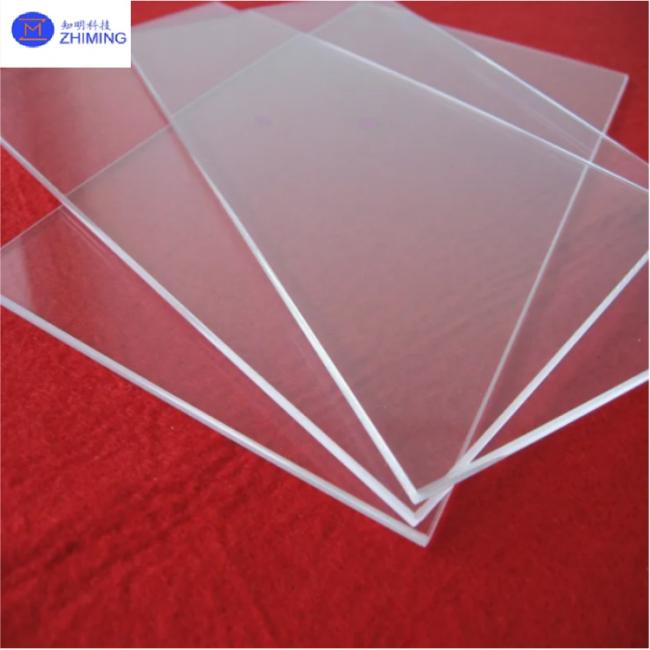
Quartz Optical Glass JGS1, JGS2, JGS3 Q&A
Q1: What's the key difference between JGS1, JGS2, and JGS3 fused silica?
A1: JGS1: Optimized for deep UV (185 nm transmission >90%) and used in semiconductor lithography.
JGS2: Balanced UV-vis (220-2500 nm) with moderate OH content, ideal for lasers and curing systems.
JGS3: High IR transmission (>85% @3.5 μm) and ultra-low OH (5 ppm), critical for quantum communication and thermal imaging.
Q2: Which JGS material is best for laser applications?
A2: JGS2 (220-2500 nm, 150 ppm OH) handles 1064 nm lasers with low birefringence.
JGS3 (260-3500 nm, 5 ppm OH) is preferred for high-power CO₂ lasers (10.6 μm) due to minimal fluorescence.
Tag: #Optical Fused Silica Glasses, #Customized, #JGS1, JGS2, JGS3, #Quartz Glass
Get in Touch
Have questions about our products or want to discuss a custom order? Our team is ready to help you.