
Detonated Polycrystalline Synthetic Diamond Powder Grade HID PD
D10 D50 D95 Synthetic Diamond Powder Abrasive Customized
Description:
Polycrystalline diamond powder is a nano-diamond polymer synthesized by transient ultra-high pressure and high temperature explosion, which is similar to the black diamond found in a small number of meteorites in nature. It is a polycrystal composed of cubic diamond and hexagonal diamond. It has the characteristics of high toughness, high self-sharpening and high hardness. As a new type of abrasive material, it has the irreplaceable advantages of other materials in sapphire grinding and processing. The grinding efficiency is 2 to 4 times that of single crystal diamond, and it does not produce scratches, and has a high finish. It has a wide range of applications in high-tech fields such as electronics, aerospace, and aviation. Due to the continuous expansion of the application fields of new technologies in industries such as LEDs in recent years, the use of polycrystalline diamond powder has increased significantly, and the demand has continued to increase.
Available Sizes of Polycrystalline Diamond Powder:
| Range | 0-1 | 1-2 | 1-3 | 2-4 | 2-5 | 3-6 | 3-7 | 4-8 | 5-10 | 6-12 | 8-12 |
| HID PD | √ | √ | √ | √ | √ | √ | √ | √ | √ | √ | √ |
Particle Size Distribution Specification for Superabrasive Grains
| Size | D10≥(µm) | D50(µm) | D95≤(µm) | Max(µm) | Min(µm) |
| 0-0.25 | 0.1 | 0.170~0.210 | 0.38 | -- | -- |
| 0-0.5 | 0.12 | 0.220~0.280 | 0.51 | --- | -- |
| 0-1 | 0.42 | 0.501~0.580 | 0.795 | 1.156 | 0.375 |
| 0.5-1 | 0.472 | 0.581~0.690 | 1.053 | 1.375 | 0.375 |
| 0.5-1.5 | 0.504 | 0.691~0.871 | 1.298 | 1.945 | 0.375 |
| 0-2 | 0.62 | 0.872~0.985 | 1.542 | 2.312 | 0.446 |
| 1/2 | 0.761 | 0.986~1.224 | 1.894 | 3.27 | 0.63 |
| 0.5-3 | 0.94 | 1.225~1.487 | 2.401 | 3.889 | 0.63 |
| 1/3 | 1.048 | 1.488~1.712 | 2.882 | 4.625 | 0.75 |
| 1.5-3 | 1.169 | 1.713~2.014 | 3.321 | 5.5 | 0.75 |
| 2/3 | 1.392 | 2.015~2.302 | 3.663 | 6.541 | 0.892 |
| 2/4 | 1.644 | 2.303~2.754 | 4.496 | 7.778 | 0.892 |
| 2/5 | 1.803 | 2.755~3.312 | 5.5 | 9.25 | 1.06 |
| 3/6 | 2.448 | 3.313~3.898 | 6.386 | 11 | 1.499 |
| 3/7 | 2.913 | 3.899~4.676 | 7.566 | 13.08 | 1.783 |
| 4/8 | 3.605 | 4.677~5.400 | 8.455 | 15.56 | 2.121 |
| 4/9 | 3.952 | 5.401~6.062 | 9.762 | 18.5 | 2.522 |
| 5/10 | 4.401 | 6.063~6.700 | 10.98 | 18.5 | 2.999 |
| 5/12 | 5.022 | 6.701~7.673 | 12.95 | 22 | 3.566 |
| 6/12 | 5.807 | 7.674~8.549 | 13.97 | 26.16 | 4.241 |
| 7/14 | 6.411 | 8.550~9.483 | 15.13 | 26.16 | 4.241 |
| 8/16 | 7.113 | 9.484~10.78 | 17.82 | 31.11 | 5.044 |
| 8/20 | 8.102 | 10.79~12.56 | 20.6 | 37 | 5.998 |
| 10/20 | 9.186 | 12.57~14.18 | 22.54 | 37 | 7.133 |
| 12/22 | 10.53 | 14.19~16.05 | 24.41 | 44 | 7.133 |
| 12/25 | 12.01 | 16.06~17.65 | 26.61 | 44 | 8.482 |
| 15-25 | 13.32 | 17.66~19.55 | 29.75 | 52.33 | 10.09 |
| 20-30 | 15.04 | 19.56~22.50 | 34.64 | 62.23 | 12 |
| 22-36 | 17.28 | 22.51~26.12 | 39.98 | 74 | 12 |
| 30-40 | 20.11 | 26.13~30.10 | 46.56 | 88 | 14.27 |
| 30-50 | 22.36 | 30.11~34.58 | 52.87 | 88 | 16.96 |
| 36-54 | 25.68 | 34.59~39.00 | 60.94 | 104.7 | 20.17 |
| 40-60 | 29.45 | 39.01~43.20 | 69.86 | 124.5 | 20.17 |
| 50-70 | 32.42 | 43.21~47.50 | 72.65 | 124.5 | 23.99 |
| 54-80 | 36.56 | 47.51~52.50 | 80.74 | 124.5 | 23.99 |
Feature:
Tight, customized particle size distribution
Blocky and rough particle surface
Stringent oversize control
Low scratch count
Self-sharpening with high material removal rate
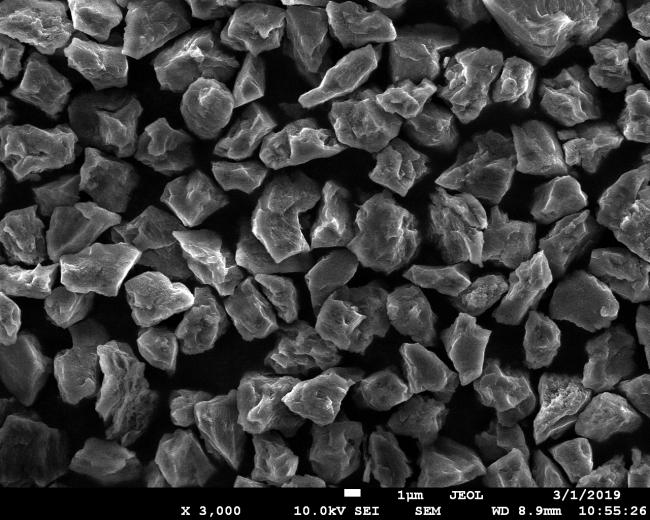
Diamond is a mineral composed of carbon. It is an allotrope of graphite with a chemical formula of C. It is also the original body of common diamonds. Diamond is the hardest substance naturally occurring in nature. Graphite can form synthetic diamonds under high temperature and high pressure. Diamond has a wide range of uses, such as handicrafts, cutting tools in industry, and it is also a precious gemstone.
Diamonds come in various colors, from colorless to black, with colorless ones being particularly preferred. They can be transparent, translucent or opaque. Many diamonds are yellowish, which is mainly due to impurities in the diamonds. The refractive index of diamond is very high, and the dispersion performance is also very strong, which is why the diamond reflects colorful flashes. Diamond will emit blue-green fluorescence under X-ray irradiation. The primary diamond ore is only produced in the Kimberlite tube or a few lamprophyre rocks. Kimberlite is their parent rock, and diamonds in other places are transported by rivers and glaciers. Diamond is generally granular. If the diamond is heated to 1000°C, it will slowly turn into graphite.
Characteristics:
Round particle shape, no irregular shapes like pencils or flakes.
Oversizes completely removed.
Narrow PSD.
Surface purity can reach ppm level.
Outstanding dispersibility.
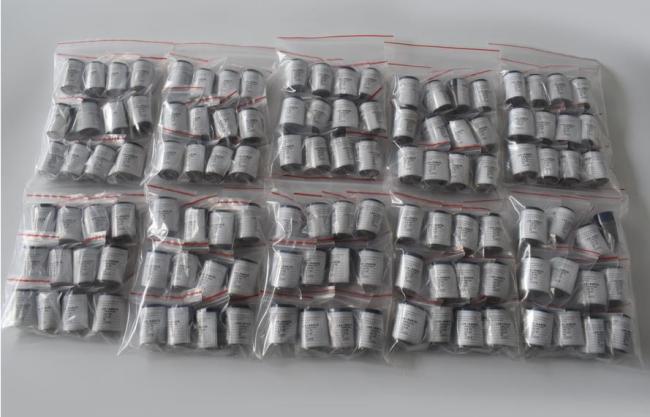
Application for Polycrystalline Diamond Powder HID PD:
Polycrystalline diamond is primarily for high-performance grinding and polishing process. It can be widely used for grinding and polishing of silicon wafer, ruby, sapphire, optical lens, metallographic sample, optical fiber communication and ceramics in IT industry, as well as disc modification, magnetic head polishing and substrate grinding.
- Lapping and polishing of semiconductor wafers such as SiC and sapphire wafers
- Surface polishing of various ceramics
- Surface treatment of metals, such as stainless steel and aluminium alloy.

Workpieces Processing
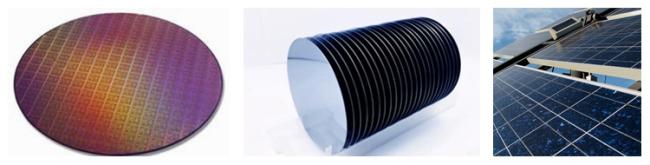
- Silicon wafers, monocrystalline and polycrystalline silicon, semiconductor wafers, photovoltaic wafers
- Sapphire phone screen, sapphire mobile phone screen saver, camera sapphire screen protective film
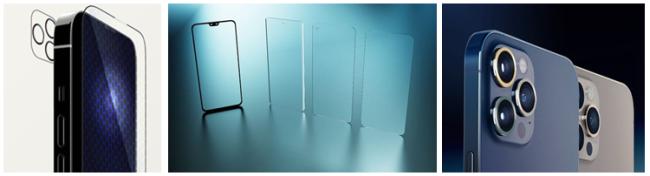
- Sapphire mobile phone camera protective film, mobile phone cover glass, sapphire watch mirror
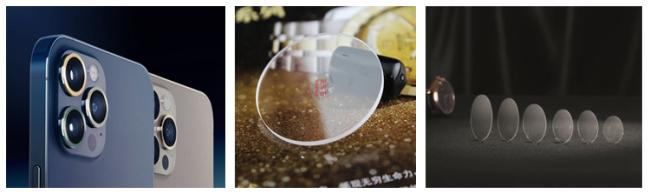
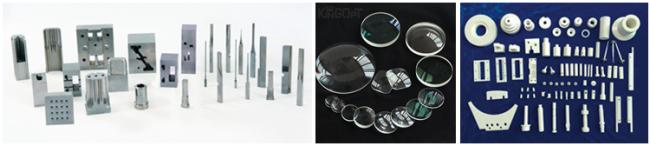
- Precision cemented carbide, precision ceramics, optical glass and lens, etc.
Get in Touch
Have questions about our products or want to discuss a custom order? Our team is ready to help you.