
Industrial Synthetic Resin Bond Micron Diamond Powder Grade BRM20
Multicrystalline Micron Diamond Powder 0-0.25um To 54-80um
Description:
Diamond is a simple crystal composed of carbon element formed under high pressure and high temperature conditions in the deep parts of the earth. Diamond is a colorless octahedral crystal whose composition is pure carbon, which is linked by carbon atoms with four-valent bonds. It is the hardest substance known to exist naturally. Since the CC bond in diamond is very strong, all valence electrons participate in the formation of covalent bonds, and there are no free electrons, so the hardness of diamond is very large, the melting point is 6900 degrees Fahrenheit, and the ignition point of diamond in pure oxygen is 720~800℃. It is 850~1000℃ in the air, and it is not conductive.
Micron Size Available & Particle Size Distribution Specification for Superabrasive Grains
| Size | D10≥(µm) | D50(µm) | D95≤(µm) | Max(µm) | Min(µm) |
| 0-0.25 | 0.1 | 0.170~0.210 | 0.38 | -- | -- |
| 0-0.5 | 0.12 | 0.220~0.280 | 0.51 | --- | -- |
| 0-1 | 0.42 | 0.501~0.580 | 0.795 | 1.156 | 0.375 |
| 0.5-1 | 0.472 | 0.581~0.690 | 1.053 | 1.375 | 0.375 |
| 0.5-1.5 | 0.504 | 0.691~0.871 | 1.298 | 1.945 | 0.375 |
| 0-2 | 0.62 | 0.872~0.985 | 1.542 | 2.312 | 0.446 |
| 1/2 | 0.761 | 0.986~1.224 | 1.894 | 3.27 | 0.63 |
| 0.5-3 | 0.94 | 1.225~1.487 | 2.401 | 3.889 | 0.63 |
| 1/3 | 1.048 | 1.488~1.712 | 2.882 | 4.625 | 0.75 |
| 1.5-3 | 1.169 | 1.713~2.014 | 3.321 | 5.5 | 0.75 |
| 2/3 | 1.392 | 2.015~2.302 | 3.663 | 6.541 | 0.892 |
| 2/4 | 1.644 | 2.303~2.754 | 4.496 | 7.778 | 0.892 |
| 2/5 | 1.803 | 2.755~3.312 | 5.5 | 9.25 | 1.06 |
| 3/6 | 2.448 | 3.313~3.898 | 6.386 | 11 | 1.499 |
| 3/7 | 2.913 | 3.899~4.676 | 7.566 | 13.08 | 1.783 |
| 4/8 | 3.605 | 4.677~5.400 | 8.455 | 15.56 | 2.121 |
| 4/9 | 3.952 | 5.401~6.062 | 9.762 | 18.5 | 2.522 |
| 5/10 | 4.401 | 6.063~6.700 | 10.98 | 18.5 | 2.999 |
| 5/12 | 5.022 | 6.701~7.673 | 12.95 | 22 | 3.566 |
| 6/12 | 5.807 | 7.674~8.549 | 13.97 | 26.16 | 4.241 |
| 7/14 | 6.411 | 8.550~9.483 | 15.13 | 26.16 | 4.241 |
| 8/16 | 7.113 | 9.484~10.78 | 17.82 | 31.11 | 5.044 |
| 8/20 | 8.102 | 10.79~12.56 | 20.6 | 37 | 5.998 |
| 10/20 | 9.186 | 12.57~14.18 | 22.54 | 37 | 7.133 |
| 12/22 | 10.53 | 14.19~16.05 | 24.41 | 44 | 7.133 |
| 12/25 | 12.01 | 16.06~17.65 | 26.61 | 44 | 8.482 |
| 15-25 | 13.32 | 17.66~19.55 | 29.75 | 52.33 | 10.09 |
| 20-30 | 15.04 | 19.56~22.50 | 34.64 | 62.23 | 12 |
| 22-36 | 17.28 | 22.51~26.12 | 39.98 | 74 | 12 |
| 30-40 | 20.11 | 26.13~30.10 | 46.56 | 88 | 14.27 |
| 30-50 | 22.36 | 30.11~34.58 | 52.87 | 88 | 16.96 |
| 36-54 | 25.68 | 34.59~39.00 | 60.94 | 104.7 | 20.17 |
| 40-60 | 29.45 | 39.01~43.20 | 69.86 | 124.5 | 20.17 |
| 50-70 | 32.42 | 43.21~47.50 | 72.65 | 124.5 | 23.99 |
| 54-80 | 36.56 | 47.51~52.50 | 80.74 | 124.5 | 23.99 |
Available Size of Resin Bond Mesh Diamond Powder:
| US Mesh | 60/80 | 80/100 | 100/120 | 120/140 | 140/170 | 170/200 | 200/230 | 230/270 | 270/325 | 325/400 |
| FEPA | D252 | D181 | D151 | D126 | D107 | D91 | D76 | D64 | D54 | D46 |
| BRD10 | √ | √ | √ | √ | √ | √ | √ | √ | √ | √ |
| BRD20 | √ | √ | √ | √ | √ | √ | √ | √ | √ | √ |
| BRD30 | √ | √ | √ | √ | √ | √ | √ | √ | √ | √ |
| BRD-Ni | √ | √ | √ | √ | √ | √ | √ | √ | √ | √ |
Abrasive Materials Mesh Size Comparison List
| HARMONY | 国际标准 | 欧洲共同体 | 美国 U.S.A | 日本 JAPAN | 理论基准尺寸 | 俄罗斯 RUSSIA | ||||||||
| GB/T6406-1995 | ISO | FEPA | ANIS B74.16-1971 | JIS4130-1988 | Theoretlcal | 9206-80 | ||||||||
| Baslc Size | ||||||||||||||
| Grain No | Grain Size | Grain No Ⅰ | Grain No Ⅱ | Grain Size | Grain No | Grain Size | Grain No | Grain Size | Grain No | Grain Size | Inch | Mlllmeter | Grain No | Grain Size |
| 40/50 | 425/300 | 427 | 40/50 | 425/300 | B/427 | 355/300 | 40/50 | 425/300 | 40/50 | 425/300 | 0.015 | 0.378 | 500/400 | 500/400 |
| 50/60 | 300/250 | 301 | 50/60 | 300/250 | B/301 | 300/250 | 50/60 | 300/250 | 50/60 | 300/250 | 0.011 | 0.288 | 400/315 | 400/315 |
| 60/80 | 250/180 | 252 | 60/80 | 250/180 | B/252 | 250/180 | 60/80 | 250/180 | 60/80 | 250/180 | 0.009 | 0.226 | 250/200 | 250/200 |
| 80/100 | 180/150 | 181 | 80/100 | 180/150 | B/181 | 180/150 | 80/100 | 180/150 | 80/100 | 180/150 | 0.0069 | 0.174 | 200/160 | 200/160 |
| 100/120 | 150/125 | 151 | 100/120 | 150/125 | B/151 | 150/125 | 100/120 | 150/125 | 100/120 | 150/125 | 0.0058 | 0.148 | 160/125 | 160/125 |
| 120/140 | 125/106 | 126 | 120/140 | 125/106 | B/126 | 125/106 | 120/140 | 125/106 | 120/140 | 125/106 | 0.0048 | 0.123 | 125/100 | 125/100 |
| 140/170 | 106/90 | 107 | 140/170 | 106/90 | B/107 | 106/90 | 140/170 | 106/90 | 140/170 | 106/90 | 0.0041 | 0.103 | 100/80 | 100/80 |
| 170/200 | 90/75 | 91 | 170/200 | 90/75 | B/91 | 90/75 | 170/200 | 90/75 | 170/200 | 90/75 | 0.0034 | 0.086 | 80/63 | 80/63 |
| 200/230 | 75/63 | 76 | 200/230 | 75/63 | B/76 | 75/63 | 200/230 | 75/63 | 200/230 | 75/63 | 0.003 | 0.075 | 63/50 | 63/50 |
| 230/270 | 63/53 | 64 | 230/270 | 63/53 | B/64 | 63/53 | 230/270 | 63/53 | 230/270 | 63/53 | 0.0026 | 0.066 | 50/40 | 50/40 |
| 270/325 | 53/45 | 54 | 270/325 | 53/45 | B/54 | 53/45 | 270/325 | 53/45 | 270/325 | 53/45 | 0.0022 | 0.057 | ||
| 325/400 | 45/38 | 46 | 325/400 | 45/38 | B/46 | 45/38 | 325/400 | 45/38 | 325/400 | 45/38 | 0.0019 | 0.048 | ||
Stability of Diamond
Diamond has stable chemical properties, acid and alkali resistance. It does not interact with concentrated HF, HCl, or HNO3 at high temperatures. It only works in the melt of Na2CO3, NaNO3, KNO3, or when it is boiled with the mixture of K2Cr2O7 and H2SO4. Slightly oxidized; corrodes in high temperature gas of O, CO, CO2, H, Cl, H2O, CH4.
Diamond also has non-magnetic properties, poor electrical conductivity, lipophilic and hydrophobic properties, and triboelectric properties. Only type IIb diamond has good semiconductor properties. According to the difference in nitrogen impurity content and thermal, electrical and optical properties of diamond, diamond can be divided into two types, type I and type II, and further subdivided into four subtypes: Ia, Ib, IIa, and IIb. Type I diamonds, especially Ia subtypes, are common ordinary diamonds, accounting for about 98% of the total natural diamonds. Type I diamonds all contain a certain amount of nitrogen and have good thermal conductivity, poor electrical conductivity and good crystal shape. Type Ⅱ diamond is extremely rare, contains little or almost no nitrogen, has good thermal conductivity and characteristics of curved crystals. Subtype IIb diamond has semi-conductivity. Because of the excellent properties of type II diamond, it is mostly used in space technology and cutting-edge industries.
Series of Harmony Resin Bond Diamond Powder
- Resin Bond Diamond Powder Premium Grade BRD30
Description: Light grey color, medium tough and micro-friable multinano-crystal, lower toughness but more friable than BRD 20, good self sharpen ability, premium grade to improve the efficiency.

- Resin Bond Diamond Powder Standard Grade BRD20
Description: Dark green color, medium tough and micro-friable multinano-crystal, irregular sharp, perfect self sharpen ability. Best choice for maintaining grinding performance and tool life.

- Resin Bond Diamond Powder Economic Grade BRD10
Description: Light green color, blocky, the most tough product among RBD series. Widely used for heavy duty application demanding long wheel life.

-Resin Bond Diamond Micron Powder Grade BRM
Description: Resin bond diamond micron powder with light gray color, blocky shape, friable, multicrystalline struture. Size distribution and shape are controlled tightly. RBM offers excellent performances in polishing and lapping glass, ceramics etc.

Characteristics:
- Strong cutting force: There are a large number of sharp cutting edges on the surface of particles, and the cutting force can reach 2-4 times that of single crystal diamond powder.
- High polishing accuracy: The cutting edge of single crystal diamond powder is large and hard, which is prone to deep scratches. The cutting edge of polycrystal-like diamond powder is small and its hardness is low. The Ra value of workpiece surface after polishing decreases significantly.
- Strong grip strength: rough surface of particles and stronger bonding with binder can significantly improve grip strength of abrasives in various diamond products and improve service life.

Structural Properties
The diamond structure is divided into equiaxed tetrahedral cube and hexagonal crystal system.
In diamond crystals, carbon atoms are connected to each other in a tetrahedral bond to form an infinite three-dimensional framework, which is a typical atomic crystal. Each carbon atom forms a covalent bond with the other 4 carbon atoms via the SP3 hybrid orbital to form a regular tetrahedron. Because the C-C bond in diamond is very strong, all valence electrons participate in the formation of covalent bonds, and there are no free electrons. Therefore, diamond is not only hard, but also has a very high melting point, and it is also non-conductive. In industry, diamonds are mainly used to make probes and grinding tools for drilling, and diamonds with complete shapes are also used to make high-end ornaments such as jewelry, and their prices are very expensive.
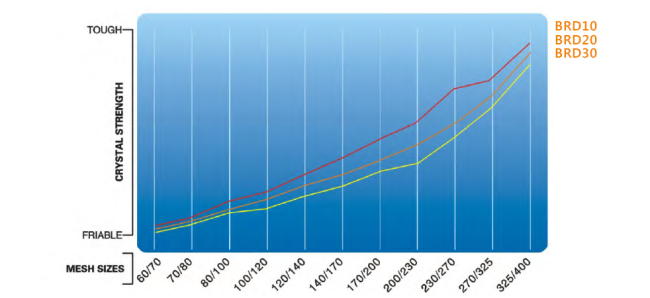
Ti-TTi Comparision of BRD Mesh Series:
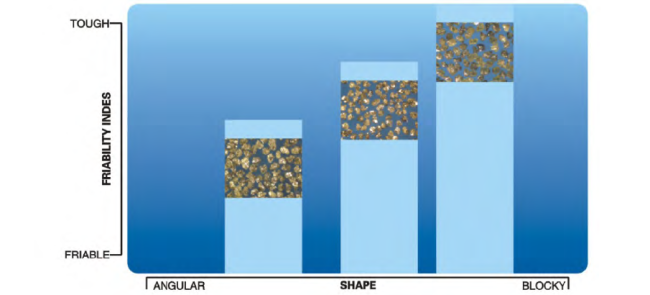
Shape Comparision of BRD Mesh Series:
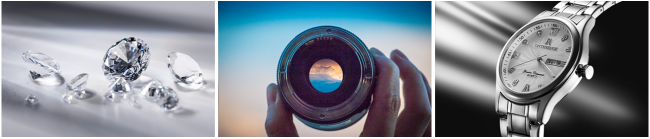
Application for Resin Bond Diamond Powder:
- Precision lapping and polishing of SiC and Al2O3 wafers;
- Grinding and polishing of ceramic materials;
- Precision lapping and polishing of stainless steel, aluminium alloy and other metal materials.
Get in Touch
Have questions about our products or want to discuss a custom order? Our team is ready to help you.