
45gpa Magnesium Based Alloy Bar Az31 Magnesium Die Casting In Automobile
Easy To Form Wrought Magnesium Alloy For Automobile Industries
Introduction:
Wrought magnesium alloy has greater development potential than cast magnesium alloy. Through the control of material structure and the application of heat treatment process, wrought magnesium alloy can obtain higher strength, better ductility and more diverse mechanics performance, so as to meet the application needs of diverse engineering structural parts. Wrought magnesium alloys are often heated to a certain temperature and processed by hot forming techniques such as extrusion, rolling and forging.
Features:
Magnesium alloys are alloys based on magnesium and other elements. Its characteristics are: low density (about 1.8g/cm3), high strength, large elastic modulus, good heat dissipation, good shock absorption, larger impact load capacity than aluminum alloy, and good corrosion resistance to organic substances and alkalis. The main alloying elements are aluminum, zinc, manganese, cerium, thorium and a small amount of zirconium or cadmium.
Classification:
Magnesium alloys are generally classified in three ways: chemical composition, forming process and whether or not they contain modifier zirconium.
According to the chemical composition, based on the five main alloy elements Mn, Al, Zn, Zr and rare earth, the alloy system is composed: Mg-Mn, Mg-AL-Mn, Mg-Al-Zn-Mn, Mg-Zr, Mg- Zn-Zr, Mg-Re-Zr, Mg-Ag-Re-Zr, Mg-Y-Re-Zr.
According to the processing technology, magnesium alloys can be divided into two categories: cast magnesium alloys and wrought magnesium alloys. There are great differences between the two in terms of composition and tissue properties. Compared with cast magnesium alloys, wrought magnesium alloys have higher strength, better plasticity and more style specifications.
Zirconium has a strong grain refining effect on magnesium alloys. According to whether magnesium alloys contain zirconium, they are divided into two categories: zirconium-free magnesium alloys and zirconium-containing magnesium alloys.
Main physical and mechanical properties of commonly used structural materials:
| magnesium casting | Magnesium forgings | Aluminum casting | Aluminum forgings | cast iron | copper | Engineering plastics | |||||
| Alloy model | AZ91 | AM50 | AZ80 | AZ31-H24 | A380 | A356-T6 | 6061-T6 | 5182-H24 | HT350 | Galvanized sheet | ABS |
| Preparation method | die casting | die casting | squeeze | plate | die casting | permanent film | squeeze | plate | sand mold | plate | - |
| Density (g/cm³) | 1.81 | 1.77 | 180 | 1.77 | 2.68 | 2.76 | 2.70 | 2.70 | 7.15 | 7.8 | 1.07 |
| Elastic Modulus (GPa) | 45 | 45 | 45 | 45 | 71 | 72 | 69 | 70 | 100 | 210 | 2.1 |
| Tensile strength (MPa) | 240 | 210 | 380 | 290 | 324 | 262 | 310 | 310 | 293 | 390 | 43 |
| Yield strength (MPa) | 160 | 125 | 275 | 220 | 159 | 186 | 275 | 235 | 320 | 39 | |
| Elongation(%) | 7 | 15 | 7 | 15 | 5 | 12 | 8 | 0 | 26 | 16.5 | |
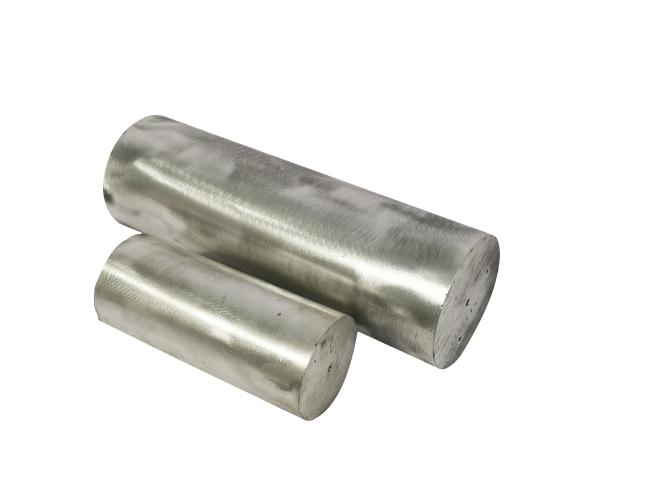
Photos:
Get in Touch
Have questions about our products or want to discuss a custom order? Our team is ready to help you.