
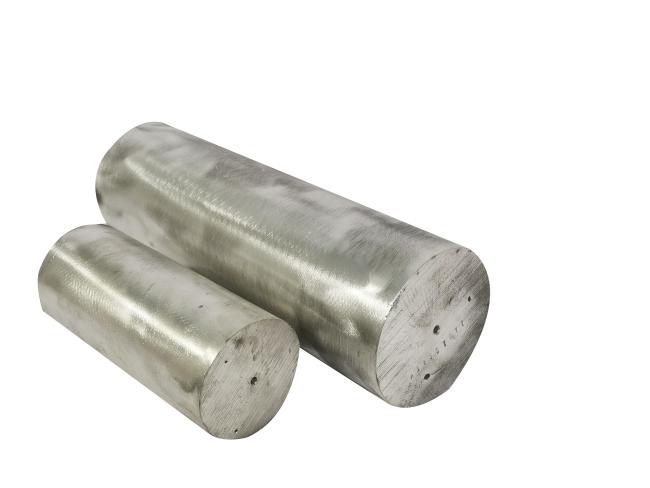
Az31b Magnesium Alloy Bar Of Magnesium ASTM For Aerospace Industry
Light Weight And Good Rigidity Magnesium Alloy Bar For Aerospace Industry
Introduction:
Magnesium alloys are alloys based on magnesium and other elements. Its characteristics are: low density (about 1.8g/cm3), high strength, large elastic modulus, good heat dissipation, good shock absorption, larger impact load capacity than aluminum alloy, and good corrosion resistance to organic substances and alkalis. The main alloying elements are aluminum, zinc, manganese, cerium, thorium and a small amount of zirconium or cadmium.
Magnesium alloy has the characteristics of low density, high specific strength and specific stiffness, good dimensional stability, good thermal conductivity and electrical conductivity, vibration absorption and easy processing and forming, so magnesium alloy is one of the competitive lightweight materials.
Features:
- Low density, the density of pure magnesium is only 1.74g/cm3, which is about 2/3 of aluminum and 1/4 of steel, close to the specific gravity of engineering plastics. It is the lightest structural alloy, which can effectively reduce the weight of components and save energy. energy consumption;
- The specific strength and specific stiffness are large, and the specific strength of magnesium alloys is not only higher than some high-strength steels, but even higher than aluminum alloys;
- Good thermal conductivity, large expansion coefficient, low elastic modulus, slightly inferior to general aluminum alloys, 300 times that of general engineering materials, and low temperature dependence, can be used to manufacture electronic products requiring good heat dissipation performance;
- It has good damping performance, strong absorption capacity and strong shock absorption, which can be used in situations with severe vibration, and can enhance the safety and comfort of automobiles when used in automobiles;
Application:
Structural parts with magnesium alloy as the base material are mainly used in special environments with strict requirements on the strength of structural parts, light equipment weight (the design weight is smaller than that of aluminum alloy), high electromagnetic shielding requirements, shock absorption, compression resistance and impact resistance.
Such as: aviation parts, aerospace electronic equipment structural parts, UAV structural parts, reinforced computer structural parts, medical equipment structural parts, communication equipment structural parts, heat sinks, shielding boxes, electronic disks, heat conduction plates, cameras, GPS positioning equipment, Radar receiving equipment, various types of handles, control panels, switches, etc.
Photos:
Get in Touch
Have questions about our products or want to discuss a custom order? Our team is ready to help you.