
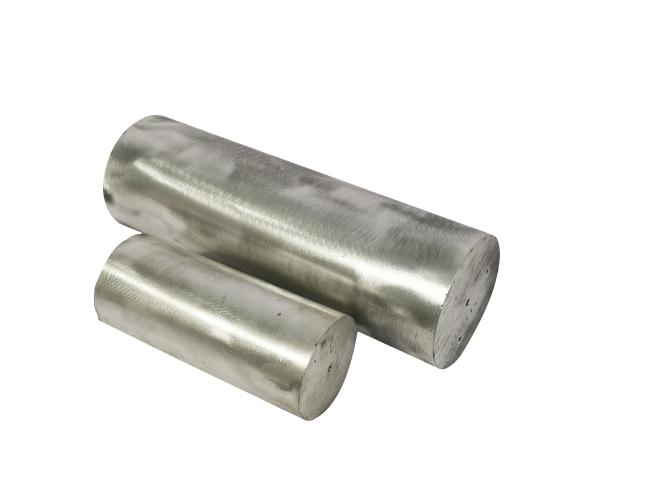
ASTM Wrought Magnesium Alloy 450MPa
Good Shock Absorption Wrought Magnesium Alloy For Automobile Industries
Introduction:
Magnesium alloy has the characteristics of low density, high specific strength and specific stiffness, good dimensional stability, good thermal conductivity and electrical conductivity, vibration absorption and easy processing and forming, so magnesium alloy is one of the competitive automotive wheel quantization materials.
At present, most of the parts made of magnesium alloys in automobiles are die castings. Magnesium alloy die castings are the lightest among all die casting alloys and have a longer service life than aluminum alloys.
Magnesium alloy die-casting parts are mainly used to produce automobile instrument panels, seat frames, transmission housings, steering wheel control system components, engine parts, door frames, wheel hubs, brackets, clutch housings, body brackets, etc.
Features:
Magnesium alloys are alloys based on magnesium and other elements. Its characteristics are: low density (about 1.8g/cm3), high strength, large elastic modulus, good heat dissipation, good shock absorption, larger impact load capacity than aluminum alloy, and good corrosion resistance to organic substances and alkalis. The main alloying elements are aluminum, zinc, manganese, cerium, thorium and a small amount of zirconium or cadmium.
Classification:
Magnesium alloys are generally classified in three ways: chemical composition, forming process and whether or not they contain modifier zirconium.
According to the chemical composition, based on the five main alloy elements Mn, Al, Zn, Zr and rare earth, the alloy system is composed: Mg-Mn, Mg-AL-Mn, Mg-Al-Zn-Mn, Mg-Zr, Mg- Zn-Zr, Mg-Re-Zr, Mg-Ag-Re-Zr, Mg-Y-Re-Zr.
According to the processing technology, magnesium alloys can be divided into two categories: cast magnesium alloys and wrought magnesium alloys. There are great differences between the two in terms of composition and tissue properties. Compared with cast magnesium alloys, wrought magnesium alloys have higher strength, better plasticity and more style specifications.
Zirconium has a strong grain refining effect on magnesium alloys. According to whether magnesium alloys contain zirconium, they are divided into two types: zirconium-free magnesium alloys and zirconium-containing magnesium alloys.
Application:
High-performance magnesium alloys are excellent aerospace materials. For example, the magnesium alloy (AZ31) matrix composite material with silicon carbide whiskers (20% by volume) as the strengthening phase, its elastic modulus is increased by 10%, and the strength is increased to about 450MPa; the United States has used magnesium alloy composite materials to manufacture propellers, For missile tails, etc., naval satellites have used magnesium alloy composite materials for structural parts such as brackets, bushings, and beams, and their comprehensive performance is better than that of aluminum-based composite materials.
Main physical and mechanical properties of commonly used structural materials:
| magnesium casting | Magnesium forgings | Aluminum casting | Aluminum forgings | cast iron | copper | Engineering plastics | |||||
| Alloy model | AZ91 | AM50 | AZ80 | AZ31-H24 | A380 | A356-T6 | 6061-T6 | 5182-H24 | HT350 | Galvanized sheet | ABS |
| Preparation method | die casting | die casting | squeeze | plate | die casting | permanent film | squeeze | plate | sand mold | plate | - |
| Density (g/cm³) | 1.81 | 1.77 | 180 | 1.77 | 2.68 | 2.76 | 2.70 | 2.70 | 7.15 | 7.8 | 1.07 |
| Elastic Modulus (GPa) | 45 | 45 | 45 | 45 | 71 | 72 | 69 | 70 | 100 | 210 | 2.1 |
| Tensile strength (MPa) | 240 | 210 | 380 | 290 | 324 | 262 | 310 | 310 | 293 | 390 | 43 |
| Yield strength (MPa) | 160 | 125 | 275 | 220 | 159 | 186 | 275 | 235 | 320 | 39 | |
| Elongation(%) | 7 | 15 | 7 | 15 | 5 | 12 | 8 | 0 | 26 | 16.5 | |
Photos:
Get in Touch
Have questions about our products or want to discuss a custom order? Our team is ready to help you.