
Thermocouple Wire Type K NiCr-NiSi For Versatile Performance In Laboratory Applications
Thermocouple Wire Type K NiCr-NiSi For Versatile Performance In Laboratory Applications
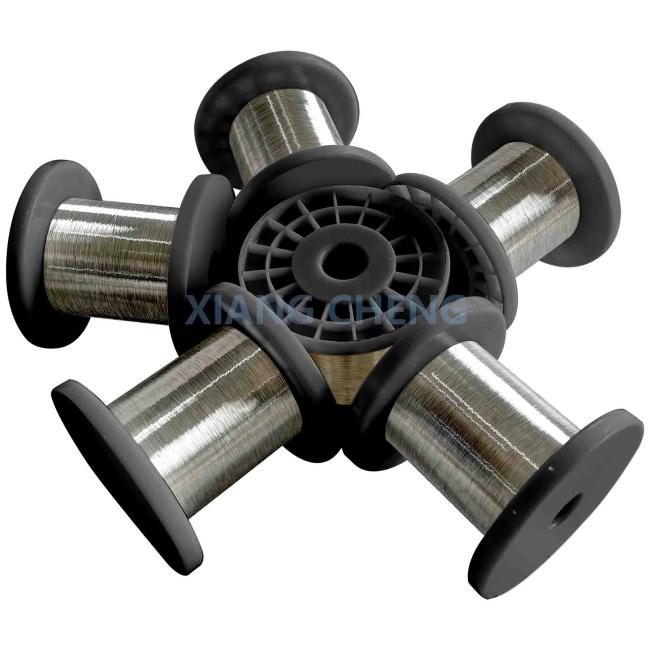
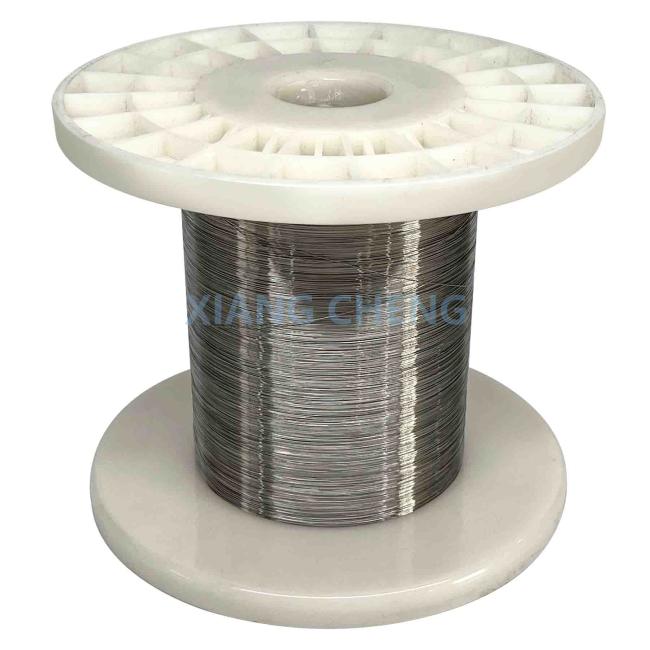
NiCr-NiSi Type K Thermocouple Wire and Cable is a widely used thermocouple configuration, designed for temperature measurement in various industrial and laboratory environments. It is particularly known for its wide temperature range, reliability, and durability under challenging conditions.
NiCr-NiSi Type K Thermocouple Wire and Cable is the most widely used thermocouple type due to its broad temperature range, durability, and cost-effectiveness. It performs exceptionally well in oxidizing atmospheres and is used extensively in industrial, scientific, and commercial applications. While it offers good stability and repeatability, care must be taken in selecting the appropriate insulation and protecting the wires from environments that could lead to degradation or measurement drift.
Color codes of thermocouple wire (K type)
Positive wire is yellow, negative wire is red. 
| Name | KP | KN |
| Melting Range (℃) | 1427 | 1399 |
| Density (g/cm³) | 8.5 | 8.6 |
| Resistivity (μΩm20℃) | 70.6 | 29.4 |
Resistance-temperature coefficient | 29 | 16.3 |
| Tensile strength Rm N/mm² MPa | ≥490 | ≥390 |
| Elongation % | ≥10 | ≥15 |
Thermocouple temperature range and tolerance
Name | Usag Classification | Grade | Max. operating temperature(℃) | emperitre nres) | Tnlerene | Standard | |
Lang term | Short term | ||||||
NiCr-NiSi (Type K) thermocouple bright wire | K | l | 1200 | 1300 | -40~1100 | +1.5℃ or +0.4%t | GB/T2614 |
| Ⅱ | -40~1300 | +2.5℃ or +0.75%t | |||||
Key Characteristics:
1.Temperature Range:
- Standard Temperature Range: −200°C to 1,260°C (−328°F to 2,300°F).
- Accuracy decreases at the higher end of the temperature range.
2.Thermoelectric Voltage:
- Generates a voltage based on the Seebeck Effect, where the thermoelectric voltage is proportional to the temperature difference between the measuring (hot) junction and the reference (cold) junction.
- Typical thermoelectric sensitivity: Approximately 41 µV/°C at 600°C.
3.Durability:
- Resistant to oxidation at high temperatures, making it suitable for prolonged use in oxidizing atmospheres.
- Not suitable for use in strongly reducing or sulfurous environments, as this can lead to degradation.
Applications:
- Widely used in industrial processes, furnaces, gas turbines, heat treating, and other high-temperature applications.
- Common in laboratory setups for scientific research and testing.
- Suitable for general-purpose temperature measurement.
Cable Insulation and Construction:
- Can be provided with various insulation materials, depending on the application:
Fiberglass: High-temperature resistance.
Ceramic: For extreme temperatures.
PVC or Teflon: For low-temperature applications and environments requiring chemical resistance.
- Shielding options: Shielded or unshielded cables are available to minimize electrical noise in sensitive environments.
Accuracy (Tolerance):
- Standard Tolerance: ±2.2°C or ±0.75% of the temperature (whichever is greater).
- Special Tolerance: ±1.1°C or ±0.4% of the temperature (whichever is greater).
Advantages:
- Broad temperature range.
- Cost-effective compared to some exotic thermocouple types (e.g., Type R or S).
- Readily available and widely supported in temperature measurement systems.
- Durable and reliable for extended periods in oxidizing environments.
Limitations:
- Susceptible to drift over time, especially at very high temperatures.
- Not suitable for highly reducing or sulfur-rich environments, which can degrade the wires.
Get in Touch
Have questions about our products or want to discuss a custom order? Our team is ready to help you.