
4-Tier H-Type Fully Automatic Layer Cage Hot-Dip Galvanized Poultry Farming Equipment for 10,000 Birds
This is the fundamental structure that determines flock comfort and egg production rates.
- Hot-Dip Galvanization: Modern cages typically use Q235 National Standard Steel treated with hot-dip galvanization. Compared to cold galvanization, this offers a thicker coating, stronger corrosion resistance, and a lifespan of 15-20 years. The surface is smooth to prevent injury to the birds.
- Structure Design: Utilizes an "H-type" tiered structure, usually ranging from 3 to 8 tiers (4-6 is standard). This high-density vertical design maximizes land use, allowing a stocking density of 30-90 birds per square meter.


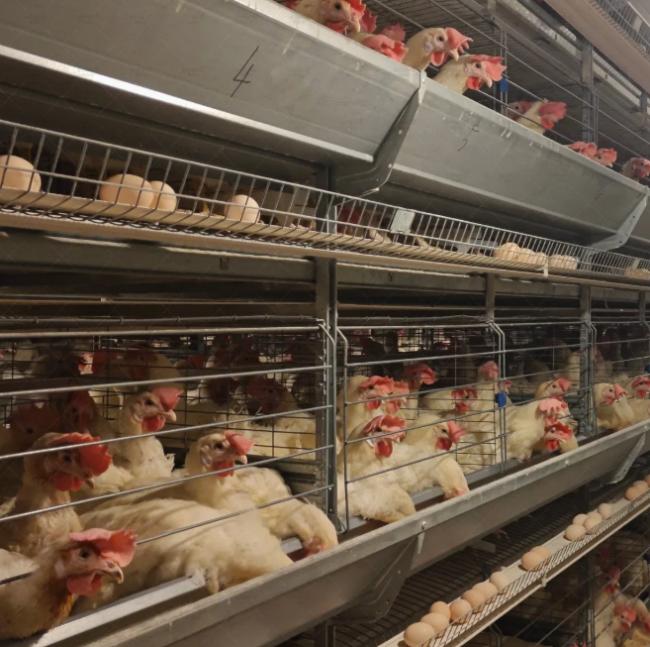

- Floor Slope: The cage floor is designed with a 7°-9° incline to ensure eggs roll automatically into the collection trough, preventing breakage or soiling by the hens.
- Egg Protection: The front of the floor mesh extends outward and is equipped with an egg guard (or soft cushion) to prevent eggs from cracking due to impact when rolling out. The breakage rate is typically kept below 0.8%.
- Doors & Space: Doors are designed for easy catching and vaccination. Modern "welfare cages" may include perches and nesting areas to satisfy natural behaviors.


This system eliminates the high labor intensity of manual feeding and reduces feed waste.
- Drive Mechanism: Usually employs a Traveling Hopper (Chain) System. The hopper travels along the cage rails at a uniform speed.
- Precision Feeding: Equipped with a feed distributor that adjusts the feed amount (e.g., 0-810g) based on the flock's age and intake requirements.
- Workflow: Feed Silo (Outdoor) -> Auger Conveyor -> Indoor Hopper -> Traveling Hopper Distribution -> Uniformly deposited into feed troughs. The system can be programmed for specific feeding times to ensure freshness.


Ensures the flock has constant access to hygienic water, a critical factor in disease prevention.
- Core Components: Uses Nipple Drinkers (typically 360° output) paired with pressure regulators and filters.
- Leak-Proof Design: The water lines are equipped with drip cups or catch basins to prevent water from leaking onto the manure belts, keeping the house dry and reducing ammonia levels.
- Smart Control: The front end features pressure regulators and dosing pumps, allowing for automatic medication or vaccination through the water lines.


This is a defining feature of fully automatic cage systems, achieving daily manure clearance.
- Belt Cleaning: Each tier has a PP (Polypropylene) manure belt installed underneath.
- Working Principle: A motor drives a traction rope to move the belts, transporting manure to the end of the cage rack, where it is discharged out of the house via a transverse scraper or conveyor.
- Advantages: Manure does not accumulate inside the house, significantly reducing ammonia gas and disease transmission routes. Some systems feature secondary scraping for a more thorough clean.


Replaces manual egg picking, significantly reducing labor costs and breakage rates.
- Collection Flow: Eggs roll from the cage -> onto the Egg Collection Belt -> to the Central Egg Line -> Elevator -> Egg Collection Table/Grader.
- Cushioning Technology: Buffer devices are installed at key points (corners, elevators) to prevent egg collisions.
- Smart Identification: High-end systems are equipped with cracked/soft egg separators that automatically remove defective eggs.
While not part of the cage body itself, it is the "central nervous system" of the operation.
- Monitoring: Sensors track temperature, humidity, ammonia concentration, and light levels in real-time.
- Automated Execution:
- Temperature: Automatically controls fans (negative pressure ventilation) and wet pads (cooling) to maintain a constant temperature (e.g., around 20°C).
- Lighting: Automatic supplemental lighting mimics natural cycles to stimulate egg production.
- Remote Access: Farmers can monitor data via mobile apps and receive automatic alarms for power outages or high temperatures.


In modern smart farming, fully automatic cages are increasingly integrated with advanced technologies:
- Inspection Robots: Robots (like "Wood Chicken Lang") can walk autonomously between cage rows, using image recognition to monitor body temperature and mortality, or even identifying health issues through sound.
- Data-Driven Decisions: The system automatically records feed intake, egg production, and mortality rates to generate reports for management decisions.
A fully automatic layer cage is not just a "cage"; it is essentially a high-density vertical factory.
- For the Hen: It provides a constant temperature, clean, and stress-free environment.
- For the Human: It liberates farmers from heavy physical labor, increasing the capacity per worker from a few thousand to 30,000-50,000 birds.
This equipment is the inevitable choice for achieving scale, intensification, and standardization in the layer industry.


Get in Touch
Have questions about our products or want to discuss a custom order? Our team is ready to help you.