
92% 95% 99% Ceramic Alumina Balls Grinding Mill Media Custom
Price:
Negotiable
MOQ:
1kg
Delivery Time:
within 15 days
Brand:
Zhongli
Product Description
92% 95% 99% Ceramic Alumina Balls Grinding Mill Media Custom
Discover the Power of 92% 95% 99% Alumina Grinding Balls: Custom Purity for Your Process
In the world of industrial processing, precision and efficiency are paramount. Whether you're involved in ceramics, paints, minerals processing, or any other industry requiring meticulous grinding, the choice of grinding media can significantly impact your operations.
Understanding Alumina Grinding Balls
Alumina grinding balls are a type of ceramic grinding media made from aluminum oxide (Al2O3). These balls are renowned for their high density, hardness, and resistance to wear and corrosion. They are used predominantly in ball mills, vibration mills, and other grinding equipment to refine materials into finer particles.
Key Features of Alumina Grinding Balls
- High Density and Hardness: Alumina balls are known for their impressive density and hardness, which enhance the grinding efficiency and durability of the media.
- Wear and Corrosion Resistance: These balls exhibit remarkable resistance to wear and corrosion, making them ideal for prolonged use in harsh environments.
- Chemical Inertness: Alumina grinding balls are chemically inert, ensuring they do not react with the materials being processed.
- Energy Efficiency: Their ability to increase grinding efficiency by 40-60% helps in saving energy and reducing operational costs.
- Eco-Friendly: Being non-toxic and environmentally friendly, alumina balls contribute to sustainable industrial practices.
Exploring Custom Purity Levels
92% Alumina Grinding Balls
The 92% alumina grinding balls are widely used for general industrial applications. They offer a balance between cost and performance, making them suitable for processes where extreme purity is not mandatory.
Common Applications:
- Ceramics: For grinding glaze and blank materials.
- Minerals Processing: To refine mineral powders.
- Refractory Materials: Used in cement and paint industries.
95% Alumina Grinding Balls
Offering higher purity, 95% alumina grinding balls are ideal for applications requiring a more precise grinding process.
Common Applications:
- Advanced Ceramics: Used in the production of high-performance ceramics.
- Electronic Materials: Essential in processing materials for electronics.
- Pharmaceuticals: Ensuring contamination-free grinding of pharmaceutical ingredients.
99% Alumina Grinding Balls
The epitome of purity, 99% alumina grinding balls are designed for the most demanding applications. Their superior properties ensure maximum efficiency and minimal contamination.
Common Applications:
- Lithium-Ion Battery Materials: Critical for the production of battery components.
- Pigments and Dyes: Ensuring pure and consistent color production.
- Bio-Technologies: Used in the processing of sensitive biological materials.
Why Choose Custom Purity Alumina Grinding Balls?
- Optimized Performance: Tailoring the purity of alumina balls to your specific needs ensures optimal grinding performance.
- Reduced Contamination: Higher purity levels mean lower risk of contamination, crucial for sensitive applications.
- Cost-Effectiveness: Balancing purity with cost allows for efficient budgeting without compromising on quality.


Chemical Composition
| Composition | Al2O3 | SIO2 | CaO+MgO | Fe2O3 |
|---|---|---|---|---|
| Wt% | ≥92 | 7 max | ≤2 | <0.1 |
Typical Properties
| Specific Gravity g/cm3 | Bulk Density kg/L | Hardness Moh's | Water Absorption % | Self wearing loss %(24hrs) | Compression Mpa |
|---|---|---|---|---|---|
| ≥3.65 | ≥2.2 | 9 | <0.01 | ≤0.012 | ≥2000 |
Available Sizes (Φ mm)
| 0.5-1.0 | 6.0 | 20.0 | 70.0 |
| 1.0 | 8.0 | 25.0 | 80.0 |
| 2.0 | 10.0 | 30.0 | 90.0 |
| 3.0 | 13.0 | 40.0 | 100.0 |
| 4.0 | 15.0 | 50.0 | |
| 5.0 | 18.0 | 60.0 |
Mechanical & Physical Properties Comparison
| Property | Alumina (92%) | Alumina (99%) | Zirconia | Steel | Silica Sand |
|---|---|---|---|---|---|
| Density (g/cm³) | 3.6 | 3.9 | 6.0 | 7.8 | 2.2 |
| Hardness (Mohs/HV) | 9 (~1,500 HV) | 9 (~1,800 HV) | 8.5 | 6-7 | 7 |
| Wear Rate (g/ton) | 10-50 | 5-20 | 1-5 | 100+ | 300+ |
| Compressive Strength | 2,000 MPa | 2,500 MPa | 2,200 MPa | 500 MPa | Low |
Key Takeaways:
- 99% Alumina offers 30% lower wear than 92% grade.
- 2-5x longer lifespan vs. steel in abrasive slurries.
- Harder than zirconia but less tough (ideal for fine grinding).
Chemical & Thermal Resistance
| Property | Alumina (99%) | Performance Impact |
|---|---|---|
| Chemical Inertness | Resists pH 1-14 | Safe for acids/alkalis, pharmaceuticals. |
| Max Temperature | 1,600°C | Stable in kilns, calcination. |
| Thermal Shock | Moderate | Avoid rapid quenching (>200°C/min). |
| Contamination Risk | None | Zero metal ions (critical for Li-ion batteries). |
Vs. Competitors:
- Beats steel in corrosion resistance.
- Outperforms silica sand in wear & consistency.
Grinding Efficiency
- Particle Size Reduction: Achieves sub-micron fineness (D50 < 1µm) in wet/dry mills.
- Speed: Higher density (vs. silica) improves kinetic energy transfer.
- Consistency: Uniform shape/size prevents clogging in bead mills.
Best For:
- High-purity materials (e.g., ceramics, electronics powders).
- Slurry processing (paints, dyes).
Industry-Specific Performance
| Industry | Benefit of Alumina Balls |
|---|---|
| Mining | 50% lower replacement cost vs. steel in ore grinding. |
| Pharma | FDA-compliant, no endotoxin release. |
| Batteries | Prevents Fe/Ni contamination in cathode materials. |
| Paints | Maintains color purity (no metal leaching). |
Cost vs. Lifetime Analysis
| Media Type | Cost per kg | Lifespan (hours) | Cost per Ton Ground |
|---|---|---|---|
| Alumina (92%) | $5-10 | 2,000-3,000 | $0.50-1.00 |
| Steel | $2-4 | 500-800 | $2.00-4.00 |
| Zirconia | $50-100 | 5,000+ | $0.20-0.50 |
Trade-Off:
- Alumina balances cost and performance - Ideal when zirconia is over-spec.
Performance Summary: Why Choose Alumina?
Advantages:
- Cost-Effective: 3x cheaper than zirconia for moderate abrasion.
- High-Purity: 99.9% Al₂O₃ for sensitive applications (e.g., pharma).
- Versatile: Works in ball/attritor/planetary mills.
- Low Maintenance: Non-corrosive, easy to clean.
- Not for high-impact milling (e.g., hammer mills).
- Thermal shock risk in rapid cooling applications.
Need Custom Alumina Balls?
We supply:
- Sizes: 1mm-50mm (±0.01mm tolerance).
- Grades: 92%, 95%, 99%, ZTA-composite.
- Certifications: ISO 9001, RoHS, FDA (for pharma).
Package
25KG/woven bag, 1000KG-1250KG for one pallet with shrink wrapped


Factory Equipment
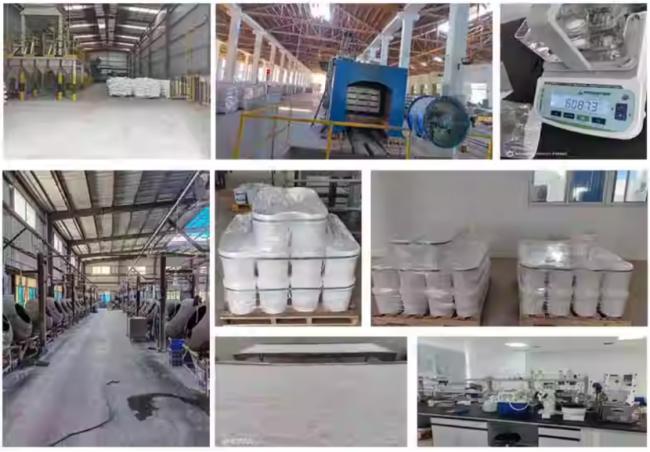
Exhibition & Partner

Case Studies
Ship to UAE


Ship to Netherlands


FAQ
1. What are alumina ceramic balls made of?
They are made from aluminium oxide (Al₂O₃), a high-purity ceramic material known for its hardness and wear resistance.
2. What are the key properties of alumina ceramic balls?
High hardness, excellent wear resistance, chemical stability, high-temperature resistance (up to 1600°C), and electrical insulation.
3. What are alumina ceramic balls used for?
They are used as grinding media, bearing components, valve balls, and in applications requiring wear resistance and chemical inertness.
4. Why choose alumina balls over steel or other ceramics?
They offer superior wear resistance, chemical stability, and are lighter than steel, making them ideal for specific applications.
5. What sizes are available for alumina ceramic balls?
Sizes typically range from 1mm to several inches, depending on the application.
Similar Products
Get in Touch
Have questions about our products or want to discuss a custom order? Our team is ready to help you.
Company
Guangzhou Zoli Technology Co.,Ltd.
Location
Room 702A, No. 585, Airport Road, Tangjing Street, Baiyun District, Guangzhou City, Self-compiled 2341
Contact Person
Ain Qiu