
Alumina Ball Mill Jars Grinding Containers In Planetary Ball Mills And Other Jar Mill Systems
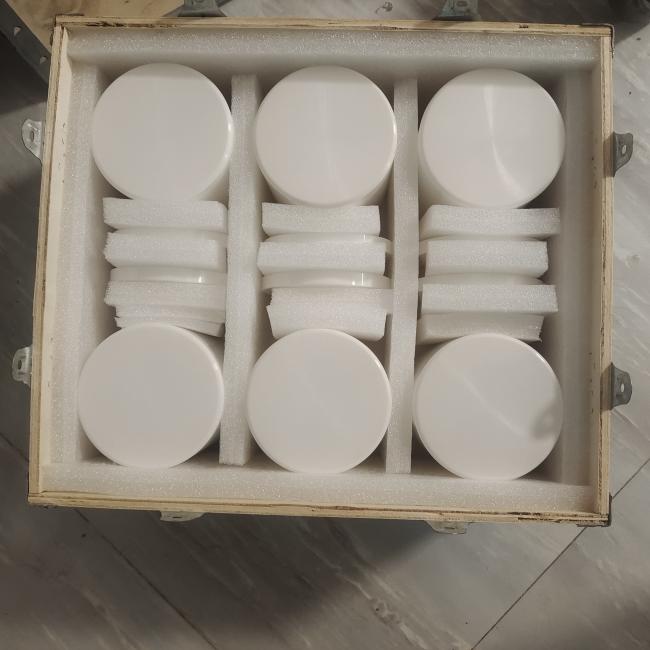
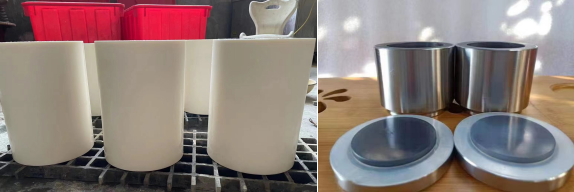
Alumina ball mill jars are specialized grinding containers designed for use in planetary ball mills and other jar mill systems. They are engineered from high-purity alumina ceramics, making them an indispensable tool in laboratories and industries where contamination-free, high-wear-resistant milling is required.
| Composition % | Specific Gravity g/cm3 | Hardness Mho’s | Bending strength (Mpa) | Water absorption rate % |
|---|---|---|---|---|
| Al2O3 ≥ 99 | ≥3.8 | 9 | > 350 | ≤0.005 |
| Volume of Jar | Inner Diameter (mm) | External Diameter (mm) | Inner Depth (mm) | Height of without lid (mm) | Total Height (mm) |
|---|---|---|---|---|---|
| 50ml | 38 | 55 | 52 | 60 | 67 |
| 100ml | 50 | 65 | 58 | 66 | 75 |
| 250ml | 74 | 92 | 70 | 78 | 88 |
| 500ml | 84 | 100 | 100 | 108 | 118 |
| 1L | 108 | 128 | 128 | 138 | 148 |
| 2L | 138 | 158 | 140 | 150 | 162 |
| 3L | 138 | 158 | 198 | 208 | 220 |
- Composition: These jars are manufactured from high-alumina ceramics, typically with an alumina (Al₂O₃) content of 99% or higher. This high purity is critical for its performance characteristics.
- Sintering Process: The alumina powder is isostatically pressed and sintered at extremely high temperatures (over 1700°C). This process creates a dense, polycrystalline structure that is exceptionally hard and durable.
- Inherent Properties: The material inherits the properties of its main component, corundum, which is one of the hardest known materials (9 on the Mohs scale, with diamond being 10).
- Superior Wear Resistance: This is the most significant advantage. The extreme hardness of alumina ceramic ensures minimal abrasion and wear from the grinding media (balls) and the sample material, even after prolonged use. This translates to a very long service life.
- Ultra-Low Contamination: The primary reason for choosing alumina over metal jars. The wear debris from the jar itself is minimal and consists only of alumina, which is often chemically inert or acceptable in most high-purity applications. This is crucial to avoid introducing metallic elements (like Fe, Cr, Ni from stainless steel) that could ruin sensitive samples.
- High Mechanical Strength: These jars possess excellent compressive strength, allowing them to withstand the high-impact forces and pressures generated inside a planetary ball mill.
- Excellent Chemical Inertness: Alumina ceramics are highly resistant to attack by acids, solvents, and other corrosive chemicals. This makes them ideal for wet grinding with a wide variety of solvents without risk of corrosion or degradation.
- Non-Magnetic and Electrically Insulating: Essential for processing electronic materials, magnetic compounds, or any application where magnetic or conductive impurities must be avoided.
- Form Factor: Typically designed as a vertical cylinder to optimize the grinding kinetics inside a planetary ball mill. The cylindrical shape promotes efficient cascading and rolling of the grinding balls.
- Sealing System: Jars come with a mechanically sealed lid fitted with a robust silicone or viton O-ring. This hermetic seal is vital for:
- Grinding under Inert Atmosphere: Allows the jar to be purged with argon or nitrogen to process air-sensitive materials (e.g., lithium battery compounds).
- Containing Solvents: Prevents leakage during wet grinding.
- Vacuum Operation: Enables milling in a vacuum environment.
- Sizes and Capacities: Available in a wide range of volumes, from small 50ml jars for R&D trials to larger 500ml or 1L jars for larger batch processing, all designed to fit standard planetary mill platforms.
| Property | Alumina Jars (99%) | Stainless Steel Jars | Zirconia (YSZ) Jars | Nylon/PTFE Jars |
|---|---|---|---|---|
| Contamination | Very Low (Al, O) | High (Fe, Cr, Ni) | Low (Zr, Y) | Very Low (Polymer) |
| Wear Resistance | Excellent | Good | Exceptional (Best) | Poor |
| Toughness | Brittle | Tough (Ductile) | High (Toughest Ceramic) | Flexible |
| Chemical Resistance | Excellent | Good to Fair | Excellent | Excellent (PTFE) |
| Cost | Medium-High | Low | Very High | Low |
Alumina jars are the preferred choice in fields where material purity is paramount:
- Battery Material Research: Grinding and mixing of cathode materials (LFP, NMC), anode materials (graphite, silicon), and solid electrolytes where iron contamination is catastrophic.
- Advanced Ceramics: Processing of technical ceramics like zirconia, silicon nitride, and aluminum nitride powders.
- Electronics and Semiconductor: Preparation of ferrites, dielectric powders, and other precursor materials for electronic components.
- Geological and Archaeological Sample Preparation: For XRF, ICP-MS, and other analytical techniques that require contamination-free powders.
- Pigments and Dyes: Size reduction where color must not be altered by metallic stains.
- Pharmaceuticals: Milling of active pharmaceutical ingredients (APIs) where metal catalyst residues are prohibited.
- Brittleness: The main drawback is inherent brittleness. They can chip or crack from sharp impacts, drops, or thermal shock.
- Best Practices:
- Never run the mill empty. Always use sufficient grinding media and charge.
- Follow recommended loading ratios (typically 1/3 to 2/3 of jar volume).
- Avoid using very large, heavy grinding media that could cause impact fracture.
- Handle with care and avoid thermal shock (e.g., placing a hot jar on a cold surface).
Alumina ball mill jars are a premium, wear-resistant grinding solution for planetary ball mills and jar mills. Their defining feature is the use of high alumina ceramics, which provides an unmatched balance of exceptional wear resistance and ultra-low contamination. They are the ideal choice for researchers and engineers working with advanced materials where the integrity of the sample is the highest priority, effectively bridging the gap between the high contamination of metal jars and the high cost of zirconia jars.
Get in Touch
Have questions about our products or want to discuss a custom order? Our team is ready to help you.