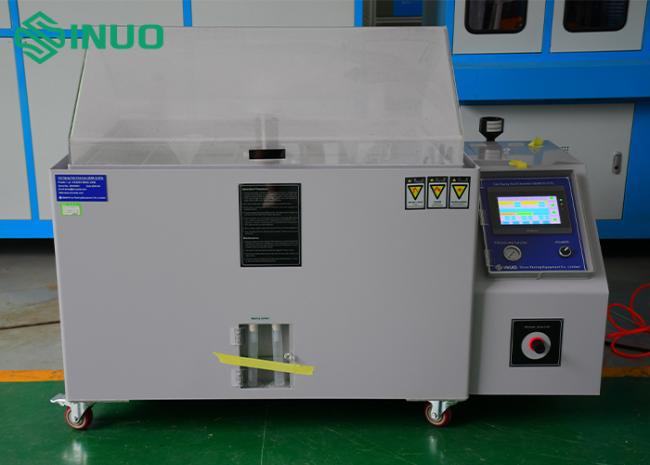
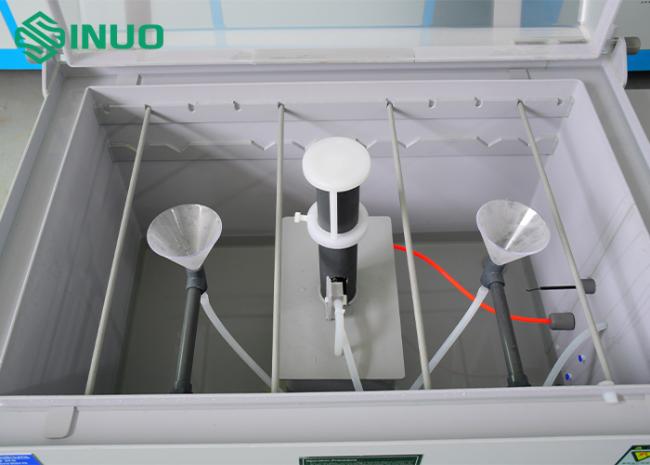
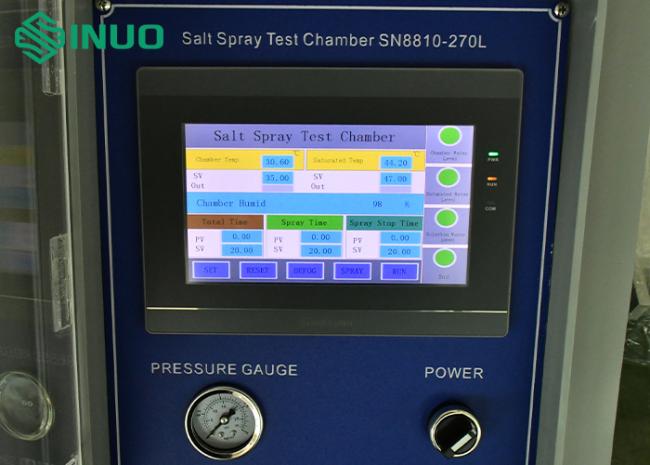
IEC 60068-2-52 270L Salt Spray Test Chamber
The 270L Salt Spray Test Chamber is a high-performance environmental corrosion testing system engineered for accelerated salt fog and salt mist corrosion simulations. Designed according to ISO 9227 and IEC 60068-2-52 standards, this equipment helps manufacturers evaluate the corrosion resistance and surface durability of metal materials, coated parts, electroplated products, automotive components, and industrial assemblies.
By atomizing sodium chloride solution into a uniform saline mist, the chamber reproduces aggressive marine and humid environmental conditions, allowing laboratories and manufacturers to quickly assess coating protection performance and material reliability.
This corrosion test chamber is widely applied in automotive testing laboratories, electronic product reliability testing, hardware manufacturing, aerospace industries, surface treatment factories, and quality inspection institutions.
Frequently Asked Questions (Q&A)
Q1: Which standards does this salt spray chamber comply with?
A: The chamber is manufactured according to ISO 9227 and IEC 60068-2-11 standards for salt fog corrosion testing.
Q2: What types of corrosion tests can be performed?
A: The equipment supports NSS (Neutral Salt Spray), ASS (Acetic Acid Salt Spray), and CASS (Copper Accelerated Acetic Acid Salt Spray) tests.
Q3: What industries commonly use this equipment?
A: It is widely used in automotive, electronics, aerospace, hardware manufacturing, electroplating, coating, and material testing industries.
Q4: Can the chamber operate continuously for long-term testing?
A: Yes. The equipment is designed for continuous long-duration corrosion testing with automatic water supply and stable temperature control.
Q5: Is customized chamber size available?
A: Yes. Customized chamber capacities and special configurations are available according to customer testing requirements.
Q6: How does the chamber prevent salt mist leakage?
A: The chamber uses a pneumatic sealing cover and water-sealed structure to effectively prevent corrosive gas leakage during testing.