
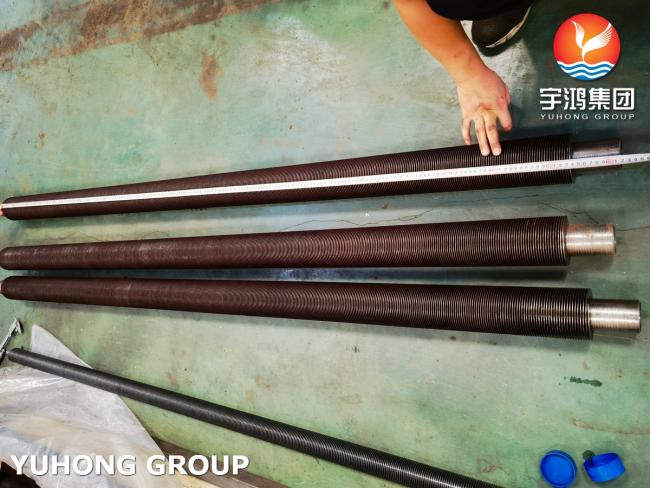
ASTM A106 Gr B High Frequency Welded Fin Tube For Heat Exchanger
1. ASTM A106 Gr.B Fin Tube Mechanical & Material Properties
- Base Material (ASTM A106 Gr B):
Tensile Strength: 415 MPa (60,200 psi) minimum
Yield Strength: 240 MPa (35,000 psi) minimum
Elongation: ≥ 21%
Carbon Content: 0.30% max
Operating Temperature Range: -29°C to 425°C (-20°F to 800°F)
- Weld Strength:
HFW creates a metallurgical bond between fin and tube
Weld penetration: Typically 85-95% of fin thickness
Pull strength: ≥ 80 MPa (11,600 psi) fin-to-tube bond
Thermal conductivity: Enhanced 5-10x compared to bare tube
2. ASTM A106 GR.B Fin Tube Manufacturing Process
- Tube Preparation: ASTM A106 Gr B tubes are cleaned and inspected
- Fin Strip Feeding: Carbon steel strip is fed at controlled angle
- High-Frequency Welding: HF current (100-800 kHz) induces localized heating at fin-tube contact point. Pressure rollers forge the heated materials together. Creates solid-state weld without filler material.
- Fin Formation: Simultaneous spiral winding during welding
- Post-Weld Treatment: Air cooling, potential annealing for stress relief
- Finishing: Straightening, cutting to length, surface treatment (galvanizing/painting if specified)
- Testing: Hydrostatic, eddy current, visual, and bond strength tests
3. ASTM A106 GR.B Fin Tube Applications
- Heat Recovery Steam Generators (HRSG) in power plants
- Air-Cooled Heat Exchangers (ACHEs) in refineries and petrochemical plants
- Fired Heaters and process heaters
- Waste Heat Recovery Systems
- Economizers and superheaters
- HVAC and industrial drying systems
4. ASTM A106 GR.B Fin Tube Advantages:
Enhanced Heat Transfer: 5-10x improvement over bare tubes
Strong Metallurgical Bond: Resists vibration and thermal cycling
Material Efficiency: Less steel required for equivalent heat transfer
Design Flexibility: Various fin densities and heights available
Proven Reliability: Extensive industry track record
5. Frequently Asked Questions
Q1: How does HFW compare to L-foot or embedded fins?
A: HFW provides superior thermal conductivity (direct metal-to-metal bond) and better mechanical strength than mechanical attachments.
Q2: What are temperature limitations?
A: Base material limits to 425°C; fin efficiency decreases above 650°C due to oxidation and thermal stress.
Q3: Can these tubes handle thermal cycling?
A: Yes, the metallurgical bond resists thermal fatigue better than mechanically attached fins.
Q4: What coatings are recommended for corrosive environments?
A: Hot-dip galvanizing, aluminizing, or specialized high-temperature paints.
Get in Touch
Have questions about our products or want to discuss a custom order? Our team is ready to help you.