
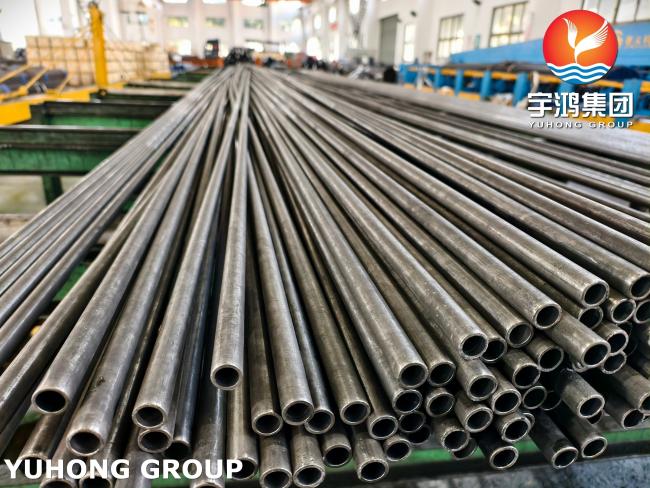
ASTM A179 / ASME SA179 Low Carbon Steel Tube Seamless Steel Heat Exchanger Tube
ASTM A179 / ASME SA179 Carbon Steel Heat Exchanger Tube Seamless Steel Tubing
Key Features & Benefits of ASTM A179 / ASME SA179 Carbon Steel Heat Exchanger Tube
-
Excellent Formability: Low carbon content and annealing allow severe bending, expanding, and rolling into tube sheets.
-
Corrosion Resistance: Not stainless; but in clean, non-aggressive environments (water, steam, oil), it performs reliably. For aggressive media, protective coatings or cathodic protection may be used.
-
Weldability: Very good, though seam welding is not applicable (tubes are seamless). Suitable for joining by brazing or welding to fittings.
-
Cost Efficiency: Lower cost than stainless steel or high-alloy materials, while offering adequate strength for moderate temperatures and pressures.
ASTM A179 / ASME SA 179 Carbon Steel Seamless Tube Chemical Composition
| Element | Carbon | Manganese | Phosphorus | Sulfur |
| Grade | 0.06-0.18 | 0.27-0.63 | 0.035 | 0.04 |
ASTM A179 / ASME SA 179 Carbon Steel Seamless Tube Material Mechanical Properties
| Yield Strength(MPa) | Tensil Strength(MPa) | Elogation(%) |
| ≥180 | ≥325 | ≥35 |
Properties:
- Strength: Cold drawn A179 tubes generally exhibit higher mechanical strength compared to their hot-rolled counterparts.
- Dimensional Accuracy: The cold drawn process allows for tighter tolerances, producing a more precise product.
- Surface Finish: They have a better surface finish, leading to improved aesthetic quality and corrosion resistance.
Comparison with Similar Grades
| Grade | Standard | Key Difference |
|---|---|---|
| SA179 | ASME | Cold-drawn, mandatory heat treatment, fine grain, higher ductility. |
| SA192 | ASME | Higher carbon (0.06–0.18% C), higher tensile (≥55 ksi), for boilers. |
| SA210 A1 | ASME | Medium-carbon steel (C ≤0.27%), higher strength, for boiler tubes. |
| EN 10216-2 P195 | EN | Similar low-carbon seamless, slightly different mechanicals. |
| JIS G3461 STB340 | JIS | Japanese equivalent; comparable properties. |
SA179 vs. SA192:
SA179 requires cold-drawing and annealing, resulting in finer grain and better formability. SA192 may be hot-finished and is intended for higher-temperature boiler service.
Testing & Inspection (per ASME SA-450)
-
Hydrostatic Test: Each tube nondestructively tested (pressure or eddy current).
-
Nondestructive Electric Test: Eddy current or ultrasonic per SA-450, unless hydrostatic test is performed.
-
Flattening Test: To verify ductility.
-
Flange Test: For tubes intended to be rolled into tube sheets.
-
Hardness Test: Rockwell B.
-
Grain Size: Typically required to be ASTM No. 7 or finer.
-
Shell-and-Tube Heat Exchangers: Both shell-side and tube-side fluids, particularly for oil refineries, petrochemical plants, and power generation.
-
Condensers: Surface condensers in steam power plants.
-
Feedwater Heaters: Preheating boiler feedwater.
-
Air Coolers: Fin-fan coolers in process industries.
-
Hydraulic Systems: Low-pressure tubing in hydraulic lines.
-
Instrumentation: Sensing lines for pressure and temperature.
Get in Touch
Have questions about our products or want to discuss a custom order? Our team is ready to help you.