
Waterproof Renewable Energy Biogas Holder Balloon PVC Coated Fabric Dual Membrane
Dual Membrane Biogas Balloons for Renewable Energy offer a flexible and cost-effective solution for biogas storage and utilization. These innovative flexible digesters are transforming how farms, households, and industries manage organic waste while generating clean energy.

A biogas balloon (or flexible biogas digester) is a gas-tight, inflatable membrane made from durable reinforced PVC coated fabric. It captures methane-rich biogas produced during anaerobic digestion of organic waste (e.g., animal manure, crop residues, or food scraps). Unlike fixed-dome or concrete digesters, biogas balloons are portable, easy to install, and adaptable to small or large-scale operations.
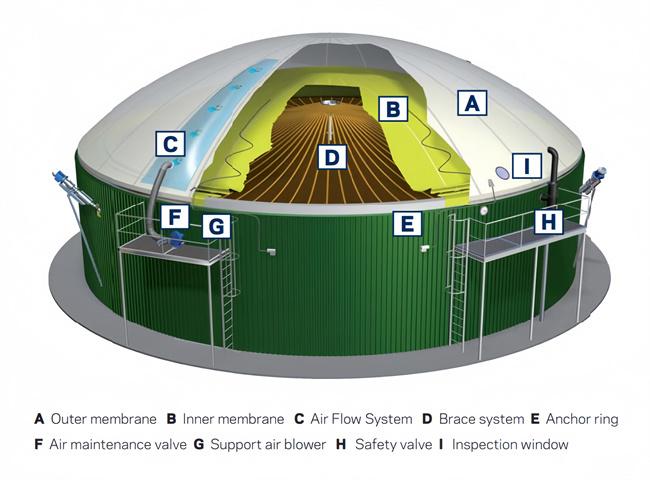
- Cost-Effective Installation: Traditional digesters require heavy construction and skilled labor. Biogas balloons can be set up in hours with minimal groundwork.
- Scalability: Need more gas storage? Simply add another balloon or upgrade to a larger size.
- Durability: High-quality materials resist UV rays, temperature fluctuations, and punctures, ensuring a lifespan of 10-15 years.
- Low Maintenance: No complex parts to repair. Regular cleaning and leak checks are the primary upkeep tasks.
From rural households to industrial plants, biogas balloons serve diverse needs:
- Farm Waste Management: Convert livestock manure into cooking fuel and fertilizer.
- Urban Organic Waste: Process food waste from restaurants or markets.
- Emergency Energy: Provide off-grid power in disaster-stricken areas.
| Feature | Biogas Balloon | Steel Gas Holder |
|---|---|---|
| Installation Time | 3-5 days | 6-8 weeks |
| H₂S Resistance | Yes (no metal corrosion) | No (requires coating) |
| Pressure Management | Fully automatic | Manual valve adjustments |
| Lifespan | 20-25 years | 25-30 years |
| Cost per m³ Storage | USD20-USD30 | USD80-USD120 |
Table 1: Biogas balloon vs. steel gas holder for Renewable Energy.
- Optimal Feedstock Mix: Use a balanced ratio of carbon-rich (e.g., straw) and nitrogen-rich (e.g., manure) waste.
- Temperature Control: Maintain 25-40°C for peak microbial activity. Insulate the balloon in colder climates.
- Regular Monitoring: Check gas pressure and pH levels weekly.
Yes, but pH levels should stay between 6.5 and 8. Add lime if the mixture becomes too acidic.
A 10 m³ balloon can generate 1-2 m³ of biogas daily—enough for 3-4 hours of cooking.
Absolutely. Methane is safely contained, and pressure-release valves prevent overinflation.
The nutrient-rich digestate is an excellent organic fertilizer for crops.
As governments push for net-zero goals, biogas balloons offer a decentralized energy solution that reduces landfill waste, curbs deforestation, and empowers communities. Innovations like integrated IoT sensors for remote monitoring and hybrid solar-biogas systems will further enhance their appeal.
Biogas balloons are not just a tool for renewable energy—they're a catalyst for sustainable development. By combining affordability, flexibility, and environmental benefits, they democratize access to clean energy while addressing global waste challenges. Whether you're a smallholder farmer or an eco-conscious entrepreneur, adopting this technology can yield immediate economic and ecological returns.
Get in Touch
Have questions about our products or want to discuss a custom order? Our team is ready to help you.