
30 Hardness Food Grade Translucent Silicone Good Tear Strength Platinum Silicone Rubber For Gypsum Crafts, Gypsum Decorative Building Materials
30 Hardness Food Grade Translucent Silicone Good Tear Strength Platinum Silicone Rubber For Gypsum Crafts, Gypsum Decorative Building Materials
Product Descriptiong of platinum silione rubber:
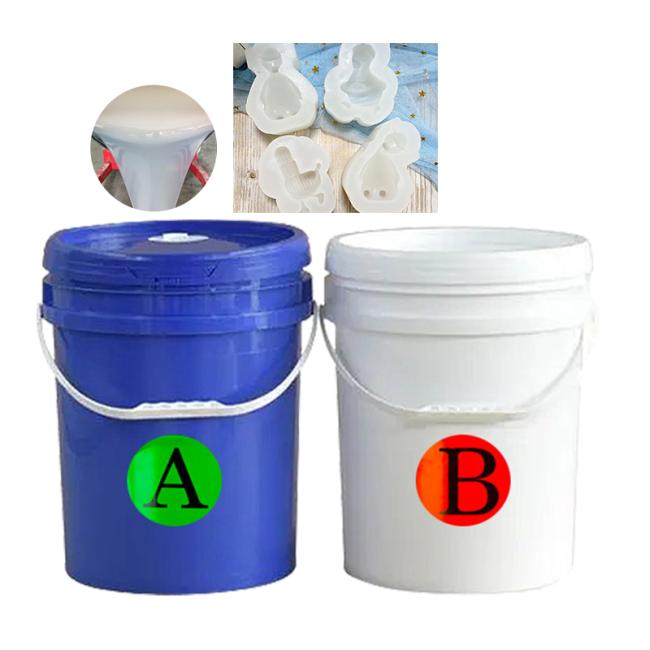
Platinum liquid silicone typically refers to addition-cure liquid silicone (Platinum Silicone) or platinum-based curing agents for silicone (often referred to as "platinum water"). It is a two-component organosilicon material that utilizes platinum as a catalyst; due to its eco-friendly, non-toxic nature and the excellent elasticity it exhibits after curing, it is widely utilized in fields such as food, medical devices, maternal and infant products, and nail art.

Characteristic of platinum silione rubber:
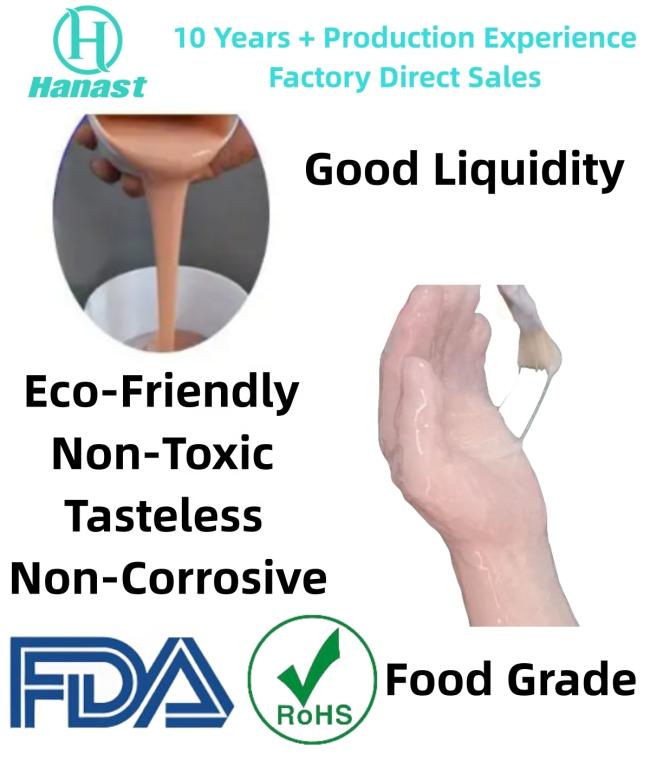
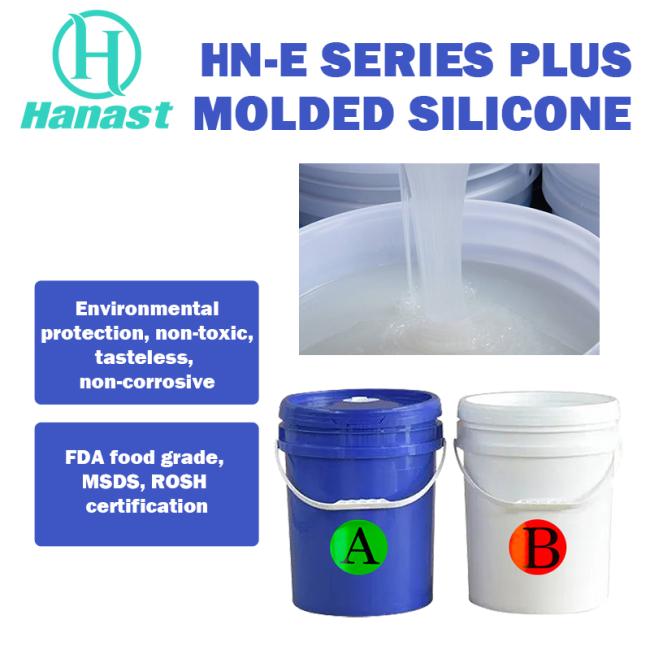
This is a high-purity, non-toxic, and odorless liquid rubber that is more environmentally friendly than ordinary industrial-grade silicone; it typically meets food-grade and medical-grade testing and certification standards, such as those of the FDA or LFGB. It exhibits excellent heat resistance and anti-yellowing properties, and generates no odors during the curing process.
Application of platinum silione rubber:
1. Food & Kitchenware
- Baking Molds: Cake, chocolate, and fondant molds.
- Kitchen Tools: Spatulas, ice cube trays, and collapsible bowls.
- Baby Products: Baby nipples, pacifiers, and teething toys.
- Medical Devices: Tubing, respiratory masks, and dental impression materials.
- Prosthetics: Skin-safe prosthetics, orthotics, and FX makeup appliances.
- Art & Crafts: Molds for resin casting, concrete, plaster, and wax candles.
- Prototyping: Replicating highly detailed parts for engineering and industrial design.
- Potting & Encapsulation: Protecting circuit boards from moisture and shock.
- Seals & Gaskets: High-temperature and waterproof sealing components.

Operation method of platinum silicone rubber:
Platinum Liquid Silicone Use Guide:
1. Weigh
-
Ratio: Mix Part A and Part B in an exact 1:1 weight ratio using an electronic scale. Do not eyeball or measure by volume.
2. Mix
-
Action: Stir in one direction for 2 to 3 minutes.
-
Tip: Scrape the sides and bottom of the cup thoroughly to ensure complete mixing.
3. De-gas
-
Action: Remove air bubbles using a vacuum pump.
-
Alternative: If you don't have a pump, let it sit for 5 minutes, then pour the mixture from a high distance in a thin stream.
4. Cure
-
Time: It cures in 3 to 5 hours at room temperature (25°C).
-
Heat: You can bake it at 60°C to 80°C to cure it in 15 to 30 minutes.


Technical parameters platinum silicone rubber:
| Model |
Color |
Viscosity (mPa.s) | Hardness (Shore A) | Tensile strength (Mpa) |
Tear strength (kN/m ) |
Elongation (%) |
Mixing ratio A: B |
Operate time (h) |
Curing time (h) |
| E600# | translucent | 800 | 0 ±2 | 2 | 4 ±2 | 450 | 1:1 | 0.5 | 4 |
| E605# | translucent | 2000 | 5 ±2 | 3 | 12±2 | 500 | 1:1 | 0.5 | 4 |
| E610# | translucent | 2500 | 10±2 | 4.8 | 13±2 | 550 | 1:1 | 0.5 | 4 |
| E615# | translucent | 3500 | 15±2 | 5.1 | 16±2 | 470 | 1:1 | 0.5 | 4 |
| E620# | translucent | 5000 | 20±2 | 5.3 | 23±2 | 520 | 1:1 | 0.5 | 4 |
| E625# | translucent | 6000 | 25±2 | 5.5 | 26±2 | 450 | 1:1 | 0.5 | 4 |
| E630# | translucent | 7500 | 30±2 | 6.5 | 18±2 | 410 | 1:1 | 0.5 | 4 |
| E635# | translucent | 8500 | 35±2 | 7 | 18±2 | 380 | 1:1 | 0.5 | 4 |
| E640# | translucent | 11000 | 40±2 | 7.2 | 19±2 | 330 | 1:1 | 0.5 | 4 |
| E645# | translucent | 14000 | 45±2 | 8.2 | 16±2 | 320 | 1:1 | 0.5 | 4 |
| E650# | translucent | 15000 | 50±2 | 7.5 | 13±2 | 240 | 1:1 | 0.5 | 4 |
| E655# | translucent | 18000 | 55±2 | 5.8 | 12±2 | 150 | 1:1 | 0.5 | 4 |
| E660# | translucent | 20000 | 60±2 | 5.8 | 11±2 | 130 | 1:1 | 0.5 | 4 |
Packaging specifications of platinum silicone rubber:
25kg/barrel
a barrel size:40*30*30cm

Key Precaution of platinum liquid silicone rubber:
Preventing "Poisoning." Platinum-cured liquid silicone rubber is highly susceptible to interference from specific chemical substances, which can result in a permanent failure to cure (commonly referred to as "silicone poisoning"). During the handling process, the liquid silicone must *never* be allowed to come into contact with the following substances: Sulfur-containing substances (e.g., elemental sulfur, natural rubber, latex gloves—nitrile or PE gloves must be worn instead); Tin-containing substances (e.g., industrial-grade condensation-cure silicones, tin-based molds); and Amine-, nitrogen-, phosphorus-, or arsenic-containing substances (e.g., certain epoxy curing agents, unsaturated polyester resins, UV-curable adhesives).
Get in Touch
Have questions about our products or want to discuss a custom order? Our team is ready to help you.