
Precision Custom Rubber Parts with Tailored Hardness, Pantone Color Matching, and OEM Logo Branding
For custom molded rubber parts, send a controlled drawing revision with critical dimensions, tolerances, sealing or mounting interfaces and sample-approval requirements. Specify compound, hardness, color and identification together so the approved sample and production order use the same configuration.
Our Core Customization Capabilities
-
Hardness Specification: Provide the required Shore A hardness, tolerance and test requirements for the selected compound. The listed 40-90 Shore A range requires confirmation for each formulation and part.
-
Color Matching: Provide a Pantone or RAL reference and physical approval sample where available. Agree color tolerance and suitability for the selected rubber compound before production.
-
Part Identification: Specify molded logos, part numbers or other marking requirements on the drawing. Confirm the marking method and legibility on samples before production.
-
Compound Requirements: Specify any flame, electrical or weathering test method and acceptance limit. Formulation feasibility and qualification are reviewed for the actual service.
-
Bespoke Packaging: From individual poly-bagging to custom-labeled boxes and retail-ready kits, we provide packaging solutions that streamline your assembly line or sales process.
Material Expertise: Choosing the Right Elastomer
NBR(Nitrile Butadiene Rubber) |
FKM(Fluoroelastomer) |
EPDM(Ethylene Propylene Diene Monomer) |
HNBR(Hydrogenated Nitrile) |
Silicone(VMQ) |
NR(Natural Rubber) |
| Key Features: Excellent resistance to petroleum-based oils, fuels, and grease. High tensile strength and abrasion resistance. |
Key Features: Candidate for selected heat and chemical applications; confirm exact compound, medium and gas requirements. |
Key Features: Exceptional resistance to ozone, UV exposure, weathering, and steam. Excellent electrical insulation. |
Key Features: Superior mechanical strength and heat resistance compared to standard NBR. Highly resistant to modern fuel additives. |
Key Features: Specify the silicone compound and service conditions. Food-contact or medical requirements need application-specific documentation and testing. |
Key Features: Candidate for selected elastic and vibration-control parts; confirm mechanical requirements and exposure conditions. |
| Temperature Range: Confirm for selected compound, medium and exposure duration | Temperature Range: Confirm for selected compound, medium and exposure duration | Temperature Range: Confirm for selected compound, medium and exposure duration | Temperature Range: Confirm for selected compound, medium and exposure duration | Temperature Range: Confirm for selected compound, medium and exposure duration | Temperature Range: Confirm for selected compound, medium and exposure duration |
| Common Applications: Oil seals, fuel system gaskets, hydraulic diaphragms, and automotive grommets. | Common Applications: Aerospace seals, chemical manifold gaskets, and high-performance engine components. | Common Applications: Outdoor electrical grommets, window seals, automotive cooling systems, and steam gaskets. | Common Applications: Oil and gas equipment, timing belts, and heavy-duty industrial seals. | Common Applications: Medical seals, food processing equipment, electronics insulation, and high-heat kitchenware. |
Common Applications: Anti-vibration mounts, heavy-duty bumpers, and industrial machinery grommets.
|
Why Partner With Our Engineering Team?
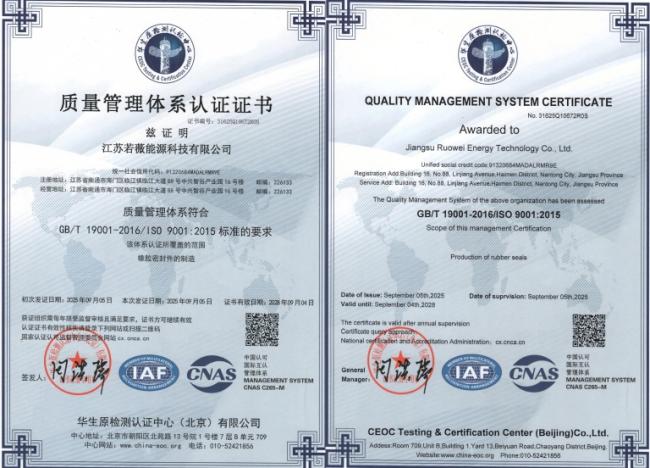
ISO 9001:2015 Quality Standards: Our facility operates under a strict Quality Management System, ensuring repeatability across high-volume production runs.
In-House Tooling & Design: Our engineers assist with Design for Manufacturing (DFM), helping to refine part geometry to reduce costs and improve performance.
Our Workshop


FAQ
Q1: What files do you need for an OEM quote?
A: We accept 3D files (STEP, STP, IGS) and 2D technical drawings (PDF, DWG). Please include your material preference, hardness, and estimated annual volume.
Q2: Can you help us select the best material (ODM service)?
A: Provide fluid identity, continuous and peak temperatures, movement, loads and installation dimensions. Candidate compounds can be reviewed against those requirements and agreed sample tests.
Q3: Is there a cost difference between black and custom-colored rubber?
A: Custom colors require specialized pigments and thorough equipment cleaning, which may result in a slightly higher setup cost, though the per-unit price remains highly competitive.
Q4: Do you offer rapid prototyping before we invest in mass production molds?
A: Confirm an appropriate prototype or trial-molding route after drawing review. A geometry prototype does not automatically reproduce the final molded compound or service performance.
Q5: What is your standard lead time?
A: Confirm tooling, sample approval and production timing in the quotation after drawing, compound and quantity review.
Get in Touch
Have questions about our products or want to discuss a custom order? Our team is ready to help you.