
Custom GPU Copper Heatsink High Density Skived Fin For IGBT LED
Copper Skived Fin GPU Heat Sink
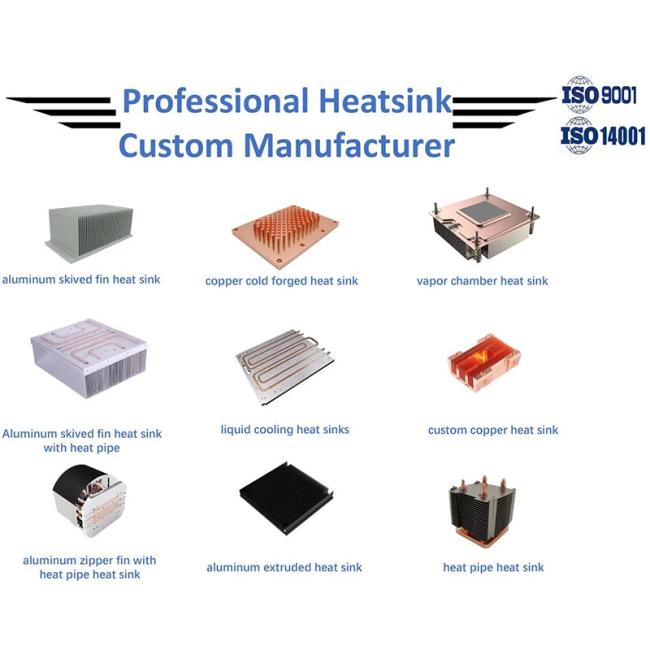
With the development of GPU chips, varieties of heat sink types are designed to meet the thermal requirements of the GPU chips, at the beginning, the power of the GPU chip is not high, so an aluminum extruded heatsink can solve the thermal issue, but as the GPU is developing rapidly and the power is higher, so a better thermal performance heatsink is required. so now we are introducing copper skived fin GPU heatsink, which has much better thermal performance than aluminum extruded heatsink. We all know that copper has much thermal conductivity than aluminum, so choose copper as the heat sink material can conduct and spread the heat from the GPU faster. Skiving technology, compared with other processing technologies, the same volume of raw materials can produce more fins to create a larger heat dissipation area, and the heat transfer performance is more stable. Compared with the bonding fin radiator, the heat dissipation efficiency can be improved by 10-30%, thereby greatly improving the heat dissipation efficiency and prolonging the device lifetime. Since the fins and the base plate belong to the same material, there is no contact thermal resistance between the fins and the base, and the ratio of the height to the space of the fins is very large (copper can reach 25, aluminum can reach 60), so the fins can be thin and dense, which can greatly increase the heat dissipation area. Even if the air volume is reduced, the radiator can still achieve a good heat dissipation effect, thereby greatly reducing the noise generated by the fan, and can dissipate a large amount of heat in a limited space to meet the heat dissipation requirements.
Product Introduction
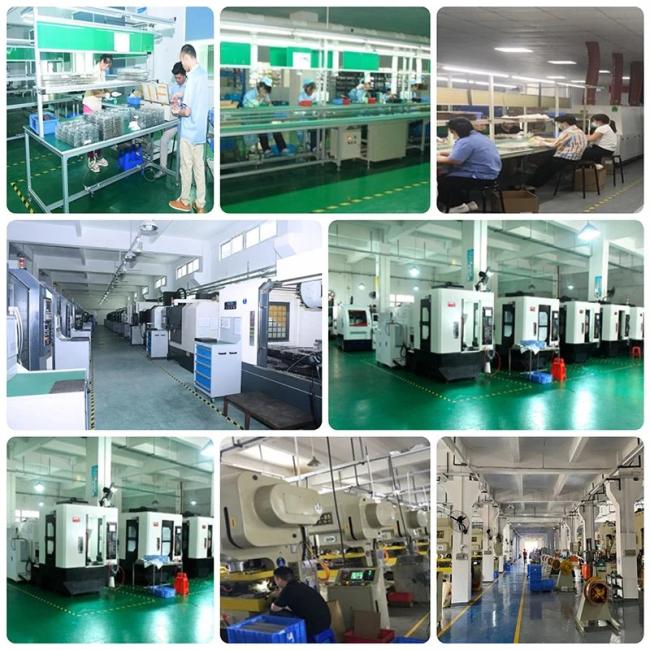
Please click the Navigation line ''visit the factory online'' to visit our factory
In the early stage of PC hardware development, due to the relatively low integration level and poor performance of the chip , active cooling solution is not needed to cool down the temperature of the electronic components. As a new thing, the GPU is far less developed than the CPU, and the heat generated is little. In the early days of graphics card development, all products were a bare board with various components soldered on it.
As Nvidia officially established the status of "GPU" chips, the performance of graphics chips broke free from the shackles of Moore's Law and began to grow rapidly. natural heat dissipation can no longer suppress more and more powerful cores. Similar to the development process of CPU radiators, various active radiators have begun to appear on new graphics card products. According to the process of history, the first appearance is the blow-down type heat sink. At this time, the shape of the radiator is various, and the brainstorm of the heat sink design is wide open. Since the graphics card is inserted vertically into the slot of the motherboard, unlike the CPU that is placed parallel to the motherboard, and the motherboard slot may not only install one component of the graphics card, but also other boards, the "height" of the graphics card radiator is affected. With very strict restrictions, it can only be expanded horizontally.
The advancement of GPU heatsink technology is accompanied by the continuous progress and development of the innovation of graphics card GPU technology. Graphics card radiators have grown from zero, from passive cooling to active cooling, from heat pipe cooling to vapor chamber cooling, as well as various innovations by major manufacturers. The latest graphics card cooling technology. It can be said that the innovation speed of the graphics card radiator and the development speed of the graphics card GPU are almost synchronous. Whether it is a major technological innovation or a small technological improvement, the mission of the graphics card radiator is to make the GPU work on a normal, stable and safe temperature
The benefits of the copper skived fin GPU heatsink
(1) The copper skived fin heatsink has a higher density of fins, increasing the heat dissipation area and improving the thermal performance;
(2) The height of the fins of the skived fin heatsink can reach 120mm, which fully meets the production needs of most radiators;
(3) The fins of the skived fin radiator can be made thinner, even can reach to 0.2mm, which can make the radiator lighter;
(4) The fins are peeling from a solid metal material, so there is no thermal resistance between the fins and base, and there will be no risk of loosening and falling off, which improves the reliability of module operation;
(5) The copper skived fin heatsink has high compatibility, and has the possibility of post-processing, and it can also embeded some heat pipes to improve thermal performance.
Product specifications
Recommended products
Get in Touch
Have questions about our products or want to discuss a custom order? Our team is ready to help you.