
1500N Iron Core Linear Motor Rotor Stator Original Linear Motor
Ironcore Linear Motor New And Original Linear Iron Core Induction Motor Rotor Stator
Ironcore Linear Motor New And Original Linear Iron Core Induction Motor Rotor Stator
Product advantages:
| Parameter | Remarks | Symbol | Unit | EC177WC-12 | EC177WC-15 | EC177WC-18 | EC177WC-24 | EC177WC-30 | EC177WC-45 | ||||||
| Ultimate Current | Magnet@25°C | lu | Arms | 13.1 | 26 | 13.5 | 33 | 20 | 41 | 27 | 52 | 28 | 66 | 41 | 98 |
| Peak Current | Magnet@25°C | lp | Arms | 10 | 20 | 11 | 25 | 15 | 31 | 20 | 40 | 21 | 50 | 31 | 75 |
| Continuous Current Water cooled | Coil@110°C | lc | Arms | 5.5 | 11 | 6 | 14 | 8 | 17 | 11 | 22 | 12 | 29 | 18 | 42 |
| Continuous Current Air cooled | Coil@110°C | lc | Arms | 4.3 | 9 | 4.3 | 11 | 6.5 | 13.4 | 9 | 18 | 9 | 22 | 13.4 | 32 |
| Back EMF | Phase-Phase peak | Bemf | V/M/s | 228 | 114 | 274 | 114 | 228 | 110 | 228 | 114 | 274 | 114 | 228 | 114 |
| Resistance Per Phase | Coil@25°C | Rph | Ω | 9.1 | 2.27 | 10.8 | 1.82 | 6.06 | 1.45 | 4.54 | 1.14 | 5.4 | 0.91 | 3.61 | 0.61 |
| Induction Per Phase | l<0.63lp | Lph | Mh | 77.35 | 19 | 92 | 15 | 52 | 12 | 39 | 10 | 46 | 8 | 31 | 5 |
| Electrical Time Constant | Coil@25°C | Te | Ms | 8.5 | 8.5 | 8.5 | 8.5 | 8.5 | 8.5 | 8.5 | 8.5 | 8.5 | 8.5 | 8.5 | 8.5 |
| Power Loss | All coils | Pc | W | 713 | 713 | 891 | 891 | 1011 | 1011 | 1347 | 1347 | 1684 | 1684 | 2527 | 2527 |
thermal
| Parameter | Remarks | Symbol | Unit | EC177WC-12 | EC177WC-15 | EC177WC-18 | EC177WC-24 | EC177WC-30 | EC177WC-45 | ||||||
| Thermal Resistance | Coils to mount. Sfc. | Rth | °C/W | 0.13 | 0.13 | 0.12 | 0.12 | 0.11 | 0.11 | 0.09 | 0.09 | 0.07 | 0.07 | 0.03 | 0.03 |
| Temp. Sensor | PTC 1kΩ/NTC | ||||||||||||||



FAQ:
1.What is a linear motor?
Linear motors are electric induction motors that produce motion in a straight line rather than rotational motion.
In a traditional electric motor, the rotor (rotating part) spins inside the stator (static part); in a linear motor, the stator is unwrapped and laid out flat and the "rotor" moves past it in a straight line.
Linear motors often use superconducting magnets, which are cooled to low temperatures to reduce power consumption.
2.What are the benefits of a linear motor?
Linear motors are also referred to as direct drive units, since the load is directly coupled to the motor.
This eliminates the need for elastic components such as gearboxes and couplings, which introduce backlash and error in the motion.
And because they do not rely on mechanical drive components such as ball screws, belts, and rack and pinions, linear motors have a much higher accuracy and repeatability, with no velocity ripple.
This lack of rotating or recirculating parts also makes them virtually maintenance-free and contributes to a lower total cost of ownership when compared to traditional drive mechanisms.
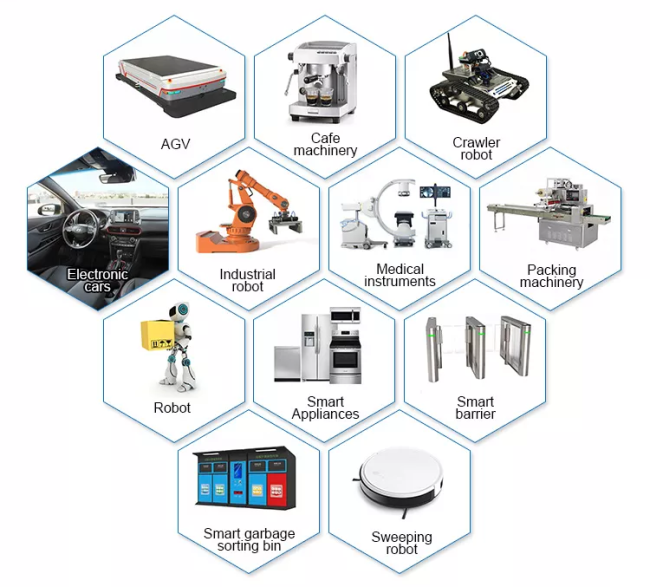
Application area
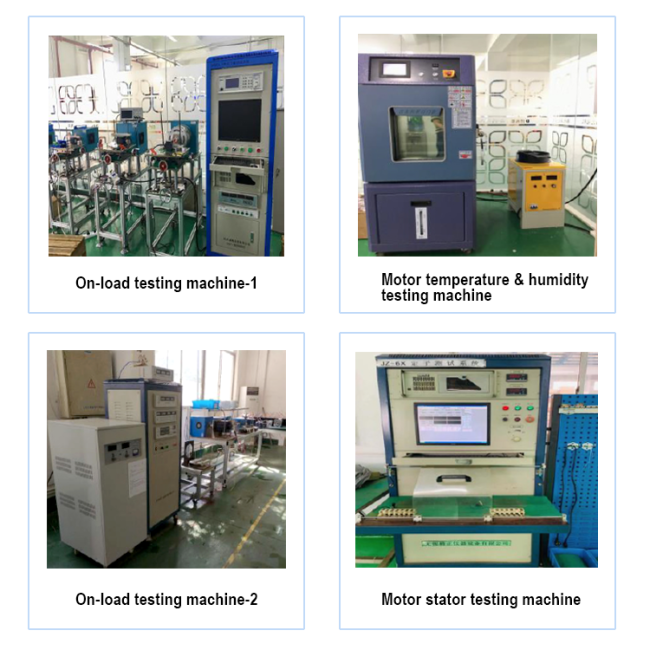
Product testing
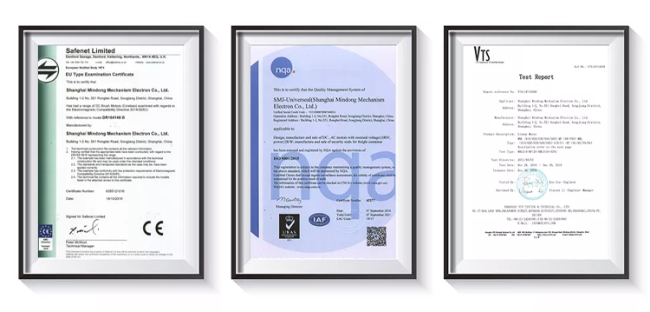
Product certificate
Get in Touch
Have questions about our products or want to discuss a custom order? Our team is ready to help you.